
A closer look at the materials, standards, and people behind every trafficsigns order
Trafficsigns.com supplies reflective aluminum traffic, parking, warning, and regulatory signs to municipalities, contractors, property managers, schools, and businesses nationwide. Our standard traffic signs are made to MUTCD designs and reflectivity requirements on .080 aluminum, while our parking and custom signs are designed for private property. This page explains what trafficsigns.com does, how our signs are manufactured, and why customers choose us over other suppliers when compliance and durability are not optional.
Common Questions About Buying Signs From Trafficsigns.com
- What is trafficsigns.com and what kind of signs do you sell?
- Trafficsigns.com is a supplier of reflective aluminum traffic, parking, regulatory, and warning signs. Our standard traffic signs follow MUTCD designs, and our catalog ranges from pedestrian and intersection warning signs to parking regulation and custom copy signs, all produced on durable aluminum blanks.
- What materials are used in trafficsigns.com signs, and how durable are they?
- Our signs are manufactured on .080 aluminum with reflective sheeting available in engineer grade, high intensity, and diamond grade. Engineer grade works for white and red regulatory signs and parking signs, but the MUTCD doesn't allow it on yellow warning signs or orange work zone signs, which need high intensity or diamond grade. All three resist rust, fading, and warping, and the high intensity and diamond grade options are made for extended outdoor exposure in sun, rain, and snow.
- What sizes and mounting options are available?
- Most signs ship in multiple sizes, commonly ranging from 12x18 inches up to 48x36 inches depending on the sign type, with standard 3/8 inch prepunched holes for mounting to U-channel posts or walls.
- Can I get a custom message or layout on a sign?
- Yes. Many of our parking and private-property signs support custom copy, so you can specify wording, phone numbers, or fine amounts. Keep in mind that regulatory and warning signs used on public roads, or private roads open to the public, must use the standard MUTCD wording, so custom wording is best kept to parking lots and private property. Check with your state DOT or local agency if you're unsure which rules apply.
- How does pricing and bulk discount work?
- Pricing is based on size and reflective grade, with volume discounts automatically applied at quantities of 4, 7, 16, and 50 signs. Ordering in bulk for a fleet of parking lots or a full intersection upgrade lowers the per-unit cost noticeably.
- How fast do orders ship?
- Standard stock signs typically print and ship within a few business days. Custom copy signs may take slightly longer since artwork is proofed before production begins.
- How do I install and maintain a sign after it arrives?
- Signs come pre-drilled for standard posts or wall mounts and can be installed with basic hardware. We recommend periodic cleaning with mild soap and water and a visual check for reflectivity loss over time.
What Types of Traffic Signs Does Trafficsigns.com Carry?
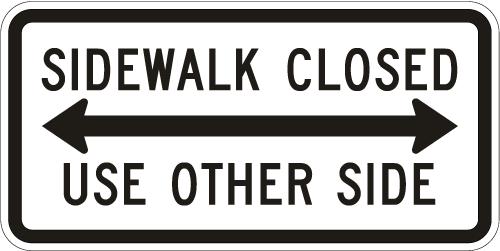
Traffic signs fall into a few core MUTCD categories, and trafficsigns.com stocks all of them. Regulatory signs tell drivers and pedestrians what they must or must not do, including stop, speed limit, and parking restriction signs. Warning signs alert road users to upcoming hazards or changing conditions, such as the Side Roads From Right sign and the Two Side Roads From Left sign, both versions of the MUTCD's Double Side Roads (W2-8) sign, used where two closely spaced side roads join the highway on the same side. Guide signs, covered in more depth on our guide signs page, direct travelers toward destinations, route numbers, and services. Pedestrian-focused regulatory signage for construction and work zones, like the Sidewalk Closed Use Other Side sign, directs people on foot around temporary sidewalk closures. Property owners also rely on parking-specific signage, including faculty and visitor designations such as the Faculty and Staff Parking sign, to manage private lots; these are private-property signs rather than MUTCD signs.
How Are Traffic Signs Designed and What Standards Do They Follow?
Every MUTCD sign code, from W2-8R to R9-10, traces back to the Manual on Uniform Traffic Control Devices, which governs shape, color, wording, size, and placement for traffic signs on public roads and private roads open to the public. Designers don't have free rein over wording or layout. The MUTCD requires standard wording, and its companion publication, Standard Highway Signs, sets the exact dimensions for letters, borders, and symbols, so a stop sign in one state looks and reads the same as one three states away. Our breakdown in A Guide to Traffic Signs and Road Safety walks through how these design rules translate into real-world signage decisions, including when it makes sense to step up from engineer grade to higher reflectivity. The MUTCD sets minimum reflectivity levels rather than a grade for each road, so the grade choice is a recommendation, and yellow and orange signs always need high intensity or diamond grade.
What Materials and Colors Go Into a MUTCD Compliant Sign?
Nearly every sign we sell starts as a .080 aluminum blank, a substrate chosen because it resists corrosion, holds its shape under wind load, and accepts reflective sheeting cleanly. That sheeting comes in three grades: engineer grade for standard reflectivity, high intensity for stronger nighttime visibility, and diamond grade for maximum retroreflectivity on high-speed or high-risk roadways. Yellow warning signs and orange work zone signs need high intensity or diamond grade under the MUTCD. We cover how this reflective layer actually works in Reflective Traffic Signs and How They Keep Roads Safe. Color meaning is equally standardized by the MUTCD: red signals stop or prohibition, black and white are used for regulatory signs, yellow warns of general hazards, fluorescent yellow-green marks school, pedestrian, and bicycle warnings, orange marks temporary traffic control and work zones, green indicates permitted movements and directional guidance, blue points to motorist services, brown marks recreational and cultural sites, fluorescent pink is for incident management, and purple is for electronic toll lanes. White is also used for the lettering on many guide signs. If you need raw stock to fabricate your own signage, our sign blanks are cut to the same specifications used across our finished product line.
How Are Traffic Signs Maintained Once Installed?
A sign's usefulness depends entirely on whether drivers and pedestrians can still read it at a glance, day or night. Routine maintenance includes checking for faded or peeling sheeting, loose mounting hardware, bent posts, and dirt buildup that dulls reflectivity. For roads open to public travel, the MUTCD requires agencies to use a method that keeps signs at or above minimum retroreflectivity levels, and scheduled nighttime visual inspections are one of the accepted methods for catching reflectivity loss before it becomes a safety issue. We go into this process in detail in Things to Know About the Life Cycle of a Traffic Sign, which also covers typical replacement timelines by reflective grade. For facilities managing accessibility requirements alongside standard traffic control, our ADA compliant signs use case page outlines how those two signage systems work together. You can also read more about our approach to sign manufacturing on our About page.
Comparing Trafficsigns.com Reflective Sheeting Grades
Reflective grade is the single biggest factor in sign visibility and price. Here's how the three options stack up.
| Reflective Grade | Visibility Level | Typical Use Case | Relative Price Tier |
|---|---|---|---|
Engineer Grade | Reflective, standard nighttime visibility | Parking lots, low-speed facility signage, and white regulatory signs (not for yellow or orange warning signs) | $ |
High Intensity | Very reflective, enhanced nighttime visibility | Municipal streets, intersections, most DOT roadways | $$ |
Diamond Grade | Ultra reflective, maximum retroreflectivity | High-speed highways, work zones, critical safety signage | $$$ |
A Sample of Trafficsigns.com's Catalog
These signs reflect the range of regulatory, warning, and parking signage available through trafficsigns.com, each produced on reflective aluminum. The regulatory and warning signs follow MUTCD designs, and the parking sign is designed for private lots.
 Regulatory / Pedestrian Signs
Sidewalk Closed Use Other Side Sign - R9-10
$22.10 - $72.95
Shop on Trafficsigns.com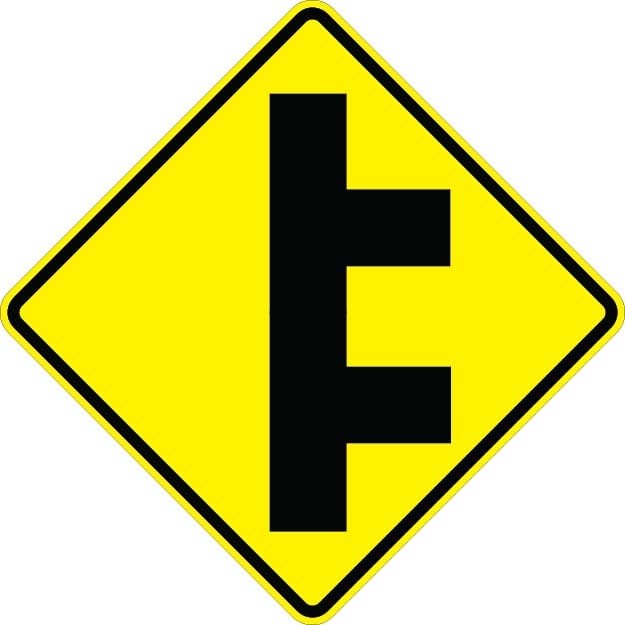 Warning / Intersection Signs
Side Roads From Right Sign - W2-8R
$44.25 - $256.95
Shop on Trafficsigns.com Warning / Intersection Signs
Two Side Roads From Left Sign - W2-8L
$44.25 - $256.95
Shop on Trafficsigns.com
 Parking Signs / Parking Regulation
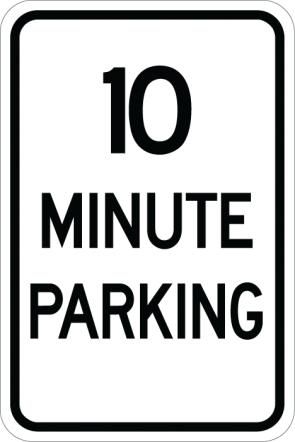
10 Minute Parking - AR-129
Private-property parking sign
$21.95 - $58.25
Shop on Trafficsigns.comReady to Order MUTCD Compliant Signs?
Browse the full trafficsigns.com catalog to find reflective aluminum signs sized and graded for your exact application, from parking lots to busy intersections.
Shop Regulatory Signs