
Everything you need to know about accessible parking signage compliance
Common Questions About ADA Handicap Parking Signage
- What are the ADA rules for handicap parking signage?
- The ADA requires that each accessible parking space be marked with a sign featuring the International Symbol of Accessibility (ISA). The sign must be mounted so its bottom edge is at least 60 inches above the ground, measured from the bottom of the sign to the ground surface. Signs must be positioned at or near the head of the space and visible to motorists. Spaces designated as van accessible must include a secondary 'Van Accessible' plaque mounted below the main accessible parking sign or say on the sign itself. All accessible parking signage must comply with both ADA Standards for Accessible Design and MUTCD guidelines.
- What is the required height for a handicap parking sign?
- The ADA specifies that accessible parking signs must be mounted with the bottom of the sign at a minimum height of 60 inches (5 feet) above the finished ground surface. This mounting height helps ensure that the sign remains visible to drivers and remains unobstructed when a vehicle is parked in front of it. Some states impose additional or slightly different height requirements, so always verify your local regulations alongside the federal standard.
- Do I need a separate van accessible sign for van spaces?
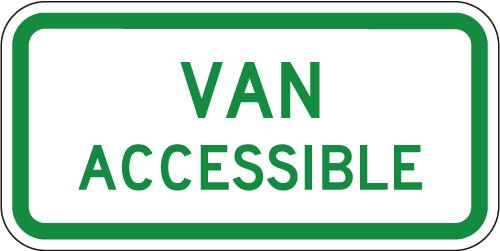
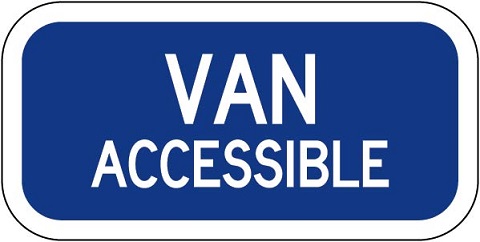
- Yes. ADA regulations require that spaces designated for van-accessible parking display a secondary 'Van Accessible' plaque (R7-8a or R7-8b) mounted directly below the primary accessible parking sign or incorporated on the sign itself. At least one in every six accessible spaces, or fraction thereof, must be van accessible. The van accessible sign communicates the additional clearance available, which is critical for vehicles equipped with lifts or ramps.
- What does the International Symbol of Accessibility look like and where is it used?
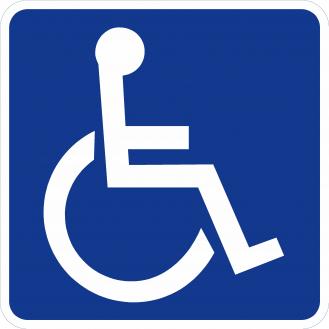
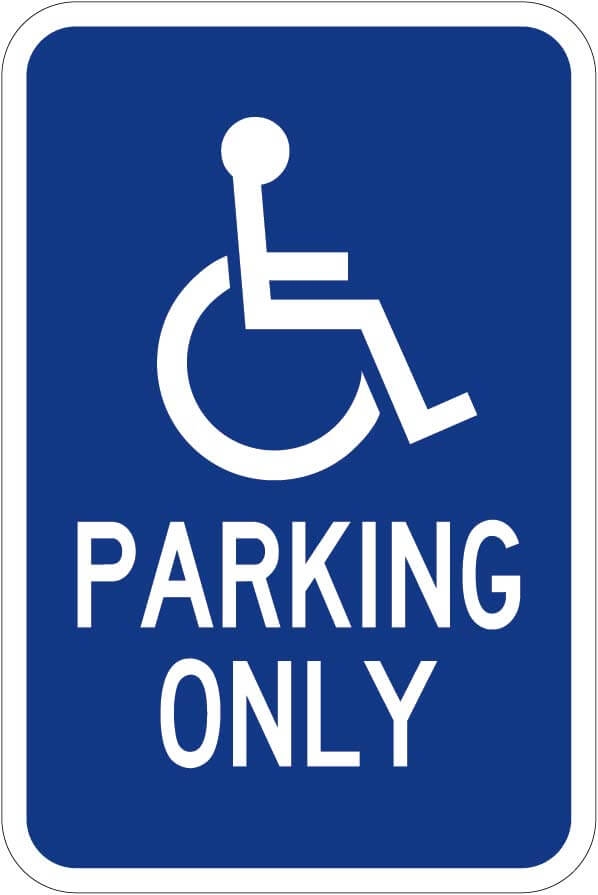
- The International Symbol of Accessibility (ISA) depicts a stylized person in a wheelchair on a blue background. It is required on every accessible parking sign and is widely used on pavement markings at the space and on accessible entrance signs. The D9-6 sign uses this symbol and may also be used at facilities offering accessible ramps and restroom facilities. When van-accessible parking is available nearby, a Van Accessible plaque should accompany the D9-6 sign.
- What material should I choose for outdoor handicap parking signs?
- ADA-compliant handicap parking signs must be made from durable, weather-resistant materials. Reflective aluminum is the industry standard. Engineer Grade reflective sheeting provides reliable visibility for lower-traffic areas. High Intensity sheeting offers greater retroreflectivity for busier lots. Diamond Grade sheeting delivers the highest level of reflectivity and is recommended for high-speed or high-traffic environments. All three grades are available on .080 aluminum blanks with pre-punched mounting holes.
- How many accessible parking spaces am I required to provide?
- The number of accessible spaces depends on the total parking capacity. ADA guidelines specify a sliding scale: lots with 1 to 25 spaces require 1 accessible space; 26 to 50 spaces require 2; 51 to 75 require 3; and so on. At least one accessible space per parking facility must be van accessible. Medical facilities and outpatient facilities follow a different, higher ratio. Always confirm requirements with your local building authority.
- Are state-specific handicap parking signs different from the federal standard?
- Many states have adopted their own handicap parking sign designs that incorporate state-specific fine amounts, permit information, or additional regulatory language. These state-specific signs (such as the Alabama R7-8al, Arizona R7-8az, or California R99) meet both state law and federal ADA requirements. Using the correct state-specific sign ensures full compliance with local enforcement standards while satisfying federal ADA mandates.
Federal ADA Handicap Signage Standards Explained
State-Specific Handicap Parking Sign Requirements
- A reference to the applicable state statute
- State-specific permit or placard language
- Towing warning text
Van Accessible Parking Sign Requirements
- R7-8b: A smaller plaque designed to mount beneath another sign
Handicap Sign Height Requirements and Placement Rules
What Are Handicap Signs Called? Understanding Sign Designations
- R7-8a / R7-8b: Van Accessible signs or plaques, mounted below the R7-8 sign at van-accessible spaces.
- State variants (R7-8al, R7-8az, R7-8ar, R99, etc.): State-specific versions of the R7-8 that include local regulatory language.
- D9-6: The Handicap Accessible Symbol Sign, used at accessible facility entrances, restrooms, and service locations rather than parking spaces.
- AR-731: The Accessible Passenger Loading Zone sign, used at drop-off and pickup areas serving people with disabilities.
ADA Handicap Parking Sign Reflective Material Comparison
All handicap signage from Trafficsigns.com is fabricated on .080 aluminum with pre-punched mounting holes. The table below compares the three available reflective sheeting grades to help you select the right material for your facility.
| Material Grade | Retroreflectivity | Best Use Case | Starting Price (12x18) |
|---|---|---|---|
| Engineer Grade (Reflective) | Standard retroreflectivity; meets minimum MUTCD requirements | Low-speed lots, private facilities, areas with good ambient lighting | From $21.95 |
| High Intensity (Very Reflective) | Higher retroreflectivity than Engineer Grade; exceeds standard MUTCD thresholds | Municipal lots, higher-traffic areas, locations with limited lighting | From $25.95 |
| Diamond Grade (Ultra Reflective) | Highest retroreflectivity available; maximum night and low-light visibility | High-speed access roads, large commercial properties, enforcement-priority zones | From $32.95 |
Shop ADA-Compliant Handicap Parking Signs
All signs are fabricated on reflective aluminum and meet DOT and MUTCD state and federal standards. Available in multiple reflective grades and sizes to suit any facility.
 Guide Signs / Service Signs
Handicap Accessible Symbol Sign - D9-6
From $34.15
Shop on Trafficsigns.com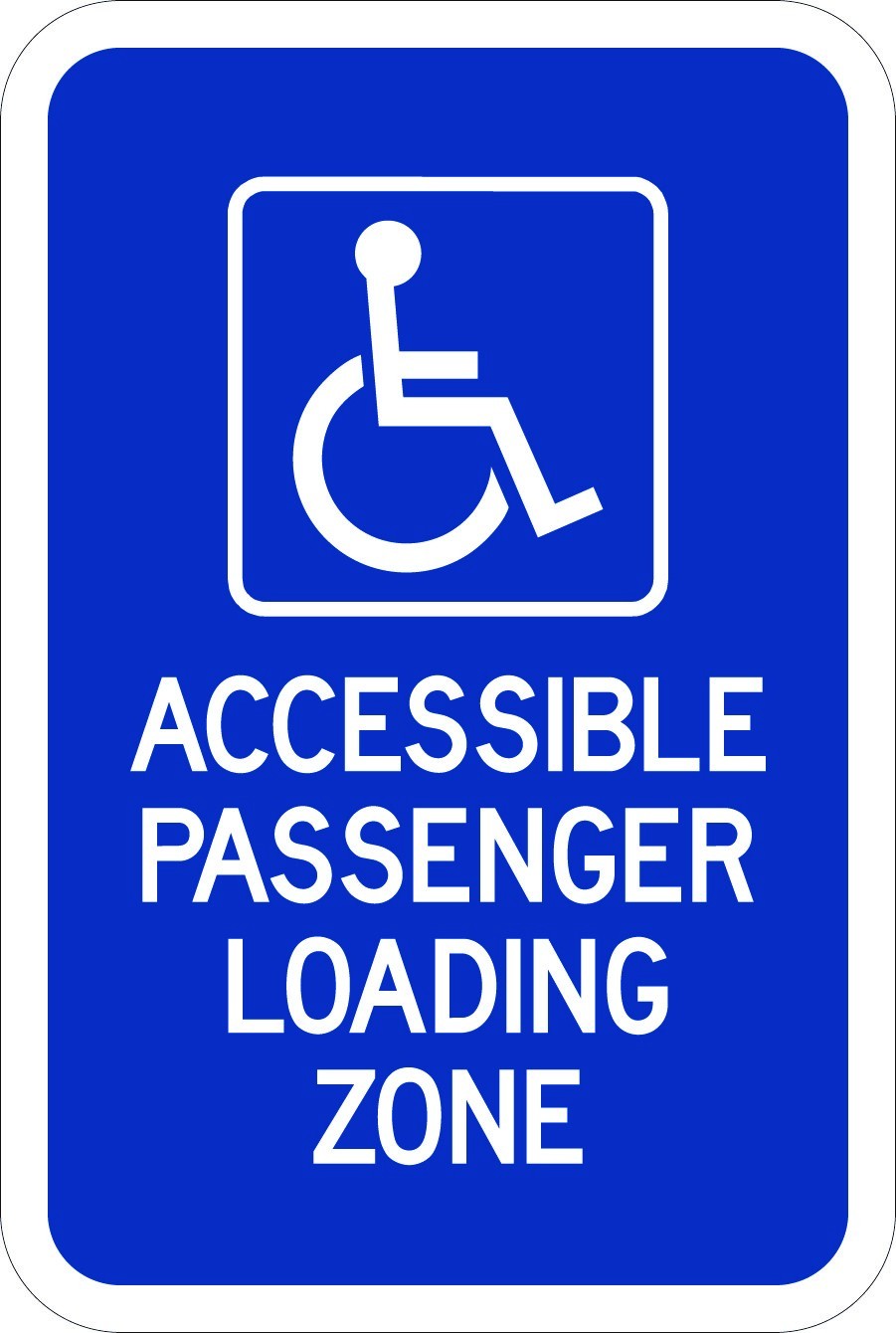
 State-Specific Handicap Parking Signs
California Handicap Parking Sign - R99
From $21.95
Shop on Trafficsigns.comFrequently Asked Questions About Handicap Parking Signage
Why can't you say 'handicapped' anymore? Language around disability has evolved. Many disability advocates and style guides now prefer 'accessible' or 'person with a disability' over 'handicapped,' which some find reductive. That said, 'handicap' persists in official sign designations (R7-8, MUTCD codes) and in legal contexts such as state parking statutes. You will still see both terms used in product names, regulations, and everyday conversation.
Can I use a ground-painted symbol instead of a vertical sign? No. Pavement markings with the ISA are required at accessible spaces but do not substitute for a vertical sign. Both elements are required under ADA standards. The vertical sign must be posted at the head of the space at the correct height.
Do I need a sign and a post, or can I mount to a wall? Either is acceptable as long as the sign is at the front of the space and the bottom edge is at least 60 inches above the ground. Wall-mounted signs are common in parking garages. Post-mounted signs are standard in surface lots.
Order ADA-Compliant Handicap Parking Signs Today
Trafficsigns.com carries the full range of accessible parking signage required for ADA compliance, including van accessible signs, state-specific handicap parking signs, and accessible symbol signs. All signs are fabricated on reflective aluminum and meet DOT and MUTCD standards. Quantity discounts are available on most products, and orders ship fast from our fulfillment team.
Shop Handicap Parking Signs