
A practical guide to traffic sign mounting requirements, hardware, and placement rules for public roads and private property
Traffic sign mounting isn't a one-size-fits-all process. Signs that control traffic, such as stop signs, speed limit signs, and warning signs, must follow the MUTCD on public roads and on private roads open to the public, like those at shopping centers, office parks, and schools. On public roads, the state or local agency decides where they go. Other private property signage is much more flexible. Owners regularly mount no trespassing, private road, and parking signs directly to fences, walls, and buildings using dedicated mounting hardware. This guide breaks down what's allowed, what mounting height rules apply, and which hardware works best for each surface.
Traffic Sign Mounting: Common Buyer Questions
- Can I legally mount a traffic sign on my fence or building?
- Yes, for signs that aren't controlling traffic. Signs like no trespassing, private property, or private parking signs are commonly fence mounted, wall mounted, or building mounted. Traffic control signs (stop signs, yield signs, speed limits) are different. On public roads, only the state or local agency can install them. On private roads open to the public, like those at shopping centers, office parks, or schools, the owner installs them, but they must follow the MUTCD. Parking lots and gated private roads have more flexibility, though state rules may still apply, so check with your state DOT or local agency.
- What hardware do I need to mount a sign on a chain link fence?
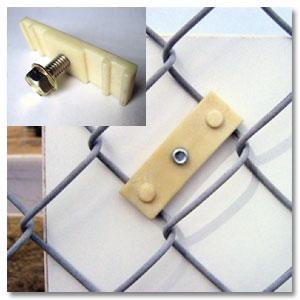
- A basic fence mounting kit, such as the Fence Sign Mounting Hardware, includes two screws, two plastic washers, and two mounting backs. This hardware secures a standard punched-blank sign directly to the fence fabric without needing a separate post or bracket system.
- Do wall mounted or building mounted signs need to meet MUTCD standards?
- Signs that don't control traffic, such as no trespassing or private property signs, don't need to meet MUTCD standards, though many buyers choose reflective aluminum for durability and visibility. Traffic control signs must follow the MUTCD on public roads and on private roads open to the public, wherever they're mounted. Parking lots and gated private roads fall outside the MUTCD's definition, but some states require signs on private property used by the public to follow the state manual, so check with your state DOT or local agency.
- What's the price range for traffic sign mounting hardware?
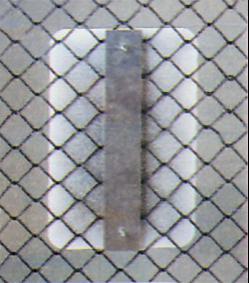
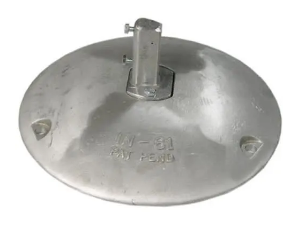
- Basic fence mounting hardware starts around $4.50 per kit, with bulk pricing dropping to roughly $4.05 each at 10 or more units. Chain link fence brackets run from $5.75 to $10.75 depending on sign size, and post mounting bases run from $35.95 to $39.95. Pricing scales down further with quantity discounts on most hardware.
- Can I mount a No Trespassing or Private Property sign without a post?
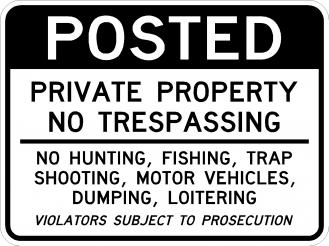
- Yes. Signs like the Private Property No Trespassing Sign and Private Property sign (AR-113) come as standard punched aluminum blanks designed for mounting on fences, walls, or posts. No post is required if you're attaching directly to an existing fence or building surface with the right hardware.
- How long does traffic sign mounting hardware hold up outdoors?
- Aluminum brackets and mounting hardware are built for continuous outdoor exposure and resist rust and corrosion for years. The chain link fence bracket, for example, is made from .080 aluminum specifically to withstand weather without deteriorating like painted steel hardware would.
- What tools do I need to install a fence, wall, or building mounted sign?
- Most installations only require a screwdriver or drill/driver, the mounting hardware itself, and a level to keep the sign straight. Masonry walls may require a masonry bit and anchors, while chain link fences typically just need the bracket and matching nuts and bolts, which are sold separately.
Wall, Fence, and Building Mounting: What's Allowed
The short answer is yes, but the rules depend heavily on what the sign is regulating. If you're posting a private property, no trespassing, or private road sign, mounting it to a fence, exterior wall, or building is standard practice and generally requires no special permit beyond your own property authorization. A sign like Private Road No Thru Traffic is designed for exactly this kind of installation, whether it's bolted to a gate post, a wall near a driveway entrance, or a perimeter fence.
The situation changes once a sign is meant to control traffic. On a public road, stop signs, yield signs, speed limit signs, and warning signs must follow the MUTCD, and only the state DOT or local agency can authorize where they go. A property owner can't install a stop sign on their own fence to control drivers on a public street, even if the fence borders the road. On a private road that's open to the public, such as a shopping center or office park road, the property owner is responsible for traffic control signs, and they must still follow the MUTCD. The section on private property below explains where that line falls.
Traffic Sign Mounting Requirements and Height Standards
One of the most common questions buyers ask is what mounting height is actually recommended for signage. The MUTCD sets the baseline for traffic signs: in rural areas, the bottom of a roadside sign must be at least 5 feet above the edge of the pavement. In business, commercial, or residential areas where parking or pedestrians are likely, the minimum is 7 feet, and any sign above a sidewalk must be at least 7 feet above it. A smaller sign mounted below another sign may sit 1 foot lower.
The MUTCD doesn't set heights for private signs like no trespassing or private property notices, but the same ideas work well on walls and fences. Mounting them roughly 5 to 7 feet above the ground keeps them easy to see from a vehicle or on foot and out of reach of casual vandalism.
A related question buyers often ask is where stop signs should be placed. Under the MUTCD, a stop sign goes on the near side of the intersection, on the right-hand side of the approach, as close to the intersection as practical, and generally no more than 50 feet from the edge of the crossing road. Where there's a marked crosswalk, the sign goes before the crosswalk. If the sign is hard to see in time, a Stop Ahead sign is required in advance. Mounting height follows the same 5-foot rural and 7-foot urban minimums. On public roads, the state DOT or local agency decides where stop signs go, so check with them about local requirements.
Mounting Hardware and Installation Methods
There are several different ways to mount a sign, and the right method depends on the surface and how permanent the installation needs to be:
- Post mounting: The traditional method for public roadway signs, using a U-channel or square post set in the ground or a base. This is standard for MUTCD-regulated signs and for large private signage that needs to stand independently. The MUTCD requires posts within the roadside clear zone to be crashworthy, meaning designed to break away or yield on impact. Where the road agency allows it, traffic signs can also go on existing supports such as signal poles, light poles, or utility poles.
- Fence mounting: Ideal for chain link or wood fences, using dedicated hardware such as the fence sign mounting hardware kit, which attaches directly through the fence fabric with screws, washers, and backing plates.
- Wall or building mounting: Requires masonry anchors, screws, or standoffs depending on the wall material (brick, block, siding, or stucco). This method works well for parking lot walls, building entrances, and gate columns.
- Portable or temporary mounting: For construction zones, events, or short-term use, a portable traffic sign stand lets you set up and relocate a sign without permanent hardware. In work zones, the MUTCD requires the bottom of a sign on a portable support to be at least 1 foot above the road.
When it comes to how to mount a street sign specifically, the process usually involves a post, since street signs need to be visible from multiple directions and mounted at the MUTCD minimum heights. Where the road agency allows it, they can also be mounted on existing poles. If you're fabricating your own sign face, starting with a durable substrate such as 12x12 square aluminum traffic sign blanks gives you a punched, ready-to-mount base compatible with most standard bracket and post hardware.
Private Property vs Public Right-of-Way Placement
Understanding where the MUTCD applies prevents a lot of confusion during installation. The key question isn't who owns the land, but whether the public can drive on it. The MUTCD applies to traffic control signs on public roads and on privately owned roads that are open to the public, regardless of ownership. Here's how that breaks down:
- Public roads: Traffic control signs must follow the MUTCD, and only the state DOT or local agency can authorize them. This applies even if the fence or wall you'd mount to sits on private land bordering the road.
- Private roads open to the public: Roads at shopping centers, office parks, schools, universities, airports, sports arenas, and parks count, even when privately owned. Stop, yield, speed limit, and warning signs there must have the same shape, color, and meaning as on public roads, and the property owner is responsible for installing and maintaining them to MUTCD standards.
- Parking lots and gated roads: Parking lots and garages, including their driving aisles, fall outside the MUTCD's definition, as do private roads closed to the public at all times by gates or guards. Owners have more flexibility here, but some states require signs on private property used by the public to follow the state manual, so check with your state DOT or local agency.
- Non-traffic signs: No trespassing, private property, and similar notices don't control traffic, so the MUTCD doesn't apply. These can be fence mounted, wall mounted, or building mounted wherever they're useful.
Property owners who want to address traffic near their property from a public street (such as a private road no thru traffic notice at their own driveway) should stick to private property signage rather than attempting to install regulatory signs on the public road themselves.
Mounting Options Comparison
Here's how the most common traffic sign mounting methods compare across surfaces, hardware needs, and typical use cases.
| Mounting Surface | Best Use Case | Hardware Required | Typical Height | Permission Needed |
|---|---|---|---|---|
Wood or Metal Post | Public roadways, regulatory and warning signs | U-channel post and bracket | At least 5 ft in rural areas; 7 ft in business, residential, or pedestrian areas (MUTCD) | DOT or local agency on public roads; property owner on private roads open to the public (must follow MUTCD) |
Chain Link or Wood Fence | Private property boundary signage | Fence mounting hardware or brackets | About 5 to 6 ft | Property owner authorization only |
Wall or Building Exterior | Parking lots, private roads, building entrances | Masonry anchors, screws, standoffs | 5 to 7 ft depending on pedestrian traffic | Property owner authorization; check local building code |
Portable Stand | Temporary work zones, events, construction | Weighted base or stand kit | Adjustable; at least 1 ft above the road in work zones (MUTCD) | Local permit may apply in public right-of-way |
Traffic Sign Mounting Hardware and Signage
Whether you're mounting signage to a fence, wall, or post, these products cover the most common traffic sign installation needs.
 Parking & Regulation Signs
Private Property No Trespassing Sign - AR-246
$21.95 - $72.45
Shop on Trafficsigns.com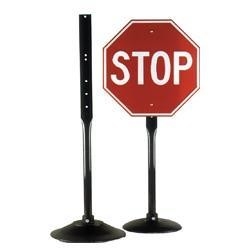
Ready to Mount Your Traffic or Private Property Signs?
From fence brackets to post bases, we carry the traffic sign mounting hardware you need to install signage correctly the first time. Browse our hardware selection and get your signs up on walls, fences, or buildings with confidence.
Shop Mounting Hardware