
Rules, recommendations, and best practices for parking lots, HOAs, apartment complexes, and industrial parks
Private property speed limit traffic signs are not required by state DOT regulations the way public road signage is, but that does not mean they are optional in practice. Property owners, HOA boards, and facility managers who skip this step often face higher liability exposure and more difficulty controlling driver behavior. This guide breaks down when private road speed limit signs make sense, what mph limits to post, and how to choose durable signage that holds up in parking lots, private drives, and industrial parks.
Common Questions About Private Property Speed Limit Signs
- Are speed limit signs legally required on private property?
- No. State DOT and MUTCD requirements apply to public roads, not private property. Parking lots, private roads, and gated communities are not obligated to post speed limits under state traffic law. That said, most insurance carriers, legal advisors, and property management companies recommend posting speed limit traffic signs anyway, since they reduce liability and give property owners a documented, enforceable standard to point to after an incident.
- Can I set my own speed limit on a private road or in a parking lot?
- Yes. Property owners have the authority to set whatever speed limit they consider reasonable for their private road or parking lot. Most parking lots are posted at 5 to 10 mph due to pedestrian traffic, while private roads, apartment complex drives, and industrial parks with more distance between turns typically post 15 to 25 mph.
- Will local police enforce a speed limit posted on private property?
- In most jurisdictions, municipal police do not have authority to issue speeding citations on private property unless the local government has specifically adopted an ordinance extending traffic enforcement to private roads open to public use. Enforcement on private property usually falls to on-site security, property management, or HOA rules with associated fines rather than police radar enforcement.
- Does posting a speed limit sign actually reduce my liability if an accident happens?
- Yes, in a meaningful way. If a vehicle-pedestrian incident occurs in a parking lot or on a private road, courts and insurance adjusters often look at whether the property owner took reasonable steps to manage traffic safety. A visible, reflective, properly mounted speed limit sign is part of that documentation trail. It will not eliminate liability, but it strengthens the argument that the property owner acted responsibly.
- What speed limit should I post in a parking lot, apartment complex, or industrial park?
- For standard retail and apartment complex parking lots, 5 to 10 mph is the industry norm because of pedestrian foot traffic, backing vehicles, and tight turns. Private roads connecting buildings within an industrial park, campus, or larger HOA community typically run 15 to 25 mph depending on road length, sight lines, and whether pedestrians or cyclists share the roadway.
- Does an HOA need special authorization to install speed limit signs on private roads?
- Generally no, as long as the roads are entirely private and not dedicated to public use. Most HOAs can install HOA traffic signs and private road speed limit signs at their own discretion through the association's governing rules. If any portion of the roadway is visible from or connects to a public street, it is worth checking local sign ordinances before installation.
- What size and material should I choose for a private road or parking lot speed limit sign?
- A 12 in x 18 in engineer grade reflective aluminum sign is the standard choice for most parking lots and private drives, offering solid nighttime visibility at a lower cost. Properties with higher traffic speeds, longer sightlines, or nighttime activity, such as industrial parks or apartment complexes with long entry roads, often upgrade to high intensity or diamond grade reflective sheeting for better visibility from a distance.
Do Private Roads and Parking Lots Legally Require Speed Limit Signs?
State traffic codes and the MUTCD govern public roadways, which is why private property is not subject to the same legal mandate for signage. However, that lack of a legal requirement is exactly why so many liability claims on private property come down to a documentation gap. A parking lot, apartment complex driveway, or industrial park access road with no posted speed limit gives a plaintiff's attorney an easy argument: the property owner never established a safe standard for vehicle speed.
Most commercial property managers, HOA boards, and industrial park operators treat private property speed limit traffic signs as standard risk management, similar to how they handle parking lot traffic signs or wayfinding. Pairing speed limit signage with broader parking regulation signage at entrances and internal intersections creates a consistent set of rules that both visitors and residents can follow, and that security staff can enforce.
Setting the Right Speed Limit for Your Property
The right speed limit depends on how the space is used. Retail parking lots, apartment complex lots, and mixed-use developments with heavy pedestrian foot traffic should post 5 to 10 mph, since drivers need time to react to people walking between rows of parked cars. Private roads connecting buildings in an industrial park, or longer HOA community drives with fewer pedestrian crossings, can reasonably support 15 to 25 mph.
A standard Speed Limit Sign R2-1 works well for most private road applications and matches the format drivers already recognize from public roadways, which improves compliance. Properties with different daytime and nighttime traffic patterns, such as gated communities with active evening security patrols, sometimes add a Night Speed Limit Sign R2-3 to reinforce lower speeds after dark. If your property includes a school, daycare, or shared playground area within an apartment complex or HOA, a School Speed Limit Sign S5-1 near that section adds an extra layer of caution that residents recognize immediately.
Installation, Enforcement, and Best Practices for Private Property Signage
Placement matters as much as the mph number itself. Speed limit traffic signs should be installed at every entrance to the property, at major internal intersections, and again after any long straight stretch where drivers tend to accelerate. Mounting height should match public road conventions, typically 7 feet from the bottom of the sign to the ground, so the sign reads clearly to drivers without blocking pedestrian sightlines.
Many properties reinforce speed limit signage with complementary private road regulations. A Private Road No Thru Traffic sign at the entrance discourages cut-through traffic that tends to speed, while a Private Property No Trespassing Sign near gated or restricted sections clarifies that the roadway is not open to general public use, which supports the property owner's ability to set and enforce its own traffic rules. During temporary construction, resurfacing, or landscaping projects on private roads, a Reduced Speed Limit Ahead roll-up sign gives drivers advance notice without requiring a permanent post installation.
For durability, engineer grade reflective aluminum is sufficient for most parking lots and apartment complex drives with standard lighting. Industrial parks and longer private roads with higher approach speeds benefit from high intensity or diamond grade sheeting, which reflects more light back to headlights and gives drivers more reaction time at night.
Reflective Grade Comparison for Private Property Speed Limit Signs
All private property speed limit traffic signs are made from durable aluminum, but the reflective sheeting grade changes visibility and price. Here is how the three grades compare based on actual catalog pricing across common sizes.
| Reflective Grade | Reflectivity Level | Best Use Case | Typical Price Range |
|---|---|---|---|
| Engineer Grade | Standard reflective, visible at typical vehicle speeds and lighting | Parking lots, apartment complex drives, low-traffic private roads | $21.95 - $86.25 depending on size |
| High Intensity | Very reflective, brighter response to headlights at greater distance | Industrial parks, HOA communities, higher-speed private roads | $25.95 - $108.75 depending on size |
| Diamond Grade | Ultra reflective, maximum visibility in low light and at long range | High-speed private roads, industrial entrances, poorly lit access roads | $58.25 - $123.75 depending on size |
Speed Limit and Private Property Signs for Every Application
Whether you are managing an apartment complex, an HOA community, or an industrial park, these signs cover the most common needs for private road speed limit signs, parking lot signage, and boundary enforcement.
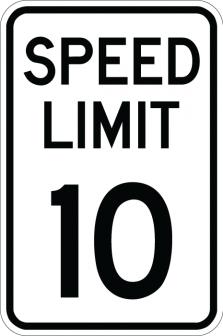
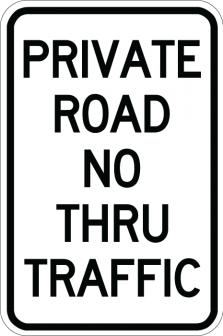 Private Road Traffic Signs
Private Road No Thru Traffic (AR-706)
$21.95 - $45.25
Shop on Trafficsigns.com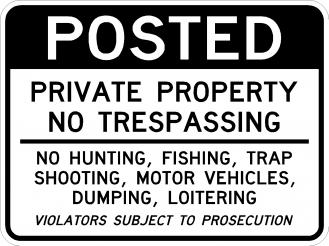 Private Property Traffic Signs
Private Property No Trespassing Sign (AR-246)
$21.95 - $72.45
Shop on Trafficsigns.com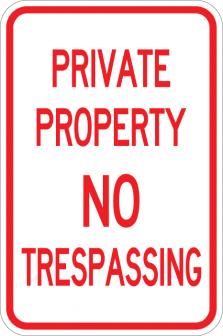 Private Property Traffic Signs
Private Property No Trespass (AR-119)
$21.95 - $25.95
Shop on Trafficsigns.com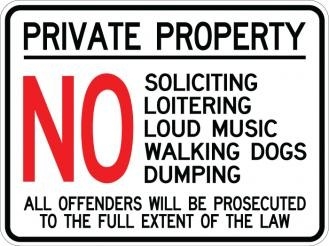 Private Property Traffic Signs
Private Property No Etc Sign (AR-113)
$33.25 - $72.45
Shop on Trafficsigns.comProtect Your Property and Reduce Liability with Proper Signage
Posting clear, durable speed limit and private property traffic signs is one of the simplest steps a property owner, HOA board, or facility manager can take to improve driver safety and limit exposure to liability claims. Browse our full selection of reflective aluminum signs built to DOT and MUTCD construction standards, sized for parking lots, private roads, and industrial parks of any scale.