
A closer look at the data behind one of the most debated traffic control devices on American roads
Stop Sign Buying Questions, Answered
- What material are your stop signs made from, and how long will they last outdoors?
- Our stop signs and related traffic control signage are built on aluminum standard punched blanks with reflective sheeting. We offer three reflectivity grades: engineer grade (standard reflective, best for lower-budget and low-speed installs; suitable for stop and other white/red regulatory signs, but not permitted by the MUTCD for yellow warning signs), high intensity (brighter, longer-lasting visibility for busier roads), and diamond grade (maximum reflectivity for highways and high-risk intersections). All grades are weather resistant and hold up through sun, rain, and temperature swings for years of outdoor service.
- What sizes should I order for a stop-controlled intersection?
- The MUTCD sets the STOP sign at 30 x 30 inches on single-lane conventional roads and 36 x 36 inches on multi-lane roads and expressways, with 30 inches as the minimum and 48 x 48 inches as the oversized option. The only reduction the Manual allows is up to 6 inches in alleys with restrictive physical conditions. If you are unsure which size fits your approach, our team can help you match it to the road type and number of lanes.
- Do you offer bulk pricing for multiple signs on a corridor or subdivision project?
- Yes. Most of our signage, including speed and intersection warning signs, is priced on tiered quantity breaks starting around 4 units and stepping down further at 7, 16, and 50 units. Municipalities and HOAs ordering signage for an entire neighborhood or corridor typically see meaningful per-unit savings at the higher tiers.
- How fast is production and shipping on standard signs?
- Standard reflective signage on aluminum blanks ships quickly since it is produced to stock MUTCD specifications rather than custom printed each time. Roll-up and construction-grade signs follow a similar production timeline. Exact transit time depends on your location and shipping method selected at checkout.
- How do I mount a stop sign once it arrives?
- Most agencies mount stop signs on a U-channel post or a breakaway base for permanent installations. For temporary or work zone use, a portable stand or roll-up frame works better and allows the sign to be repositioned as conditions change. We carry mounting hardware and blanks to match either approach.
- Can I get an all-way stop configuration instead of a standard two-way stop?
- Yes. When cross streets carry similar traffic volumes, engineers may recommend all-way stop control rather than a standard two-way stop, since it clarifies right-of-way for all approaches and reduces the ambiguity that leads to crashes at confusing intersections. Under the MUTCD, each approach gets a standard STOP sign (R1-1) with an ALL-WAY plaque (R1-3P) mounted below it. Plaques reading "4-WAY" or "3-WAY" are not permitted.
- How should I care for reflective signs after installation?
- Rinse road grime and dust off periodically with water and a soft cloth to preserve reflectivity, and avoid abrasive cleaners that can scratch the sheeting. Inspect mounting hardware annually for rust or looseness. Reflective sheeting gradually loses brightness over its service life, so signs showing dull or faded reflectivity should be scheduled for replacement to keep intersection visibility up to standard.
The Data Behind Stop Sign Effectiveness
MUTCD Stop Sign Warrants
Purpose, Shape, Material, and History: What Every Driver Should Know
Traffic Calming Requires More Than a Stop Sign
Communities looking to address speeding on a residential street often start with traffic calming signage placed ahead of the intersection to give drivers earlier notice to slow down, rather than relying on the stop sign alone to do that work reactively. For projects that need a complete approach, from advance warning to the stop-controlled point itself, a Traffic Calming Kit bundles the signage typically recommended by traffic engineers for corridor-wide speed management.
Reflective Grades and Roll-Up Materials for Speed and Stop Signage
| Material Option | Reflectivity | Typical Use | Approx. Outdoor Lifespan | Best For |
|---|---|---|---|---|
Engineer Grade | Standard reflective, meets minimum MUTCD requirements | Permanent stop and other white/red regulatory signs on local roads. Not permitted for yellow warning signs. | 7-10 years | Residential streets and budget-conscious installs |
High Intensity | Enhanced brightness for nighttime visibility | County and state roadways with moderate to high traffic | 10 years | Roads with higher traffic volume or speed |
Diamond Grade | Maximum reflectivity, day and night | Highways, high-crash intersections, poor sightline locations | 12 years | High-risk intersections and DOT-managed highways |
Standard/Premium Mesh (Roll-Up) | Non-reflective (daytime use only) up to high intensity mesh. Signs used at night must be retroreflective or illuminated. | Temporary work zone speed and stop control | Up to 2 years outdoor | Construction zones, portable use like the Reduced Speed Limit Ahead Roll-Up Sign |
Signage That Supports Stop-Controlled Intersections
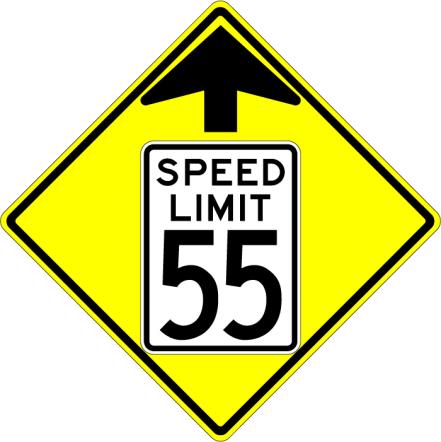 Warning Signs / Intersection Signs
Speed Reduction Ahead Sign - W3-5
$44.25 - $256.95
Shop on Trafficsigns.com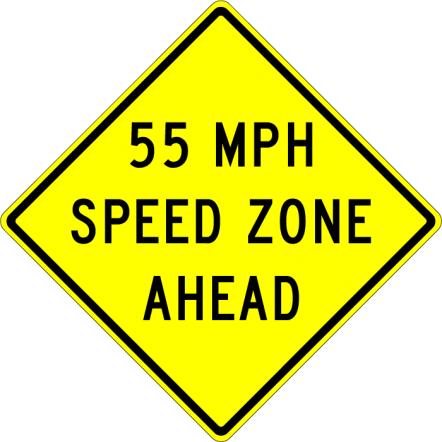 Warning Signs / Intersection Signs
Speed Zone Ahead Sign - W3-5A
$44.25 - $256.95
Shop on Trafficsigns.com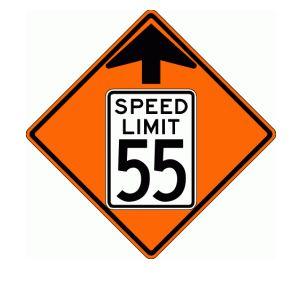 Warning Signs / Intersection Signs
Reduced Speed Limit Ahead Roll-Up Construction Signs - W3-5-RU
$44.55 - $213.75
Shop on Trafficsigns.com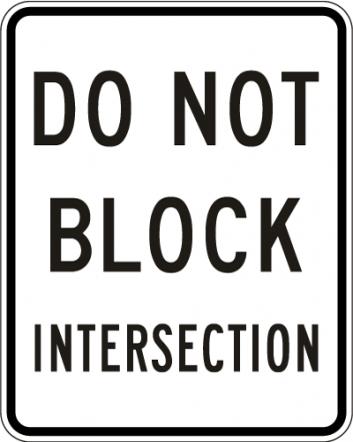
Build a Safer, MUTCD-Compliant Intersection
Whether you are addressing a documented crash history, responding to a stop sign warrant study, or upgrading an aging intersection, Trafficsigns.com carries the reflective signage, mounting hardware, and complete kits needed to do it right the first time.
Shop Stop-Controlled Intersection Kits