
Everything HOA boards, property managers, and community associations need to know about selecting, installing, and maintaining compliant traffic signs for private roads and neighborhoods.
HOA Traffic Sign Questions: What Buyers Need to Know
- What material should HOA traffic signs be made from?
- HOA traffic signs should be made from reflective aluminum. Aluminum sign blanks resist rust, warping, and UV degradation, making them the standard choice for outdoor residential and private road applications. Reflective sheeting grades range from Engineer Grade (standard reflectivity for low-speed areas) to High Intensity (very reflective, suitable for most community roads) to Diamond Grade (ultra-reflective, recommended for high-traffic entry points or areas with limited lighting). All grades meet DOT and MUTCD state and federal standards.
- What sizes are available for HOA stop signs and speed limit signs?
- Standard HOA stop signs are typically 24x24 inches for low-speed private roads, though 30x30 and 36x36 inch options are available for higher-visibility needs. Speed limit signs for private communities commonly come in 12x18 and 18x24 inch sizes. The correct size depends on the posted speed, road width, and sight distance within your community. Consulting MUTCD size guidelines is recommended, even for private roads, to maintain consistency and defensible compliance.
- Can HOA signs be customized with community names or specific rules?
- Yes. Custom reflective aluminum signs can be printed with community-specific text, logos, or rules. Options include custom square, diamond, and rectangular formats in multiple sizes. A pre-production proof is provided for approval before manufacturing begins, so boards can confirm layout, wording, and design before signs are produced. This is especially useful for neighborhood entrance signs, private road notices, and parking regulation signs unique to your community.
- What are the pricing and bulk discount options for HOA sign orders?
- Pricing varies by sign type, size, and reflective material grade. Standard signs such as a Private Road No Thru Traffic sign start around $21.95, while custom signs start from $27.85 for a 12x12 Engineer Grade sign. Bulk pricing tiers kick in at quantities of 2, 3, 6, 11, and 20 units, with discounts increasing at each level. For example, custom diamond signs in 24x24 drop from $89.95 each down to $59.37 each at a quantity of 20. Large community orders benefit significantly from these volume tiers.
- How long does production and shipping take for HOA traffic signs?
- Production time varies depending on whether you are ordering standard stock signs or custom-printed signs. Standard reflective aluminum signs typically ship faster, while custom signs require a proof approval step before production begins. It is advisable to factor in proof review time when planning a sign installation project. Contact the Trafficsigns.com team directly for current lead times and expedited options if your community has an urgent need.
- How are HOA traffic signs installed and mounted?
- Most reflective aluminum HOA signs come with 3/8-inch pre-punched holes at the corners, making them compatible with standard U-channel sign posts, square steel posts, or breakaway mounting hardware. Post depth and anchor style should account for local soil conditions and wind load requirements. For private roads, the HOA is responsible for ensuring posts are placed at the correct height (typically 7 feet from the ground to the bottom of the sign in pedestrian areas) and are clearly visible from the appropriate distance.
- Do HOA traffic signs need to meet MUTCD standards even on private property?
- While the Manual on Uniform Traffic Control Devices (MUTCD) is technically a federal standard for public roads, most liability attorneys and insurance carriers recommend that HOA boards follow MUTCD guidelines on private roads as a best practice. Using MUTCD-compliant signs, including proper colors, retroreflective materials, and sizing, demonstrates due diligence and supports the HOA's legal standing if a traffic incident occurs on community property. All signs sold at Trafficsigns.com that are described as meeting DOT and MUTCD standards use approved reflective materials and conform to recognized design specifications.
Understanding HOA Traffic Sign Requirements for Private Communities
Many states, including California and Texas, have adopted provisions that extend vehicle codes to private roads open to general public use. In those cases, HOA stop signs and speed limit signs must conform to state-approved specifications to be legally enforceable by local law enforcement. Even in states where private road signage is not directly regulated, courts have consistently held HOAs to a reasonable care standard, meaning that inadequate or nonexistent signage can expose an association to liability after an accident.
The safest approach for any HOA board is to treat private community traffic signs with the same seriousness as public road signs. That means using reflective aluminum signs in the correct sizes and colors, posting speed limits that reflect actual road conditions, and placing stop signs where sight distances or intersection geometry create genuine hazards.
For communities with unique needs, such as a gate entrance that requires a welcome sign or a shared driveway marked as a private road, custom parking and regulation signs offer the flexibility to communicate community rules clearly while maintaining a professional appearance.
Do You Legally Have to Stop at Stop Signs on Private Property?
In states where vehicle codes do not extend to private roads, the HOA's own rules carry the weight of enforcement. Violation of posted signs can result in fines, towing, or other community-level consequences as outlined in the CC&Rs. The key factor in either scenario is that the stop sign must be properly installed. A sign that does not meet minimum reflectivity standards, is posted at the wrong height, or uses nonstandard colors may undermine enforcement.
For communities relying on local police for enforcement, it is worth contacting your jurisdiction directly to confirm what specifications are required. Most departments will refer to MUTCD standards, which specify that regulatory signs like stop signs must use retroreflective red backgrounds with white legend. Meeting those standards with compliant custom reflective aluminum signs is the most straightforward way to ensure your community's signs are enforceable.
The 4 Categories of Traffic Signs and How They Apply to HOA Communities
Regulatory Signs tell road users what they must or must not do. In HOA settings, this includes stop signs, speed limit signs, no parking signs, and private road signs. These signs use specific color combinations (red for stop, white with black text for speed limits) and must be retroreflective. HOA speed limit signs and stop signs fall into this category.
Warning Signs alert road users to conditions or hazards ahead. In a residential community, these might include pedestrian crossing signs, playground ahead signs, or curve warning signs. Warning signs are typically yellow with black legend in a diamond shape.
Guide Signs provide directional and informational guidance. Neighborhood entrance signs, street name signs, and community map signs fall into this category. Guide signs are typically green with white text for standard destinations.
Temporary Traffic Control Signs are used during construction, maintenance, or special events. Communities undergoing road repairs or utility work typically use orange signs in this category.
Understanding these categories helps HOA boards select the right signs for each situation. A private road notice is a regulatory sign and should use approved materials. A pedestrian warning near a playground is a warning sign and should follow diamond-shape and yellow-color conventions. Ordering the correct sign type for each use case is both a safety best practice and a compliance consideration.
HOA Parking Signs and Parking Regulation Requirements
Most towing companies and local ordinances require that parking restriction signs be posted at the entrance to any area where towing is authorized, with specific language such as the towing company's name and phone number in some jurisdictions. Checking local requirements before ordering parking signs is essential, particularly in California and Texas where parking enforcement on private property is closely regulated.
For communities that want to display rules beyond standard parking text, custom parking signs allow boards to add community-specific wording, hours of restriction, and contact information directly to the sign face. All custom signs are produced on reflective aluminum with pre-punched mounting holes, making installation straightforward on standard post hardware.
Reflectivity is equally important for parking signs as it is for regulatory traffic signs. A parking restriction sign that is not visible at night provides inadequate notice to drivers and weakens the HOA's position if a towing dispute arises. High Intensity or Diamond Grade reflective sheeting ensures maximum visibility in all lighting conditions.
Can You Put Up Your Own Street Signs? What HOAs Need to Know
For communities that want to install standard street name signs or neighborhood entrance signs, selecting compliant materials from the start saves cost and effort later. Using retroreflective aluminum signs in standard MUTCD-compliant sizes and colors means the signs will meet any future public road requirements if the HOA's streets are eventually dedicated to the municipality.
Private road traffic signs should never be placed within public right-of-way without the appropriate permits. If an HOA wants to add signage near a public street intersection, coordinating with the local traffic engineering department is required. For signs entirely within private community property, the HOA board typically has full authority to determine placement and content, subject to any state or local codes that apply to private roads open to public traffic.
For communities ordering multiple sign types, browsing the full selection of road signs and guide signs provides a practical starting point for identifying all the categories needed across a neighborhood.
Reflective Materials for HOA Traffic Signs: Choosing the Right Grade
Three grades are available for HOA traffic signs on Trafficsigns.com:
Engineer Grade is the baseline reflective material for most low-speed residential applications. It provides adequate nighttime visibility for internal community roads where speeds are 15 mph or lower and lighting conditions are reasonable.
High Intensity offers significantly greater reflectivity and is recommended for community entrance roads, collector streets within larger HOA communities, and any location where drivers may be approaching at higher speeds or from greater distances. High Intensity sheeting meets all DOT and MUTCD standards for retroreflectivity.
Diamond Grade is the highest-performance option, producing ultra-bright retroreflection that is visible from long distances. This grade is appropriate for entry gates, arterial roads within large communities, and any sign where maximum visibility is a priority regardless of cost.
For most HOA applications, High Intensity provides the best balance of performance and cost. Diamond Grade is worth the additional investment for stop signs at blind intersections, neighborhood entrance signs seen from public roads, and any sign where a driver's reaction time at night is a genuine safety consideration.
All reflective aluminum signs from Trafficsigns.com are produced on standard punched aluminum blanks with radius corners and 3/8-inch pre-punched holes. Custom signs include a pre-production proof for board approval before manufacturing begins.
What Color Are Mandatory Traffic Signs? HOA Compliance Reference
Red is reserved exclusively for prohibitory and stop signs. Stop signs, do not enter signs, and wrong way signs all use red backgrounds. No parking signs with red elements communicate prohibition of parking.
White backgrounds with black text are used for regulatory signs that impose requirements, including speed limit signs, turn restriction signs, and most parking regulation signs. These signs communicate rules that drivers are expected to follow.
Yellow is the standard color for warning signs, indicating hazards or conditions that require caution. Diamond-shaped yellow signs cover pedestrian crossings, playground areas, curves, and similar hazards common in residential communities.
Green is used for informational and guide signs, including street name signs and directional signs.
Orange is used for temporary traffic control, such as construction zone signs and detour notices.
For HOA boards ordering signs, matching color to function ensures that residents and visitors interpret signs correctly and that the community's signage meets the visual standards that support enforceability. Custom signs in any of these colors are available in reflective aluminum formats through the custom reflective aluminum sign options at Trafficsigns.com.
HOA Traffic Sign Reflective Grade Comparison
Selecting the right reflective material ensures your community's signs are visible day and night. Use this comparison to match reflectivity grade to your specific HOA application.
| Feature | Engineer Grade | High Intensity | Diamond Grade |
|---|---|---|---|
| Reflectivity Level | Standard | Very Reflective | Ultra Reflective |
| Meets DOT/MUTCD Standards | Yes | Yes | Yes |
| Best For | Low-speed internal roads (under 15 mph) | Community entrance roads, collector streets | High-traffic entries, blind intersections, arterials |
| Typical HOA Use | Internal parking areas, cul-de-sacs | Stop signs, speed limit signs on main community roads | Entrance gates, high-visibility stop signs |
| Nighttime Visibility | Adequate for well-lit areas | Good in low-light conditions | Excellent in all conditions including unlit roads |
| Price Range (12x18 example) | Starting ~$21.95 | Starting ~$25.95 | Starting ~$45.95 |
| Lifespan (Outdoor) | 7+ years typical | 10+ years typical | 10+ years typical |
HOA Traffic Signs Available at Trafficsigns.com
Browse these commonly ordered signs for HOA communities, private roads, and residential neighborhoods. All signs are produced on reflective aluminum and meet DOT and MUTCD standards.
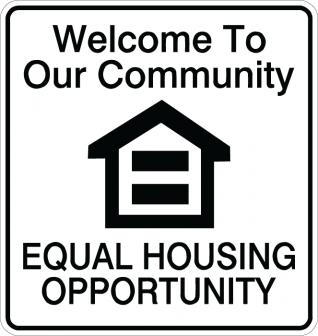 Neighborhood Entrance Signs
Welcome To Our Community Sign - AR-521
From $34.15
Shop on Trafficsigns.com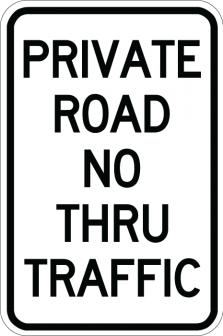 Private Road Traffic Signs
Private Road No Thru Traffic Sign - AR-706
From $21.95
Shop on Trafficsigns.com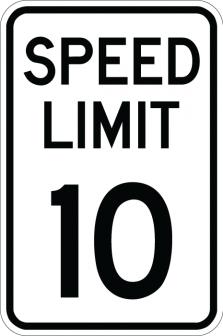
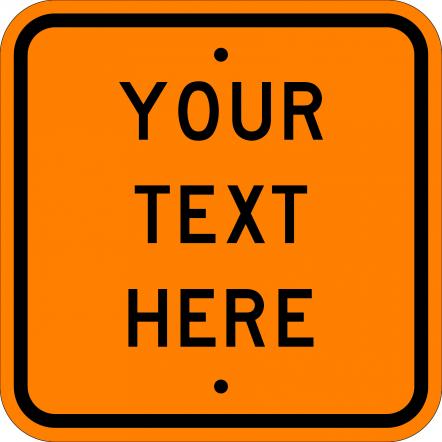 Custom HOA Signs
Custom Orange Reflective Aluminum Square Sign - CS-S-O
From $27.85
Shop on Trafficsigns.com Custom HOA Warning Signs
Custom Reflective Aluminum Diamond Sign 24x24 - CS-D-24-24
From $55.95 (Engineer Grade)
Shop on Trafficsigns.comOrder Compliant HOA Traffic Signs for Your Community
Trafficsigns.com carries the full range of reflective aluminum traffic signs needed for HOA communities, private roads, and residential neighborhoods. From standard stop signs and speed limit signs to fully custom community-specific signage, every sign ships on durable aluminum with the reflective grade you choose. Volume discounts are available for community-wide sign programs. Get started today and ensure your neighborhood has the compliant, professional signage it needs.
Shop HOA Traffic Signs