
Everything you need to know about highway sign types, MUTCD classifications, and how interstate highway signs are numbered and designed.
Buyer Questions About Highway Signs
- What materials are highway signs made from, and how long do they last outdoors?
- Highway signs sold at TrafficSigns.com are fabricated on .080 aluminum blanks with reflective sheeting bonded to the face. Engineer Grade reflective sheeting is rated for standard roadside use and performs well for 7-10 years. High Intensity sheeting offers greater retro-reflectivity for faster roads and higher-traffic corridors. Diamond Grade sheeting delivers the highest level of retro-reflectivity, meeting the most demanding DOT and MUTCD requirements. All three grades resist rust, corrosion, UV fading, and harsh weather without delaminating.
- What sizes are available for interstate highway signs?
- Interstate route signs like the M1-1 are available in 24x24 and 30x24 inch formats. Interstate Business Loop and Spur signs (M1-2, M1-3 series) are stocked in 24x24 and 30x24 inch sizes. Guide signs such as the D5-12 Interstate Oasis Exit Sign come in 18x18 and 36x36 inch formats. Size selection generally depends on posted speed limit and roadway classification per MUTCD guidelines. Higher-speed roads require larger sign faces for adequate legibility distance.
- Do these signs meet DOT and MUTCD standards?
- Yes. All High Intensity and Diamond Grade signs sold on TrafficSigns.com meet DOT and MUTCD state and federal guidelines. Signs are produced on standard prepunched aluminum blanks with radius corners and 3/8-inch mounting holes, conforming to standard installation hardware. Engineer Grade signs meet baseline federal reflectivity standards and are appropriate for most off-highway, low-speed, and private roadway applications.
- Are bulk discounts available on highway signs?
- Yes. Volume pricing tiers apply to most highway sign SKUs. For example, the Interstate Route Sign M1-1 in Engineer Grade starts at $44.25 per unit and drops to $42.48 at 4 units, $40.71 at 7 units, $38.94 at 16 units, and $37.17 at 50 units. Diamond Grade versions follow a similar tiered structure. Contact TrafficSigns.com for project-quantity quotes on large orders.
- How are the signs shipped, and what is the typical turnaround time?
- Standard in-stock signs are processed and shipped promptly. Custom or printable sign configurations may require additional production time. Signs are shipped flat to prevent damage to the reflective sheeting. Specific lead times are displayed at checkout or available from the sales team for time-sensitive projects.
- What mounting hardware is compatible with these highway signs?
- All signs come with standard 3/8-inch prepunched holes and radius corners, which are compatible with U-channel posts, square tube posts, and breakaway mounting systems commonly used for roadside installation. The prepunched pattern follows MUTCD-standard hole placement so signs mount directly to conventional post hardware without modification.
- Can I order a highway sign with a custom route number or digit count?
- Yes. The interstate route sign series includes options for both standard and 3-digit route numbers. The M1-1W (3-digit Interstate Route Sign) and M1-2W (3-digit Interstate Business Loop Sign) are specifically designed for routes requiring three-digit numbering. Select the correct SKU based on your route number length to ensure the sign layout matches MUTCD proportions.
What Are Highway Signs?
How Are Highway Signs Classified?
Regulatory signs communicate traffic laws and rules that drivers must obey. They typically use a white background with black, red, or green text and symbols. The most recognized regulatory signs include stop signs (red octagon), yield signs (red and white downward-pointing triangle), speed limit signs (white rectangle), and do not enter signs (red and white).
Warning signs alert drivers to potentially hazardous conditions ahead, including sharp curves, intersections, railroad crossings, school zones, and pedestrian crossings. Most use a yellow background with black text or symbols and are typically diamond-shaped. School zone signs, such as the S4-2 'When Children Are Present' sign, use a fluorescent yellow-green background to improve conspicuity in areas where children may be present.
Guide signs provide navigational and informational assistance to drivers. They are divided into subcategories including route marker signs, destination signs, service signs, and recreation and cultural interest signs. Interstate route markers (M1-1), business loop signs (M1-2), and oasis exit signs (D5-12) are all guide signs. Interstate highway signs within this category use the distinctive shield shape on a blue or green background depending on the route designation.
Color is the fastest visual cue a driver processes. The MUTCD assigns specific meanings to each highway sign color:
- Red: Stop, prohibition, or danger (stop signs, do not enter signs, wrong way signs)
- Yellow: General warning (standard warning signs)
- Fluorescent yellow-green: Warning in pedestrian, bicycle, and school zones
- White: Regulatory information (speed limits, lane controls)
- Green: Guide information for highway travel (directional signs, exit signs)
- Blue: Motorist services (gas, food, lodging, rest areas)
- Brown: Recreational areas, parks, and cultural sites
- Orange: Temporary traffic control and construction zones
- Coral: Incident management signs and emergency evacuation routes
Shape reinforces color coding so that signs remain recognizable even when visibility is reduced:
- Octagon: Stop
- Triangle (inverted): Yield
- Circle: Railroad advance warning and railroad crossing signs
- Pentagon (pointing up): School advance and school crossing
- Diamond: Warning
- Rectangle: Regulatory or guide
- Shield: Route marker for interstate, US, and state highways
- Pennant: No passing zone
How Are Interstate Highway Signs Numbered and Designed?
Two-digit even-numbered interstates run east-west. Numbers increase from south to north, so I-10 runs along the southern tier of states and I-90 runs along the northern tier. Two-digit odd-numbered interstates run north-south, with numbers increasing from west to east. I-5 runs along the Pacific Coast, while I-95 runs along the Atlantic Coast.
Business routes are designated segments of the highway system that divert from the main interstate to pass through the commercial core of a city or town. They are marked with the standard interstate shield supplemented by a 'Business' banner. The M1-2 (Interstate Business Loop) marks a route that loops through a business district and reconnects to the main interstate at both ends. The M1-3 (Interstate Business Spur) marks a route that enters a business district but does not reconnect, functioning as a dead-end or terminal route.
Interstate highway signs are fabricated according to MUTCD specifications that define panel dimensions, letter height, font (Highway Gothic or Clearview), reflective sheeting grade, and mounting hardware. The distinctive red, white, and blue interstate shield was standardized in the 1950s and remains one of the most recognized symbols in American transportation. All interstate route marker signs sold at TrafficSigns.com are produced on reflective aluminum with prepunched mounting holes, conforming to current MUTCD standards.
What Are the 4 Types of Road Signs?
1. Regulatory Signs: These signs communicate laws and rules that drivers must follow. They cover speed limits, right-of-way, turning restrictions, lane controls, and prohibited movements. Violating a regulatory sign is a traffic offense.
2. Warning Signs: These signs alert drivers to hazards, changes in road conditions, or unexpected situations ahead. Common examples include curve warning signs, merge signs, pedestrian crossing signs, railroad crossing advance warning signs, and the 'When Children Are Present' supplemental sign used in school zones.
3. Guide Signs: These signs provide directional, distance, and destination information. The interstate highway sign system falls almost entirely within this category. Subcategories include route markers, distance signs, exit signs, service signs (blue background), and recreation signs (brown background).
4. Temporary Traffic Control Signs: These orange signs are deployed in work zones and construction areas to redirect traffic, warn of lane shifts, and indicate reduced speed limits. They use the same shapes and color conventions as permanent signs but with an orange background to signal their temporary nature.
Highway Sign Reflective Sheeting Grades Compared
Choosing the correct reflective sheeting grade is as important as selecting the right sign design. The MUTCD specifies minimum retroreflectivity levels for different roadway classifications and speed environments. TrafficSigns.com offers three grades across most highway sign SKUs.
| Feature | Engineer Grade | High Intensity | Diamond Grade |
|---|---|---|---|
| Reflectivity Level | Standard | Very Reflective | Ultra Reflective |
| MUTCD Compliance | Baseline federal standard | Meets DOT and MUTCD requirements | Meets DOT and MUTCD requirements |
| Best Use | Low-speed roads, private property, parking areas | Arterials, collector roads, secondary highways | High-speed interstates, freeways, critical safety signs |
| Night Visibility | Good | Very Good | Excellent |
| Typical Lifespan | 7-10 years | 7-10 years | 10+ years |
| Sample Price (M1-1, 24x24) | $44.25/unit | $52.35/unit | $73.35/unit |
| Volume Discount (50+ units, M1-1) | $37.17/unit | $43.97/unit | $61.61/unit |
Shop Highway Signs at TrafficSigns.com
Browse MUTCD-compliant highway signs fabricated on reflective aluminum. All signs include prepunched mounting holes and radius corners. Volume pricing is available on most SKUs.
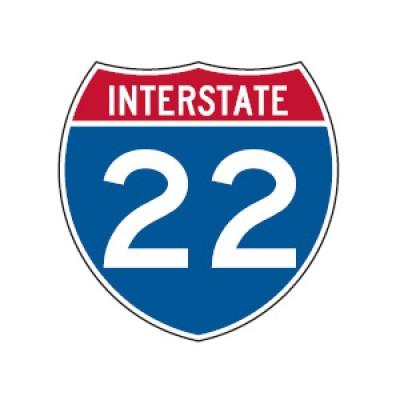
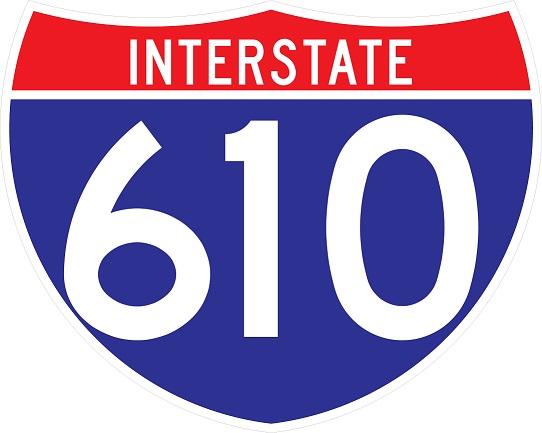 Guide Signs / Route Markers
Interstate Route Sign 3 Digits - M1-1W
$72.45 - $92.50
Shop on Trafficsigns.com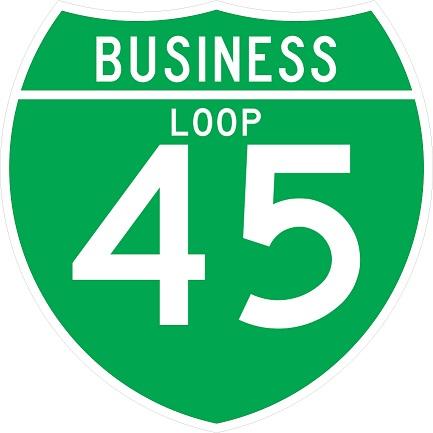 Guide Signs / Business Route Markers
Interstate Business Loop Sign - M1-2
$52.35 - $92.50
Shop on Trafficsigns.com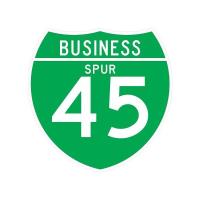 Regulatory Signs / Traffic Control
Interstate Business Spur Sign - M1-3
$52.35 - $195.50
Shop on Trafficsigns.com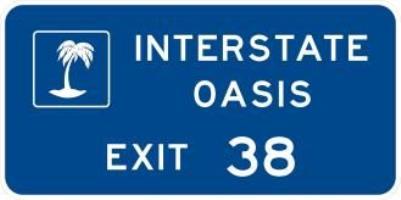 Guide Signs / Service Signs
Interstate Oasis Exit Sign - D5-12
$34.15 - $148.50
Shop on Trafficsigns.comOrder MUTCD-Compliant Highway Signs Today
TrafficSigns.com stocks the full range of interstate highway signs, route markers, warning signs, and guide signs built to DOT and MUTCD standards. All signs are fabricated on reflective aluminum with standard mounting holes for fast installation. Volume pricing is available on most SKUs, and our team can assist with project-scale orders for municipalities, contractors, and transportation departments.
Shop Highway Signs