
From raw aluminum sign blanks to fully reflective, DOT-compliant signage ready for the road
Every stop sign, parking regulation, and hazardous materials notice you see on the road starts as a flat aluminum blank. Understanding how traffic signs are made helps buyers choose the right reflective grade, size, and finish for their project, whether that project is a single custom sign for a parking lot or a bulk order for a municipal contract. This guide walks through traffic sign manufacturing from raw material to finished product, covering the aluminum, reflective sheeting, printing methods, and quality testing that go into every sign we produce.
Traffic Sign Manufacturing: Common Buyer Questions
- What material are traffic signs made from, and how durable is it?
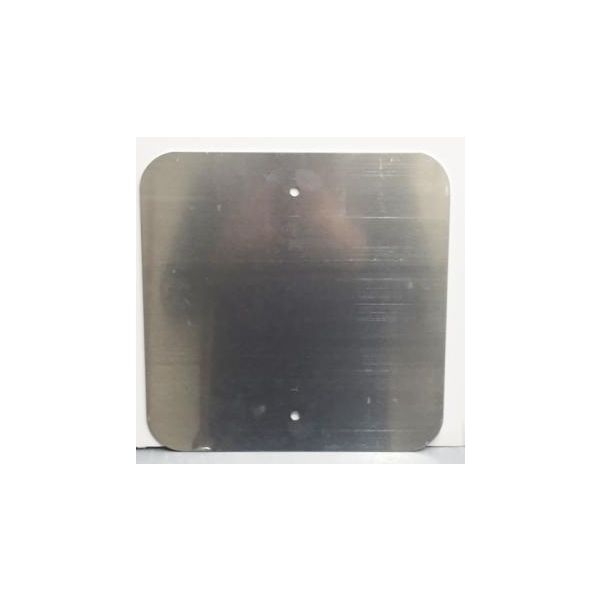
- The vast majority of traffic signs are made from aluminum sign blanks. Aluminum resists rust and corrosion, holds up in extreme temperatures, and is light enough to mount on standard posts without sagging. Our aluminum traffic signs are available with Engineer Grade, High Intensity Prismatic (HIP), or Diamond Grade reflective sheeting. Engineer Grade is the standard entry-level reflective material commonly used throughout the sign industry, while High Intensity Prismatic (HIP) and Diamond Grade are DOT-approved reflective materials that meet federal and state MUTCD requirements for traffic control signs, offering increased visibility and performance for regulated roadway applications.
- What sizes do traffic signs come in?
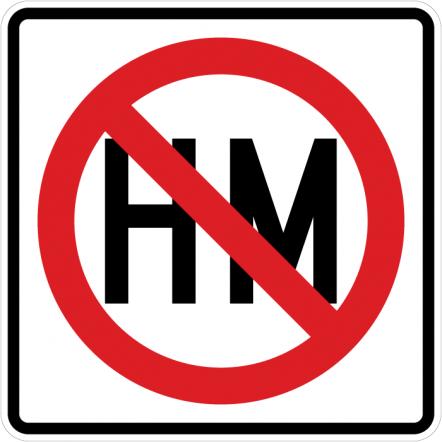
- Standard sizes typically range from 12 inches square up to 36 inches square or larger, depending on the sign type. For example, the R14-3 Hazardous Materials Prohibited Sign is available in 24x24, 30x30, and 36x36, while blanks used for custom fabrication are sold from 12x12 up to 36x36 and beyond. Larger custom sizes are available for high-speed roadways or highway applications where extra visibility is required.
- Can I design my own custom traffic sign?
- Yes. Custom traffic signs can include your own text, logo, colors, and layout on a reflective aluminum blank. Options like the Custom Reflective Aluminum 12 x 18 Signs and the Custom Orange Reflective Aluminum Diamond allow you to add your company logo at no extra charge, and a pre-production proof is provided for your approval before the sign goes into production.
- How much does it cost to have a traffic sign made?
- Cost depends on size, reflective grade, and quantity. Aluminum sign blanks start around $7.35 each, while a finished regulatory sign in Engineer Grade runs roughly $44 to $50 at 24x24, and a large 36x36 Diamond Grade sign can run over $140. Most signs also offer volume pricing, so ordering multiples per size can meaningfully lower your per-unit cost.
- Are there bulk discounts for ordering multiple signs?
- Yes. Pricing on most custom and regulatory signs drops in tiers as order quantity increases, often starting at 2, 4, or 5 units and continuing to discount further at higher volumes like 20 or 50 units. This makes it cost-effective for facilities, municipalities, and contractors ordering signage for multiple locations at once.
- How do I mount a traffic sign once it arrives?
- Most signs come as prepunched blanks with 3/8 inch holes ready for bolting to a post, wall, or fence. Standard hardware includes carriage bolts, nuts, and washers sized to match the prepunched holes. For posts, U-channel or square tube posts paired with brackets are the most common mounting method for roadway and parking applications.
- How should I clean and store aluminum signs to extend their life?
- Rinse signs periodically with water and a mild detergent to remove dirt and road grime, which can dull reflective sheeting over time. Avoid abrasive scrubbing on the reflective surface. When storing extra signs, keep them flat or upright in a dry area away from direct sunlight to prevent warping and premature fading of the sheeting.
How Traffic Signs Are Made: The Manufacturing Process Step by Step
Traffic Sign Materials: Aluminum and Reflective Sheeting Explained
What Are the 4 Types of Traffic Signs?
Guide signs help drivers navigate, marking routes, distances, and destinations, most commonly seen as green highway signs.
Informational signs cover everything else, from rest area notices to services and facility directions. Each category has its own shape, color, and reflectivity requirements under DOT and MUTCD standards, which is why manufacturing specifications differ across sign types even when the underlying aluminum and sheeting materials are the same.
Designing and Customizing Your Own Traffic Sign
How Much Does It Cost to Make a Road Sign?
Reflective Sheeting Grades Compared
| Reflective Grade | Reflectivity Level | Best Suited For | Compliance |
|---|---|---|---|
Engineer Grade | Reflective | Parking lots, low-speed roads, general facility signage | Does not meet DOT and MUTCD standards |
High Intensity | Very reflective | Higher-speed roadways, industrial sites, added nighttime visibility | Meets DOT and MUTCD standards |
Diamond Grade | Ultra reflective | Highways, hazardous materials routes, high-risk intersections | Meets DOT and MUTCD standards |
Traffic Sign Blanks and Manufactured Signs for Every Project
From raw aluminum blanks to fully printed, reflective regulatory signs, these products show the range of what traffic sign manufacturing can produce.
 Regulatory Signs
Hazardous Materials Prohibited Sign - R14-3
$44.25 - $148.50
Shop on Trafficsigns.com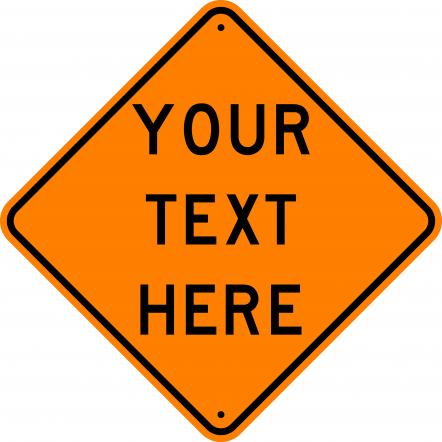 Custom Signs
Custom Orange Reflective Aluminum Diamond - CS-D-O
$27.85 - $266.95
Shop on Trafficsigns.com
Ready to Order Your Custom Traffic Sign?
Whether you need a single blank for a DIY project or a bulk order of DOT-compliant regulatory signs, our sign fabrication process delivers durable, reflective signage built to meet MUTCD and DOT standards. Submit your design and get a proof before production begins.
Shop Custom Reflective Signs