
Understanding traffic sign spacing requirements under MUTCD guidelines
Traffic sign spacing affects how much time drivers have to see, read, and react to the message ahead. Place signs too close together and drivers miss critical information. Place them too far apart, or too close to the hazard, and there isn't enough time to respond. This guide breaks down MUTCD traffic sign spacing rules for warning, regulatory, and guide signs, including advance placement distances by speed, so you can plan an installation that's both compliant and genuinely safer for the road.
MUTCD Fundamentals of Traffic Sign Spacing
The Manual on Uniform Traffic Control Devices doesn't hand out a single universal number for how far apart traffic signs need to be. Instead, it says signs that call for separate decisions must be spaced far enough apart for drivers to make each decision, and that the posted or typical travel speed should be one of the main factors in setting that spacing.
For warning signs, the MUTCD gives a placement table based on two conditions. Condition A covers spots where drivers need to slow down and change lanes in heavy traffic, such as Merge or Right Lane Ends signs. Condition B covers spots where drivers need to slow to a lower speed or come to a stop, such as Stop Ahead, Yield Ahead, or Signal Ahead signs. The table lists 100 feet as the minimum advance placement, to keep enough space between signs.
Beyond individual placement, signs should generally sit far enough apart that a driver can take in one message before reaching the next. Clustering too many signs on one post or stacking several messages within a short stretch of road works against clear communication, even when each sign is compliant on its own. The MUTCD sets these principles, but exact spacing on a given road is up to the agency that owns it, so check with your state DOT or local traffic engineering office for any local requirements.
Advance Warning Sign Placement Distances by Posted Speed
Advance warning sign spacing scales directly with speed, because faster traffic needs more distance to see a sign, read it, decide on a response, and act before reaching the hazard. For signs that warn of a possible stop, such as Stop Ahead, Yield Ahead, and Signal Ahead, the MUTCD's placement table suggests these distances ahead of the hazard:
- 25 mph: 155 feet
- 30 mph: 200 feet
- 35 mph: 250 feet
- 40 mph: 305 feet
- 45 mph: 360 feet
- 50 mph: 425 feet
- 55 mph: 495 feet
- 60 mph: 570 feet
- 65 mph: 645 feet
- 70 mph: 730 feet
- 30 mph: 200 feet
- 35 mph: 250 feet
- 40 mph: 305 feet
- 45 mph: 360 feet
- 50 mph: 425 feet
- 55 mph: 495 feet
- 60 mph: 570 feet
- 65 mph: 645 feet
- 70 mph: 730 feet
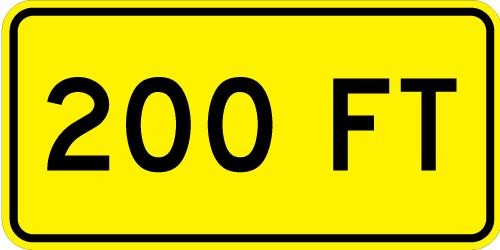
Signs where drivers need to slow down and change lanes in heavy traffic, such as Merge or Right Lane Ends, need more room. At 45 mph, for example, the table suggests 775 feet. If a warning sign has lettering smaller than 6 inches or more than four words, add at least 100 feet so drivers have time to read it. You can also pair a warning sign with a Distance plaque (W16-2aP) mounted below it, so drivers know exactly how far ahead the hazard is.
The MUTCD says these distances should be applied with engineering judgment and can be adjusted for site conditions like curves, hills, or other nearby signs. Your state DOT or local traffic engineering office can confirm the right placement for your road.
For roadwork, the MUTCD recommends minimum spacing between each advance warning sign in the series, starting with the ROAD WORK sign (W20-1): 100 feet on low-speed urban streets, 350 feet on high-speed urban roads, 500 feet on rural roads, and 1,000 to 2,640 feet on expressways and freeways. The road owner decides whether an urban street counts as low or high speed, so check with your state DOT or local agency for the cutoff in your area.
Regulatory Sign Spacing and Speed Limit Sign Placement
Regulatory signs follow a different logic than warning signs. Rather than spacing tied purely to stopping distance, placement is tied to decision points: intersections, zone boundaries, and locations where a driver's assumption about the rules might reasonably change.
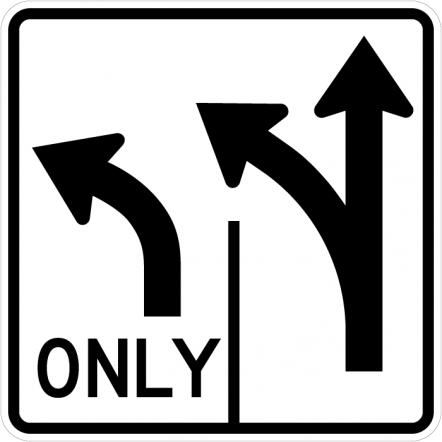
Speed limit signs are a common example. A Speed Limit sign is required where a speed limit changes, and the MUTCD recommends adding more signs after interchanges and major intersections, and anywhere drivers may need a reminder. The MUTCD doesn't set a fixed distance between Speed Limit signs, so many agencies use their own spacing policies, and urban streets often see more frequent posting near schools, parks, and busy intersections. Check with your state DOT or local traffic engineering office for the spacing used in your area. Lane control and intersection signs, such as the Advance Intersection Lane Control Sign R3-8, are placed far enough ahead of the intersection to give drivers time to merge into the correct lane before reaching the decision point. For a full range of regulatory options by category, the regulatory signs collection covers speed limit, lane control, and turn restriction signage built to these same standards.
The 9 Basic Shapes of Traffic Signs
The MUTCD recognizes nine standard traffic sign shapes, and several are reserved for a single sign so drivers can identify it at a glance. The nine shapes are: octagon (Stop), downward-pointing triangle (Yield), circle (Grade Crossing Advance Warning), pennant (No Passing Zone), pentagon (School and County Route signs), crossbuck (the X-shaped Grade Crossing sign), diamond (warning signs), rectangle (regulatory and guide signs, plus some warning signs), and trapezoid (Recreational and Cultural Interest Area guide signs and National Forest Route signs).
Shape helps drivers recognize a sign's meaning quickly, even when it's partly blocked or seen from behind. Diamond-shaped warning signs are the most common shape in the warning signs category. Shape doesn't change how far apart signs are placed, though. The MUTCD bases spacing on travel speed and the time drivers need to see, understand, and react to each sign, as covered in the sections above.
Traffic Sign Spacing by Category
Spacing depends on sign type and road speed. Use this table as a starting point, then check the full MUTCD tables and your state DOT or local traffic engineering office for requirements on your road.
| Sign Category | Typical Spacing Guideline | Governing Factor | Example Sign |
|---|---|---|---|
Advance warning signs, high-speed/rural roads | About 360 to 730 feet before a possible stop at 45 to 70 mph; 775 to 1,250 feet where drivers must merge or change lanes | Posted or typical speed and driver reaction time | Distance plaque (W16-2P), mounted below a warning sign |
Advance warning signs, low-speed/urban streets | About 155 to 305 feet before a possible stop at 25 to 40 mph; 100 feet minimum | Lower speeds reduce required lead time | Distance plaque (W16-2aP), mounted below a warning sign |
Work zone advance warning series | Minimum between signs: 100 feet (low-speed urban), 350 feet (high-speed urban), 500 feet (rural), 1,000 to 2,640 feet (expressway/freeway) | Road type and speed category, as set by the road owner | ROAD WORK sign (W20-1) |
Regulatory signs (speed limit, stop, yield) | Posted where a rule begins or changes and after major intersections, spaced far enough apart for drivers to make each decision | Sight distance and driver decision points | Speed Limit sign (R2-1) |
Guide signs (street name, route, exit) | Placed ahead of decision points; distance depends on road type and speed, so check with your state DOT or local traffic office | Time needed for a driver to read and react | Road Signs collection |
Traffic Sign Spacing: Common Buyer Questions
- What materials are used for traffic signs, and how long do they hold up outdoors?
- Signs from Trafficsigns.com are built on reflective aluminum blanks in three reflectivity grades: engineer grade (reflective), high intensity (very reflective), and diamond grade (ultra reflective). Engineer grade works for white and red regulatory signs, but the MUTCD doesn't allow it on yellow warning signs and plaques, which need high intensity or diamond grade. All three grades are rated for years of outdoor exposure, with diamond grade offering the strongest nighttime visibility for high-speed corridors.
- What size sign do I need for my road?
- Sign size is based on the type of road, not on how far the sign sits from the hazard. The MUTCD lists sizes for conventional roads, expressways, and freeways, with larger sizes for faster, wider roads. For example, the Distance plaque (W16-2aP) is 24 x 12 inches on conventional roads, or 30 x 18 inches oversized, and the Advance Intersection Lane Control sign (R3-8) is 30 inches tall (36 inches oversized), with a width that depends on the number of lanes. Your state may have its own sizing rules, so check with your state DOT or local traffic engineering office.
- Do your signs meet MUTCD and DOT reflectivity requirements?
- Yes. Our high intensity and diamond grade signs are made to meet MUTCD retroreflectivity requirements, along with standard MUTCD sizes and shapes. Keep in mind that yellow warning signs and plaques need high intensity or diamond grade, since engineer grade isn't permitted for them.
- How much do traffic signs cost, and is there a discount for ordering multiple signs at once?
- Pricing depends on size and reflectivity grade. Smaller plaques start under $25, while diamond grade panels in larger sizes run higher. Most signs include volume pricing tiers, so ordering a full advance warning series (often 3 signs in a work zone) reduces the per-unit cost compared to ordering one at a time.
- How fast can I get signs produced and shipped for a spacing project?
- Standard reflective signs are stocked configurations that ship quickly once an order is placed. If you're planning a multi-sign advance warning sequence, ordering the full set together helps ensure consistent lead times so all signs arrive ready for installation on the same schedule.
- What's involved in mounting signs at the correct spacing along a road?
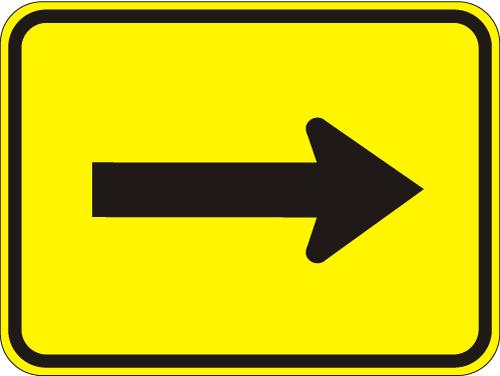
- Installation typically means setting posts at the planned advance distance, mounting the sign at the right height, and confirming sightlines aren't blocked by vegetation or curves. The MUTCD calls for the bottom of the sign to be at least 5 feet above the edge of the road in rural areas, and at least 7 feet in business, commercial, or residential areas and above sidewalks. A plaque mounted below another sign may be 1 foot lower. Plaques like the Supplemental Arrow plaque (W16-6P) mount below the main warning sign and don't need their own spacing, since they go with the sign above them. Permits and local rules vary by state and road owner, so check with your state DOT or local traffic engineering office before installing.
- How do I clean and maintain reflective signs once they're installed?
- Rinse aluminum signs periodically with water and a mild detergent to remove road grime, which can dull reflectivity over time. Avoid abrasive pads on the sheeting itself. Inspect mounting hardware and post condition on a regular schedule, especially at signs positioned near high-traffic intersections or work zones where vibration and impact are more common.
Signs and Plaques for Your Spacing Plan
Every sign below is made on reflective aluminum. Yellow warning signs and plaques need high intensity or diamond grade sheeting to meet MUTCD retroreflectivity requirements, while engineer grade is an option for white regulatory signs like the R3-8.
 Regulatory Signs
Advance Intersection Lane Control Sign - R3-8
$69.95 - $148.50
Shop on Trafficsigns.com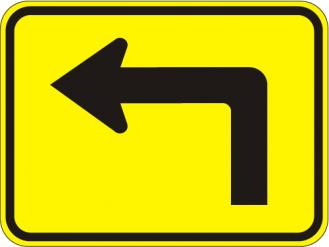

Plan Your Sign Spacing with Compliant Hardware
Whether you're laying out a work zone advance warning series or updating regulatory signage at an intersection, start with signs built to MUTCD reflectivity and sizing standards, then confirm placement with your state DOT or local traffic engineering office. Browse our full range of warning and regulatory signs to build out your project.