Loading Zone Sign Requirements: A Complete Guide to Parking Lot Compliance

Loading Zone Sign Requirements: A Complete Guide to Parking Lot Compliance

Meet Federal, State, and Local Standards with Properly Marked Loading Zones

Improperly marked loading zones create liability, traffic congestion, and regulatory headaches for property managers, facility operators, and business owners alike. Whether you manage a commercial property, a freight dock, or a retail parking lot, understanding loading zone sign requirements is essential for maintaining compliance and keeping operations running smoothly. This guide covers the key regulations, sign types, materials, and sizing standards you need to know, along with the products that meet MUTCD and DOT requirements.

Common Questions About Loading Zone Sign Requirements

What is the loading and unloading sign?
A loading and unloading sign designates an area where vehicles may stop briefly to load or unload passengers, goods, or freight, but may not park. The most common MUTCD-standard design is the R7-6 No Parking Loading Zone sign, which uses bold text and sometimes directional arrows to define the zone boundaries. Commercial properties often use additional signage such as the AR-214 No Parking Commercial Loading Zone sign to clarify that the restriction applies specifically to non-delivery vehicles.
How long can I stay in a loading area?
Time limits in loading areas vary by jurisdiction and property type. Many municipal loading zones allow vehicles to remain for 10 to 20 minutes for active loading and unloading. Some commercial and retail properties post timed loading zone signs, such as 10-minute or 15-minute loading zone signs, to manage turnover. Freight and delivery zones at warehouses or loading docks may have longer allowances. Property owners can post custom time-limit signage to enforce their specific rules, provided it is clearly legible and consistently applied.
What does a 'no standing' sign mean?
A 'no standing' sign is more restrictive than a loading zone sign. In a no standing zone, a driver may not stop the vehicle at all, even briefly, unless responding to traffic conditions. By contrast, a loading zone permits a temporary stop for active loading or unloading with the driver present. A no parking sign allows brief stops for loading or picking up passengers. Understanding these distinctions matters when posting signage at commercial properties, as the wrong sign type can lead to confusion, complaints, or enforcement challenges.
Can you park in a loading zone after 6pm in San Diego?
In San Diego, loading zone restrictions typically apply during posted hours only. Many commercial loading zones display time-restricted signage, such as 7am to 6pm on weekdays. After posted hours, parking is generally permitted unless the sign specifies otherwise or indicates no parking at any time. Always read the specific sign at the location, as hours vary by zone and property type. Commercial properties may post their own restrictions that differ from city-regulated zones.
What are Chicago's loading zone rules?
Chicago loading zone regulations are enforced by the Chicago Department of Transportation. Commercial loading zones in Chicago are typically marked with yellow-painted curbs and posted signs indicating permitted hours, most commonly 7am to 9pm. Trucks may use posted freight loading zones during those hours for active deliveries. Outside posted hours, standard parking rules apply. Property owners seeking a designated loading zone must apply for a permit through the city. Proper signage meeting local and MUTCD standards is required to validate and enforce any posted zone.
What loading zone signs are required in New York City?
New York City uses a combination of city-issued curbside signs and curb markings to designate loading zones. Truck loading zones in NYC are typically marked with signs stating 'Truck Loading Only 7am to 7pm' or similar. These signs are city-installed for public right-of-way zones. For private commercial properties, owners must post compliant no parking and loading zone signs that meet NYC DOT and MUTCD standards. Signs must use reflective materials, standard colors, and approved typefaces. Properties with accessible passenger loading zones must use ADA-compliant signage as well.
What are loading zone sign requirements in California?
California loading zone sign requirements are governed by the California Manual on Uniform Traffic Control Devices (CA MUTCD), which aligns closely with the federal MUTCD. Signs must use retroreflective sheeting, approved color schemes (white background with black lettering for most regulatory signs), and standard letter sizes for legibility. Local jurisdictions such as Los Angeles and San Francisco may have additional requirements for commercial loading zones, including specific hours of restriction and curb color coding. Private property owners must also ensure signs are mounted at a height and location visible to approaching drivers.

Understanding Loading Zone Sign Requirements and MUTCD Standards

The Manual on Uniform Traffic Control Devices (MUTCD), published by the Federal Highway Administration, provides the baseline standard for loading zone signage across the United States. States adopt the MUTCD with or without amendments, and local jurisdictions layer additional requirements on top. For property managers and business owners, compliance means satisfying all three levels: federal, state, and local.
At the federal level, loading zone signs must use retroreflective sheeting so they are visible at night and in low-light conditions. Sign colors, typefaces, and symbol designs must conform to MUTCD specifications. The R7-6 No Parking Loading Zone sign is the standard MUTCD-recognized sign for no parking loading zones, and it should be used wherever the zone is located on or adjacent to a public right-of-way.
For private commercial properties, the standards remain a strong reference even when not legally mandated. Signs that follow MUTCD guidelines are more likely to be recognized and respected by drivers, and they reduce the risk of liability if a parking dispute arises. Many local codes specifically require MUTCD-compliant signage on private lots that serve the public.
Key requirements that appear across most jurisdictions include: reflective aluminum construction, mounting at a height visible above parked vehicles (typically 7 feet from the bottom of the sign to the ground in pedestrian areas), placement at the beginning and end of the loading zone, and clear indication of any time restrictions. For a broader look at how loading zone signs fit into a complete parking lot layout, see all of our parking lot traffic signs.

Types of Loading Zone Signs and When to Use Each

Loading zone signage is not one-size-fits-all. The right sign depends on the type of property, the vehicles being served, and the specific restriction you need to communicate.
No Parking Loading Zone Signs are the most common type. They inform drivers that the area is reserved for active loading and unloading only and that unattended parking is prohibited. The R7-6 and AR-205 (with directional arrow) are the standard designs, available with optional left, right, or double arrows to define the extent of the zone.
Commercial Loading Zone Signs such as the AR-214 are specifically worded for commercial areas where freight deliveries and business operations require dedicated access. These signs make clear that the restriction applies to all non-commercial vehicles, not just passenger cars.
Bus Loading Zone Signs like the AR-228 designate areas for school buses, transit buses, or shuttle vehicles. These are common at schools, transit hubs, hotels, and airports.
Accessible Passenger Loading Zone Signs (AR-731) identify areas where passengers with disabilities may be dropped off or picked up. ADA requirements apply to any facility that serves the public, and proper signage is part of that compliance.
Loading Zone Plaque Signs (R8-3gP) are supplemental signs used below or alongside other regulatory signs to clarify that the adjacent area is a loading zone. They are often paired with time-of-day panels.
Timed Loading Zone Signs such as 10-minute and 15-minute loading zone variants communicate how long a vehicle may remain for loading purposes. These are especially useful in retail parking lots and urban commercial corridors where turnover is critical.
For custom messaging, such as specifying freight-only access or restricted hours unique to your facility, custom parking signs in reflective aluminum are available in multiple sizes and formats.

Loading Zone Sign Materials: What the Standards Require

Material selection is one of the most consequential decisions in loading zone compliance. MUTCD Section 2A.08 requires that all regulatory signs, including loading zone signs, use retroreflective sheeting to ensure nighttime visibility. This requirement applies to both public roadway signs and, in most jurisdictions, signs on private commercial property accessible to the public.
Trafficsigns.com loading zone signs are manufactured on .080 aluminum blanks with standard pre-punched mounting holes and radius corners. Three reflectivity grades are available:
Engineer Grade Reflective is the baseline option. It meets minimum MUTCD standards for most applications and is suitable for low-speed environments, interior parking lots, and locations with adequate ambient lighting. Pricing starts at $21.95 for a 12x18 sign.
High Intensity Reflective provides significantly greater retroreflectivity and is required in many state and local codes for roadway-adjacent signage. It is the recommended choice for loading zones on or near public streets, at freight docks with truck traffic, and any location where nighttime visibility is a safety priority.
Diamond Grade Reflective is the highest performance sheeting available. It meets DOT and MUTCD standards and is specified for high-speed roadways, large commercial facilities, and any application where maximum sign visibility is required. Diamond grade is especially appropriate for loading dock signs at distribution centers or facilities with 24-hour operations.
All three grades are applied to aluminum blanks, which are corrosion-resistant and designed for long-term outdoor performance. Aluminum loading zone signs do not warp, fade quickly, or degrade from moisture the way lower-cost materials can. For facilities that need a non-standard size or message, custom reflective aluminum signs are available in a range of formats.

Loading Zone Sign Placement, Sizing, and Mounting Requirements

Correct sign placement is as important as the sign itself. A compliant sign that is blocked by vegetation, mounted too low, or positioned at the wrong end of a zone will not provide adequate notice to drivers and may not hold up in a parking enforcement dispute.
Mounting height: In areas accessible to pedestrians, the bottom of a loading zone sign should be no lower than 7 feet above the ground. At locations where pedestrian access is unlikely, a minimum of 5 feet is acceptable under most codes. Signs mounted on buildings or walls follow the same general guidance.
Placement relative to the zone: Signs should be positioned at the beginning and end of the loading zone. For longer zones, intermediate signs may be needed. Directional arrow signs (such as the AR-205 with a left or right arrow) help drivers understand the extent of the restricted area from a single sign post.
Sign sizing: Standard loading zone signs are available in 12x18, 18x24, and larger formats. The 12x18 size is appropriate for most parking lot and private property applications. The 18x24 size is recommended for higher-speed approaches or locations where the sign must be readable from a greater distance, such as at the entrance to a loading dock or freight area. Larger custom formats are available through our custom reflective aluminum vertical sign options.
Curb markings: Many jurisdictions require yellow-painted curbs in addition to posted signs to identify loading zones. Signage alone may not be sufficient to establish enforceable restrictions under local code. Check with your local municipality or a licensed contractor before relying solely on posted signs.
Post and hardware: Standard pre-punched holes on reflective aluminum signs accommodate 3/8-inch hardware. Signs can be mounted on U-channel posts, square posts, or directly to walls and fences using appropriate anchors.

Loading Zone Regulations by Jurisdiction: Key Differences to Know

While the MUTCD provides a national baseline, loading zone regulations vary considerably by state and city. Here is a summary of key jurisdictional differences that affect sign selection and placement.
California: The CA MUTCD governs loading zone signage. Local jurisdictions such as Los Angeles enforce strict requirements for commercial loading zones, including posted hours and curb markings. San Diego and San Francisco have their own permitting processes for curbside loading zones. Private property owners in California must ensure signs are retroreflective and comply with applicable local codes.
New York City: NYC DOT manages public loading zone designations. Truck loading only zones are typically signed for 7am to 7pm on weekdays. Private commercial properties must post their own MUTCD-compliant signage for on-site loading areas. ADA-accessible loading zones require the AR-731 or equivalent sign per ADA Standards for Accessible Design.
Texas: Texas follows the Texas MUTCD, which closely tracks the federal standard. Major cities like Dallas and Houston have specific loading zone ordinances for commercial districts. Private property loading zone signs must be visible and legible, and local codes may require minimum sign dimensions.
Chicago: The Chicago Department of Transportation manages commercial loading zone designations on public streets, which require a city permit. On private property, business owners are responsible for posting and maintaining loading zone signs. Yellow curb paint combined with posted signage is the standard practice. Chicago enforces loading zone rules aggressively in commercial corridors, making clear and compliant signage essential.
For facilities that need a fully custom message, time restriction, or specific language required by local code, explore the parking regulation sign category for additional options including time-panel and combination signs.

Loading Zone Sign Reflectivity Grades Compared

Choosing the right reflectivity grade depends on your site conditions, local code requirements, and the volume and speed of traffic approaching the zone. The table below summarizes the key differences between the three grades available on reflective aluminum loading zone signs.

FeatureEngineer GradeHigh IntensityDiamond Grade
MUTCD ComplianceYesYesYes
Nighttime VisibilityStandardVery HighMaximum
Recommended UseInterior lots, low-speed areasStreet-adjacent zones, freight docksHigh-speed roads, 24-hr facilities
Weather ResistanceOutdoor ratedOutdoor ratedOutdoor rated
Base Price (12x18)$21.95$25.95$32.95
Bulk Discount AvailableYesYesYes
MaterialReflective aluminumReflective aluminumReflective aluminum

Loading Zone Signs That Meet DOT and MUTCD Standards

Every loading zone sign below is manufactured on reflective aluminum, pre-punched for standard post mounting, and available in engineer grade, high intensity, and diamond grade reflective sheeting. Bulk pricing is available on orders of 4 or more signs.
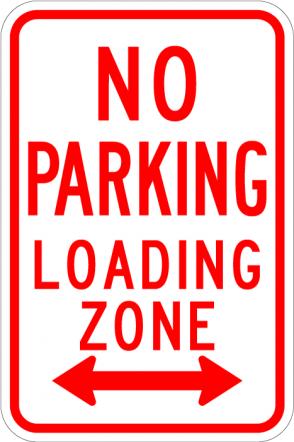
No Parking Loading Zone Sign R7-6 on reflective aluminum Parking Regulation Signs

No Parking Loading Zone Sign - R7-6

$21.95 - $58.25

Shop on Trafficsigns.com
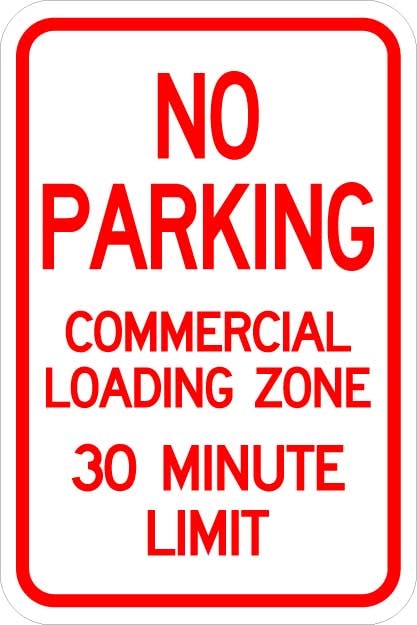
No Parking Commercial Loading Zone Sign AR-214 on reflective aluminum No Parking Signs

No Parking - Commercial Loading Zone Sign - AR-214

$21.95 - $25.95

Shop on Trafficsigns.com
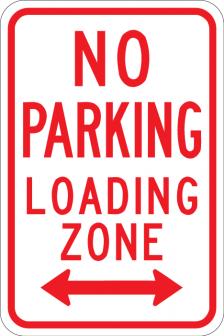
No Parking Loading Zone Arrow Sign AR-205 on reflective aluminum Parking Regulation Signs

No Parking Loading Zone (Arrow) Sign - AR-205

$21.95 - $25.95

Shop on Trafficsigns.com
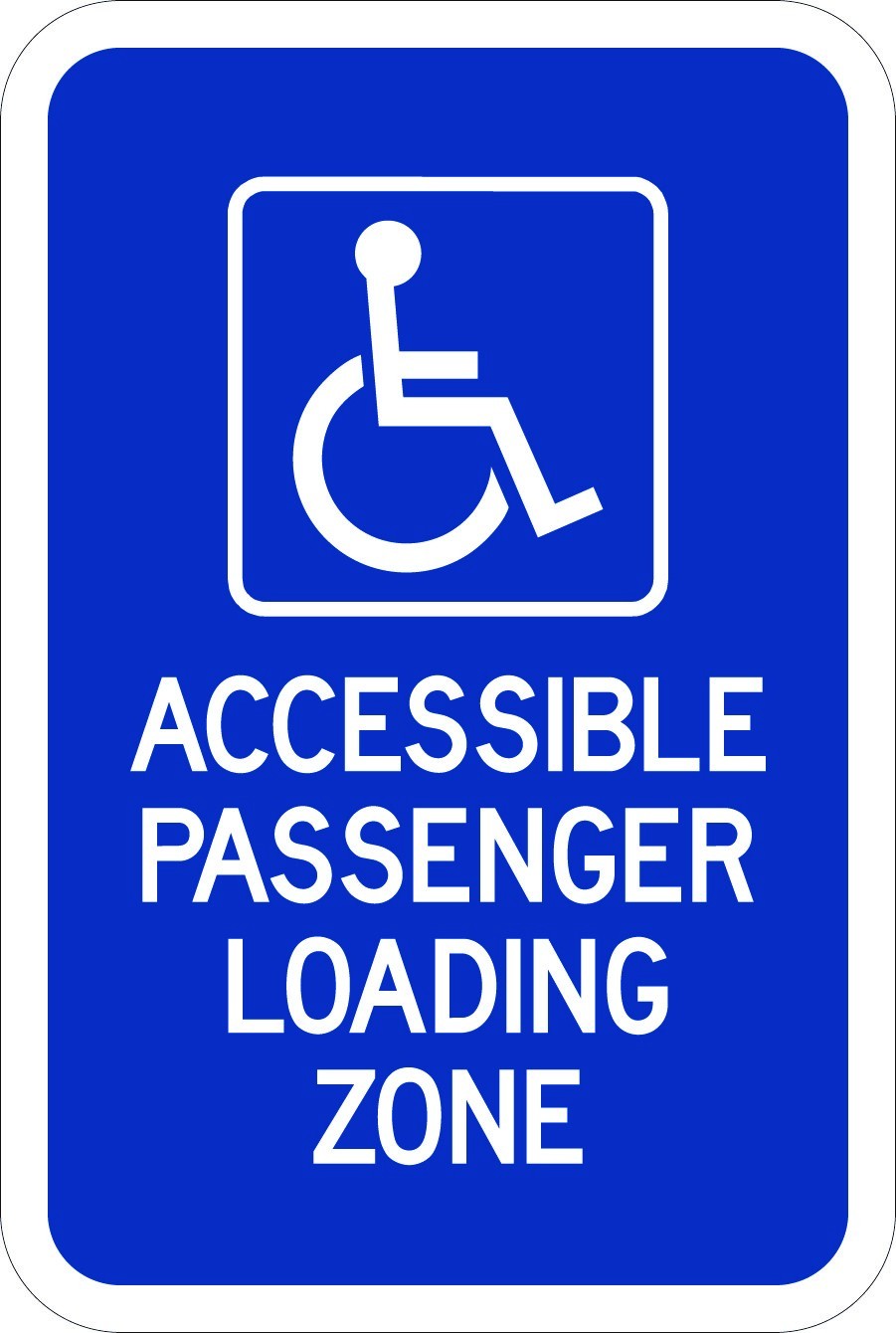
Accessible Passenger Loading Zone Sign AR-731 on reflective aluminum No Parking Signs

Accessible Passenger Loading Zone Sign - AR-731

$21.95 - $25.95

Shop on Trafficsigns.com
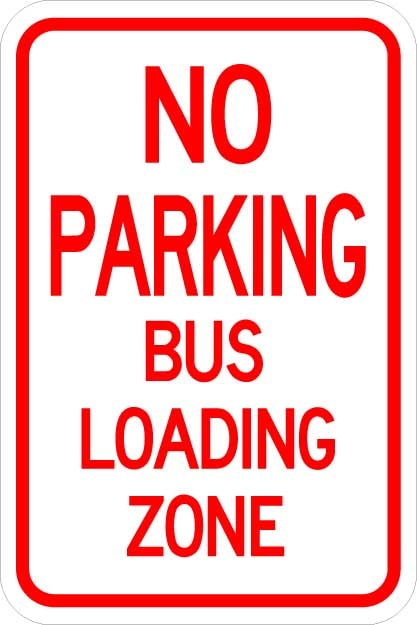
No Parking Bus Loading Zone Sign AR-228 on reflective aluminum School Zone / Loading Zone Signs

No Parking Bus Loading Zone Sign - AR-228

$33.25 - $45.25

Shop on Trafficsigns.com

Get the Right Loading Zone Signs for Your Facility

From standard MUTCD-compliant no parking loading zone signs to custom reflective aluminum signs with your specific messaging, Trafficsigns.com has the products your property needs to meet federal, state, and local requirements. All signs are manufactured on reflective aluminum, available in multiple grades and sizes, with bulk pricing on orders of 4 or more. Order today and receive professional-grade signs built to last.

Shop Loading Zone Signs