
Three similar-looking curb signs, three very different sets of rules for drivers and property owners.
Common Questions About No Parking, No Standing, and No Stopping Signs
- Is no standing the same as no parking in NYC?
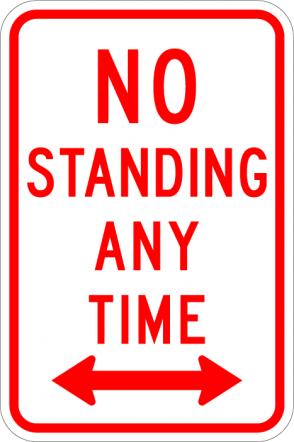
- No. In New York City and most other jurisdictions, a no standing sign is stricter than a no parking sign. Under a no parking regulation, a driver can stop briefly to load or unload passengers or cargo, but the vehicle cannot sit unattended. Under a no standing regulation, a driver cannot leave the vehicle stopped at all, even briefly, except for the immediate loading or unloading of passengers. NYC uses no standing signs heavily near bus stops, taxi stands, and commercial loading zones where curb space needs to keep moving.
- Does no parking mean no stopping?
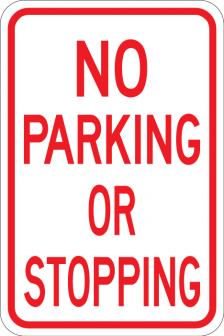
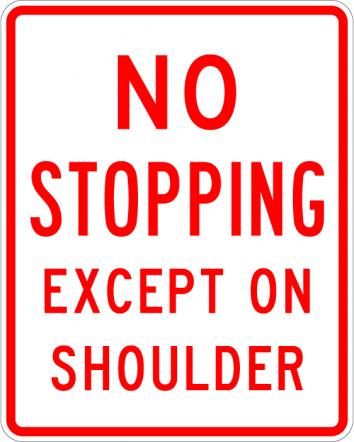
- No. A no parking sign only restricts leaving a vehicle unattended in that zone. Drivers can still stop momentarily to pick up or drop off passengers or freight. No stopping signs are far more restrictive and prohibit the vehicle from stopping at all, for any reason, except in a genuine traffic-related emergency. No stopping zones typically appear on bridges, tunnel approaches, highway shoulders, and emergency access lanes where even a brief stop creates a safety hazard.
- What are the main types of curb parking restriction signs?
- Most jurisdictions rely on four main categories: no parking signs (vehicle cannot sit unattended), no standing signs (vehicle cannot stop except for active loading or unloading), no stopping signs (vehicle cannot stop at all except in an emergency), and passenger loading zone signs (short-term stops permitted for pickup and drop-off only). Each category has its own MUTCD code, most commonly the R7 series for parking and standing restrictions and the R8 series for stopping restrictions.
- Can you stop to load or drop off passengers at a no standing or no parking sign?
- Yes, in both cases, but the allowed window differs. A no parking sign generally permits a longer pause for active loading or unloading. A no standing sign only permits the time it takes to physically load or unload passengers or goods, meaning the driver typically needs to stay with the vehicle and keep the stop brief. Leaving the vehicle unattended, even for a minute, is a common cause of citations under a no standing regulation.
- How can property owners avoid disputed no-standing citations?
- The best defense against contested no-standing violations is unambiguous, highly visible signage. Faded, undersized, or poorly placed signs are one of the most common reasons enforcement gets challenged. Posting a reflective aluminum sign like the No Standing Any Time Sign, sized correctly for the sight distance of the zone, gives drivers no room to argue they didn't see or understand the restriction. Municipalities and private lot owners should also confirm signage meets current MUTCD placement and reflectivity standards.
- What material and grade should I choose for outdoor no parking or no standing signs?
- Reflective aluminum is the standard for any curb or parking lot sign that needs to hold up outdoors. Engineer grade reflective sheeting is the most economical option and works well for low-traffic private lots. High intensity sheeting offers stronger nighttime visibility for busier streets, and diamond grade sheeting delivers the strongest reflectivity for high-speed roads or poorly lit areas. All three grades are available on the No Standing Any Time Sign and most other parking restriction traffic signs in this catalog, in sizes ranging from 12 x 18 inches up to 36 x 36 inches.
- Can I order a custom no parking or no standing sign with my own wording or logo?
- Yes. Custom reflective aluminum signs are available in square, diamond, and rectangular formats, including the Custom Orange Reflective Aluminum Diamond and Custom Orange Reflective Aluminum Square signs. Every custom order includes a pre-production proof for approval before printing, radius corners, and 3/8 inch prepunched mounting holes, so the sign is ready to install as soon as it arrives.
No Parking Signs: What They Actually Restrict
No Standing Signs: The Rule Most Drivers Misunderstand
No Stopping Signs: The Strictest Curb Restriction
Choosing the Right Curb Sign for Your Property
No Parking vs. No Standing vs. No Stopping: Side-by-Side Comparison
Here's how the three most common curb parking restriction traffic signs compare in terms of what's allowed and where each is typically installed.
| Sign Type | Brief Stop Allowed? | Load/Unload Passengers? | Unattended Parking Allowed? | Common MUTCD Code | Typical Locations |
|---|---|---|---|---|---|
| No Parking | Yes, briefly | Yes | No | R7-1 / R7-1a | Residential streets, retail curbs, private lots |
| No Standing | Only for active loading/unloading | Yes, but must stay brief | No | R7-4 | Bus stops, taxi stands, hotel entrances, active traffic lanes |
| No Stopping | No | No | No | R8-6 / R8-7 | Bridges, tunnels, highway shoulders, emergency lanes |
Shop No Parking, No Standing, and No Stopping Signs
Reflective aluminum signs built to meet DOT and MUTCD state and federal standards, available in engineer grade, high intensity, and diamond grade sheeting.
 No Parking Signs
No Stopping Except On Shoulder Sign - R8-6
$33.25 - $195.50
Shop on Trafficsigns.com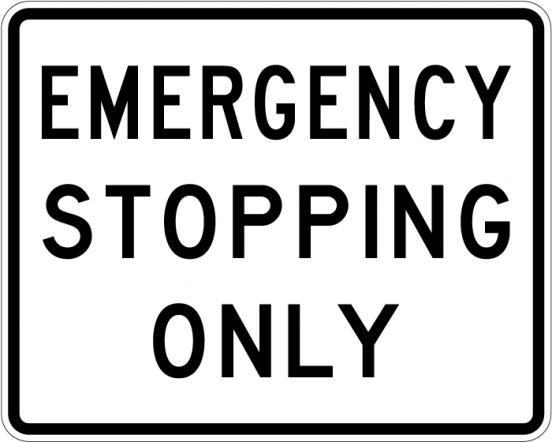
 Parking Regulation
Custom Orange Reflective Aluminum Diamond - CS-D-O
$27.85 - $266.95
Shop on Trafficsigns.comGet the Right Curb Sign for Your Property
Whether you need a no parking, no standing, or no stopping sign, or a custom design built to your exact wording, our reflective aluminum signs are made to meet DOT and MUTCD standards and hold up outdoors for years. Browse the full lineup of parking regulation signs and find the right size, grade, and format for your street, lot, or facility.
Shop Parking Regulation Signs