
Understand the MUTCD standards, placement requirements, and design distinctions that separate these two critical traffic control devices.
Common Questions About Pedestrian Crossing Signs vs. School Crossing Signs
- What is the main difference between a school crossing sign and a regular pedestrian crossing sign?
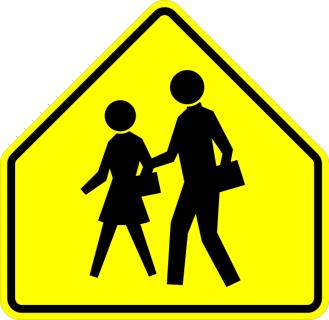
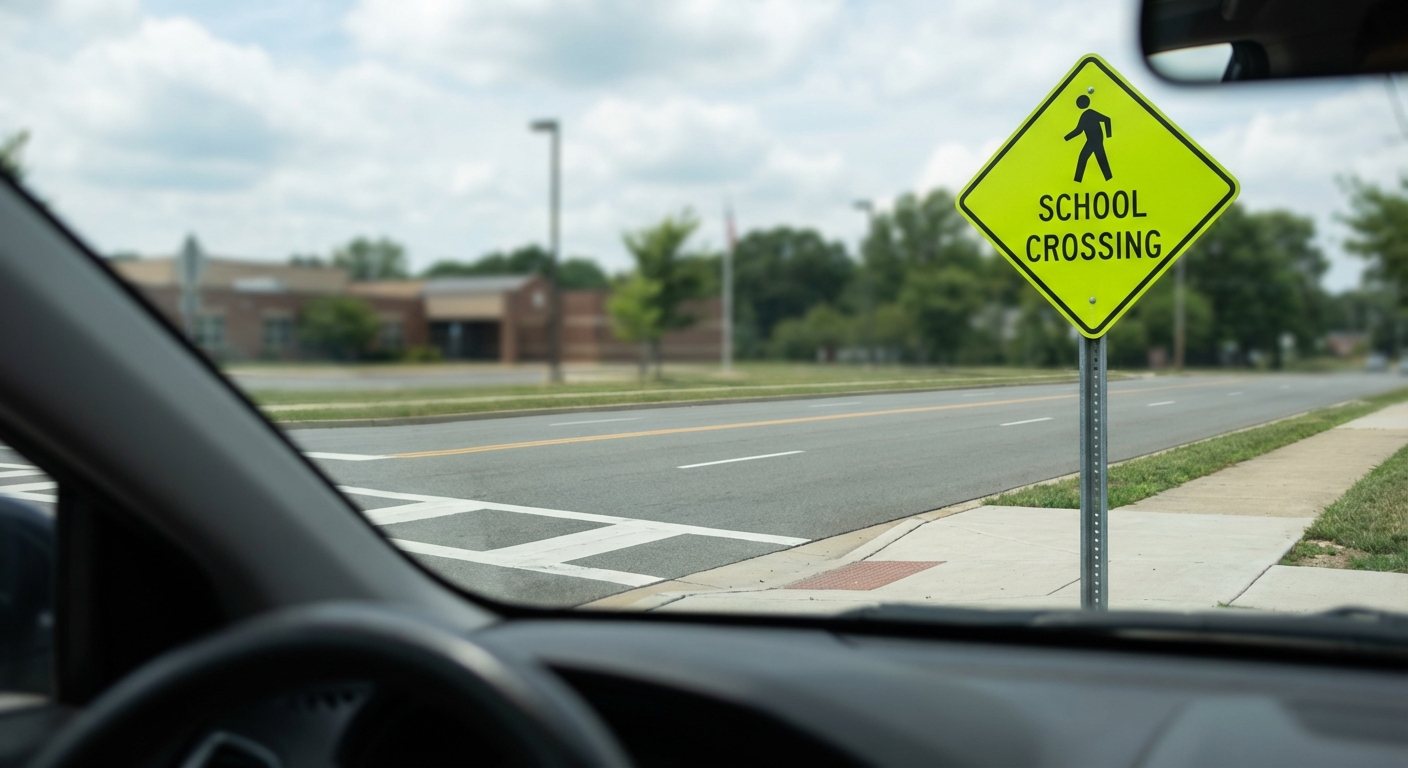
- The primary differences are color and context. Standard pedestrian crossing signs use a yellow-green fluorescent background with a black pedestrian symbol and are placed at general-public crosswalks. School crossing signs use a fluorescent yellow-green pentagon shape (or square for some older designs) with a depiction of children and are installed specifically within designated school zones. The pentagon shape itself is a unique identifier reserved exclusively for school-area warning signs under MUTCD guidelines.
- What color are pedestrian and school zone signs?
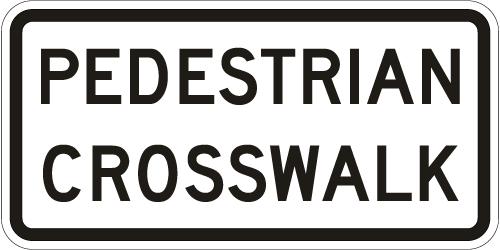
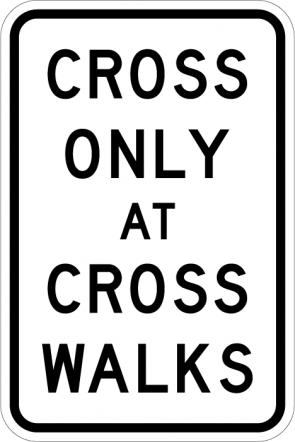
- Both pedestrian crossing warning signs and school crossing signs use a fluorescent yellow-green (lime yellow) background, which the MUTCD specifies for high-visibility pedestrian and school warning applications. Regulatory pedestrian signs, such as crosswalk instruction signs, typically use white backgrounds with black or red text. The bright yellow-green color was formally adopted because studies showed it is more attention-grabbing than the older standard yellow used on older signs.
- What are the four types of crossings?
- Traffic engineers generally recognize four types of pedestrian crossings: marked crosswalks at signalized intersections, marked crosswalks at unsignalized mid-block locations, school crossings within designated school zones, and pedestrian hybrid beacon (HAWK signal) crossings. Each type carries its own signing requirements. Marked crosswalks at general locations use standard W11-2 pedestrian crossing signs, while school crossings use S1-1 or similar school crossing signs paired with school zone pavement markings and speed limit reductions.
- Are school crossing signs effective?
- Research consistently shows that school crossing signs reduce vehicle speeds and improve driver yielding behavior when installed correctly and in good condition. Effectiveness improves significantly when high-visibility retroreflective materials (high intensity or diamond grade) are used, when signs are combined with pavement markings, and when sign placement follows MUTCD advance-warning distance recommendations. Signs that are faded, damaged, or poorly positioned lose their effectiveness, which is why material grade and proper installation matter.
- Where should pedestrian crossing signs be installed?
- The MUTCD recommends placing pedestrian crossing warning signs at or just in advance of the crosswalk location. For higher-speed roadways, an advance warning sign is placed at a distance appropriate for the posted speed limit, typically 100 to 500 feet before the crossing. Signs should be mounted on the right side of the road, facing oncoming traffic, at a height of at least 7 feet to the bottom of the sign in urban areas, or 5 feet on shared-use paths.
- Where should school crossing signs be installed?
- School crossing signs are placed at the entrance to a school zone and at each pedestrian crossing within that zone. The S1-1 school crossing sign is typically installed in advance of the crossing, with the approach distance based on posted speed. School zone boundary signs define the start and end of the zone. All school crossing signage must be coordinated with school speed limit signs and, where applicable, school speed zone ahead signs to create a complete, compliant school zone signing system.
- Can I use a pedestrian crossing sign in a school zone instead of a school crossing sign?
- No. The MUTCD reserves the pentagon shape and school-specific symbols for school areas. Using a general pedestrian crossing sign inside a school zone does not meet federal or most state standards for school zone signage. School zones require the proper S-series school signs. You may supplement school zone signage with additional pedestrian warning signs at nearby non-school crosswalks, but they cannot replace the required school crossing signs within the zone.
How MUTCD Classifies Pedestrian Crossing Signs and School Crossing Signs
Design, Shape, and Symbol Differences
- School crossing signs (S1-1, W-29) use a pentagon shape, or in some older installations a square. The pentagon is a unique identifier found nowhere else in the MUTCD sign system.
Placement Standards: Where Each Sign Goes
The W11-2 and related pedestrian warning signs should be placed at or in advance of marked crosswalks. At speeds of 25 mph or less, placing the sign at the crosswalk is generally acceptable. At higher speeds, an advance sign placement 100 to 500 feet prior to the crossing point allows drivers adequate reaction distance. The sign should face oncoming traffic and be mounted at the appropriate height for the roadway type.
School crossing signs must be placed at each pedestrian crossing within the school zone boundary. Advance warning signs are placed before the crossing at a distance based on posted speed. The school zone itself must be clearly delineated with boundary signs. Signs should only be active during school hours in jurisdictions that use flashers or time-of-day restricted speed limits, though static signs remain in place year-round.
Regulatory vs. Warning: Understanding Sign Function
Warning signs (yellow-green diamond or pentagon) tell drivers to expect a condition ahead. They do not legally require a specific action beyond general caution.
Regulatory signs (white background, often with red) impose a legal obligation. A pedestrian crossing yield sign requires drivers to yield. A crosswalk stop sign requires a full stop. Installing a warning sign where a regulatory sign is required does not satisfy the legal obligation.
For school zones, the signing system typically combines:
- School speed limit signs (regulatory, white background)
- School crossing warning signs (S1-1, yellow-green pentagon)
- Pavement markings
- Optional school speed zone ahead signs (S4-5 series)
For general crosswalks, the system typically combines:
- Pedestrian crossing warning signs (W11-2, yellow-green diamond)
- Yield or stop regulatory signs at the crossing
- Crosswalk pavement markings
- Optional supplemental plaques
For locations where pedestrians are prohibited from crossing, the No Pedestrian Crossing Sign R9-3 provides the appropriate regulatory instruction.
Pedestrian Crossing Signs vs. School Crossing Signs: Side-by-Side Comparison
The table below summarizes the key differences between standard pedestrian crossing signs and school crossing signs across the most important specification categories.
| Feature | Pedestrian Crossing Sign | School Crossing Sign |
|---|---|---|
| MUTCD Series | W11 (Warning) / R9 (Regulatory) | S1 (School Warning) |
| Shape | Diamond (warning) / Rectangle (regulatory) | Pentagon (downward-pointing) |
| Background Color | Fluorescent Yellow-Green (warning) / White (regulatory) | Fluorescent Yellow-Green |
| Symbol | Single walking pedestrian figure | Two figures (adult/guard and child) |
| Typical Size | 24x24" to 48x24" depending on type | 24x24" to 36x36" |
| Reflectivity Options | Engineer Grade, High Intensity, Diamond Grade | Engineer Grade, High Intensity, Diamond Grade |
| Placement Context | Any marked crosswalk, general pedestrian areas | Within designated school zones only |
| MUTCD Restriction | General use permitted at any crosswalk | Pentagon shape reserved exclusively for school areas |
| Speed Reduction Required | Not required, but recommended at high-speed crossings | Required within school zone boundary during school hours |
| Common Companion Signs | R9-8, R1-6, R1-6a crosswalk signs | S4-5 speed zone ahead, school speed limit signs |
Shop Pedestrian and School Crossing Signs
Need Help Choosing the Right Crossing Sign?
Our team can help you identify the correct MUTCD sign type, reflectivity grade, and size for your specific crosswalk or school zone installation. All signs ship on durable aluminum and meet DOT and federal standards.
Shop Pedestrian and School Crossing Signs