
Everything you need to know about compliant posted speed limit signs for roads, school zones, work zones, and special speed areas
Speed limit sign regulations govern how, where, and what type of signs must be posted on public and private roadways across the United States. Whether you are replacing a worn sign, establishing a new speed zone, or outfitting a school zone or work zone corridor, understanding MUTCD speed limit sign requirements ensures your installation meets federal and state standards. This guide covers sign dimensions, reflectivity grades, placement rules, and the specific sign designations used for different speed control applications.
Speed Limit Sign Buyer Questions Answered
- What reflectivity grade do I need for a speed limit sign on a public road?
- MUTCD speed limit sign requirements specify that all regulatory signs on public roadways must use retroreflective sheeting to ensure nighttime visibility. For most roadway applications, Engineer Grade reflective sheeting meets minimum standards. High Intensity sheeting is recommended for higher-traffic corridors, while Diamond Grade provides maximum visibility and is commonly used in work zones or areas with high pedestrian activity. All signs from Trafficsigns.com are available in Engineer Grade, High Intensity, and Diamond Grade reflective aluminum to match your specific compliance needs.
- What are the standard dimensions for a speed limit sign?
- The MUTCD specifies standard speed limit sign dimensions based on roadway classification. For conventional roads, the standard size is 24 inches wide by 30 inches tall. On expressways and freeways, a larger 36 x 48 inch sign is required. For school zone speed limit signs such as the S5-1, a 24 x 48 inch format is standard. Supplemental signs and speed zone ahead signs like the R2-5c are typically available in 18 x 24 or 24 x 30 inch formats. Always confirm your state's specific roadway sign standards, as some jurisdictions require larger sizes on high-speed corridors.
- How do I choose between Engineer Grade, High Intensity, and Diamond Grade sheeting?
- Engineer Grade (Type I) reflective sheeting satisfies minimum MUTCD requirements for low-speed local roads and private property applications. High Intensity (Type III or IV) is appropriate for collector and arterial roads where traffic volumes are moderate to high. Diamond Grade (Type XI) is the highest-performing sheeting and is required or strongly recommended for freeway, expressway, and work zone speed limit signs. If you are purchasing signs for a municipal project or DOT contract, confirm the sheeting grade specified in your project documents before ordering.
- Can I order custom speed limit signs with a specific speed number?
- Yes. Custom reflective aluminum speed limit signs are available in a range of sizes and reflectivity grades. You can specify the posted speed, layout, and any supplemental text or symbols needed. For standard MUTCD-compliant formats, pre-designed templates ensure correct letter sizing, font, and border specifications. Custom orders are printed on heavy-gauge aluminum with pre-punched mounting holes for straightforward installation on standard sign posts.
- What is the correct lateral placement for a speed limit sign?
- The MUTCD requires speed limit signs to be installed on the right side of the road, facing traffic. On conventional two-lane roads, the sign face should be placed 6 to 12 feet from the edge of the travel lane. Mounting height must be at least 5 feet from the bottom of the sign to the pavement grade, and at least 7 feet in areas with pedestrian activity. In rural areas with no pedestrian access, signs may be mounted at 5 feet. State DOTs may specify tighter tolerances, so consult your jurisdiction's traffic engineering guidelines for exact placement requirements.
- How far in advance of a speed change must a speed limit sign be posted?
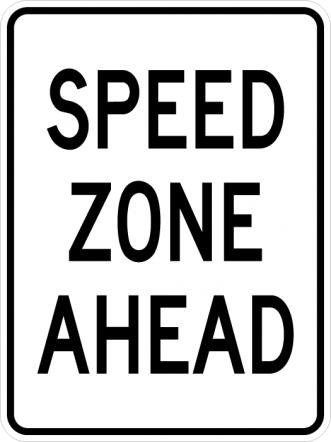
- The MUTCD does not specify a universal advance distance for speed limit signs, but traffic sign placement standards call for signs to be posted at or near the point where the new speed limit takes effect. For transitions into lower speed zones, supplemental Speed Zone Ahead signs (R2-5c) should be placed in advance of the regulatory sign to give drivers adequate warning and stopping distance. State-specific speed zone regulations may define minimum advance distances, particularly for school zones and work zones.
- What is the difference between a Speed Zone Ahead sign and a posted speed limit sign?
- A Speed Zone Ahead sign (R2-5c) is an advisory or supplemental sign that alerts drivers to an upcoming reduction in speed before they reach the new speed limit area. It does not itself establish the legal speed limit. The posted speed limit sign (typically the R2-1 series) is the regulatory sign that legally establishes the maximum permitted speed within a given zone. Both sign types must meet MUTCD reflectivity and dimension standards and are typically used together at the entry to school zones, work zones, and other reduced-speed areas.
Understanding Speed Limit Sign Regulations Under the MUTCD
Speed Limit Sign Placement: Key Rules and Requirements
Speed Limit Sign Regulations by State: What Changes at the State Level
Speed Limit Sign Materials and Durability: Aluminum and Reflective Options
Speed Limit Sign Reflective Sheeting Comparison
Choosing the correct reflective grade is essential for MUTCD compliance and driver safety. The table below compares the three retroreflective sheeting grades available on speed limit signs from Trafficsigns.com.
| Feature | Engineer Grade | High Intensity | Diamond Grade |
|---|---|---|---|
| MUTCD Type Classification | Type I | Type III / IV | Type XI |
| Typical Application | Local roads, private property | Collector and arterial roads, school zones | Freeways, expressways, work zones |
| Nighttime Visibility | Basic retroreflectivity | High retroreflectivity | Maximum retroreflectivity |
| Angle of Visibility | Narrow | Wide | Widest |
| Relative Price | Lowest | Mid-range | Highest |
| Meets Minimum MUTCD Requirements | Yes | Yes | Yes |
| Recommended for High-Speed Roads | No | In some cases | Yes |
| Available at Trafficsigns.com | Yes | Yes | Yes |
Shop MUTCD-Compliant Speed Limit Signs
All products below meet DOT and MUTCD state and federal standards. They are manufactured on reflective aluminum standard punched blanks and are available in multiple sheeting grades and sizes to match your specific roadway application.
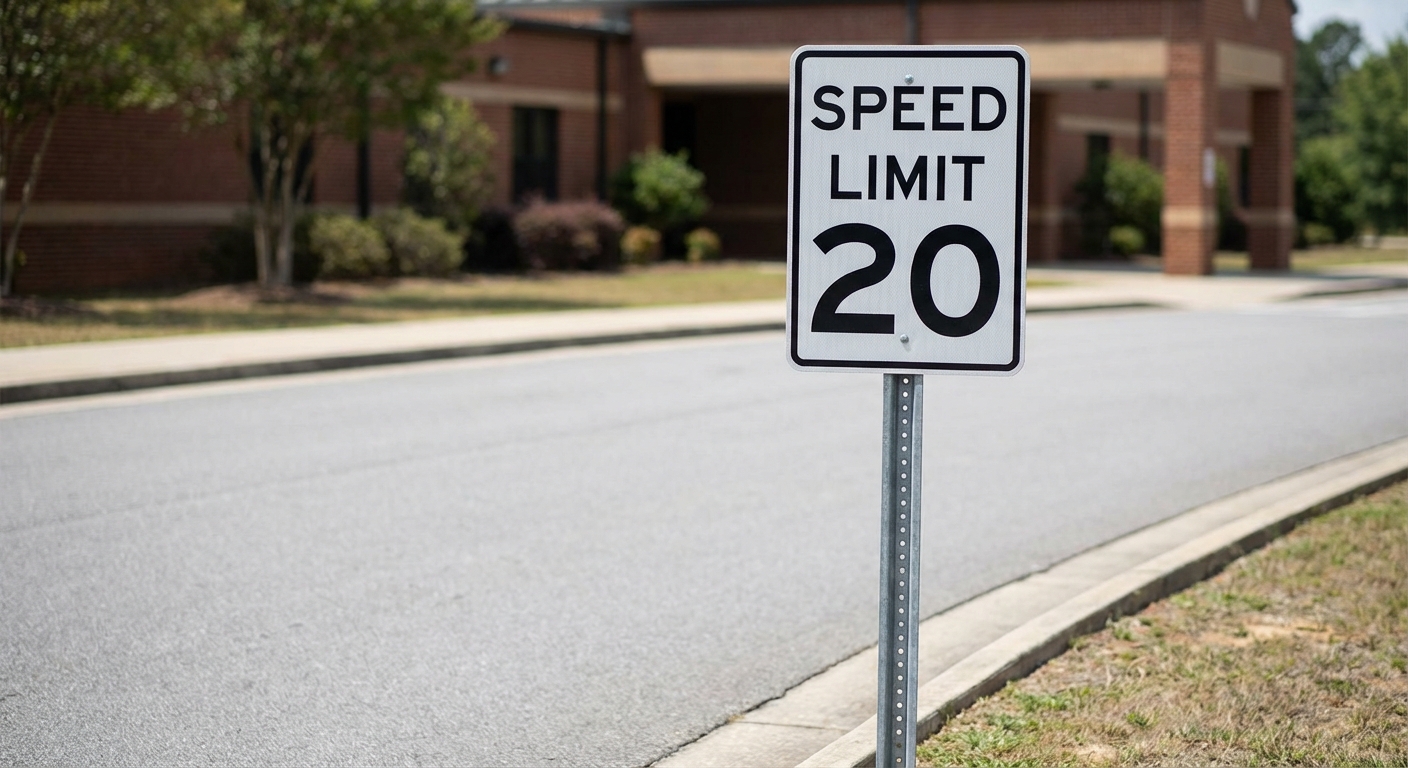
Order MUTCD-Compliant Speed Limit Signs Today
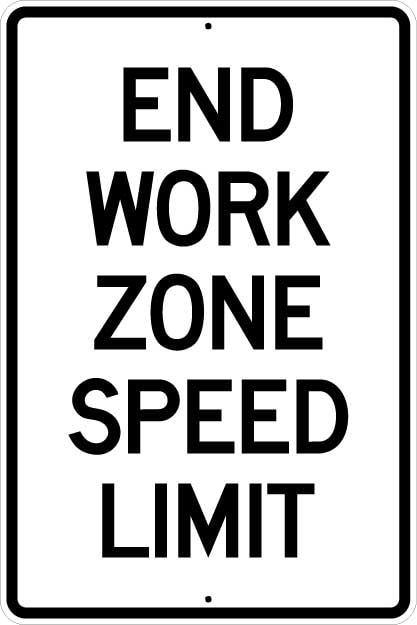
Trafficsigns.com stocks a complete range of posted speed limit signs, school zone speed signs, work zone speed signs, and speed zone ahead signs, all manufactured on reflective aluminum to meet DOT and MUTCD state and federal standards. Volume pricing is available for municipal, contractor, and DOT orders. For non-standard speed numbers, sizes, or configurations, custom reflective aluminum signs are available with fast production turnaround. Browse the full speed limit signs catalog or contact the team for bulk pricing assistance.
Shop Speed Limit Signs