
DOT and MUTCD Compliant Stop Signs for Roads, Intersections, and Private Property
Common Buyer Questions About Stop Signs
- What sizes do your stop signs come in?
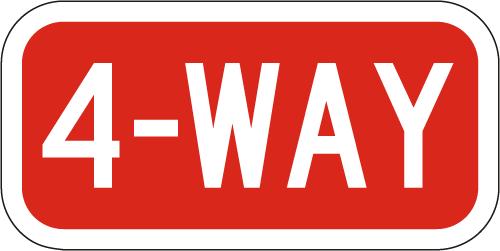
- Our standard stop signs are available in 24x24 inch, 30x30 inch, and 36x36 inch sizes. The 24-inch sign is the most common for private roads and parking facilities, while 30-inch and 36-inch signs are typically required on public roads under MUTCD guidelines. Supplemental plates such as the 4 Way (R1-3) and All Way (R1-4) signs come in their own dimensions, starting at 12x6 inches.
- What reflective grades are available and which one do I need?
- We offer three reflective grades: Engineer Grade (standard reflectivity, suitable for low-speed private roads), High Intensity (very reflective, meets MUTCD requirements for most public roads), and Diamond Grade (ultra reflective, required in high-speed or high-risk locations). High Intensity and Diamond Grade signs comply with DOT and MUTCD state and federal standards.
- Do you offer bulk pricing on stop signs?
- Yes. Volume discounts are applied automatically at 4, 7, 16, and 50 units. For example, the 4 Way Stop Sign (R1-3) in Engineer Grade starts at $14.95 per sign and drops to $12.56 each when you order 50 or more. Diamond Grade pricing follows the same tiered structure.
- Are your stop signs compliant with DOT and MUTCD standards?
- What material are the stop signs made from?
- All stop signs are printed on durable aluminum standard punched blanks with a reflective sheeting surface applied. Aluminum construction ensures the signs hold up in rain, snow, UV exposure, and extreme temperatures without rusting or warping.
- How fast do stop signs ship?
- Most standard stop signs are produced and shipped quickly. Check the product page for current production and shipping lead times. Bulk orders may require additional production time.
- Can I get a stop sign cover to temporarily block a sign without removing it?
- Yes. We carry Austin Stop Sign Covers (ASC-S) in 30-inch and 36-inch sizes. They are made from durable vinyl, are reusable, and attach and detach easily without tools. A minimum order of 20 covers is required, and they can be a mix of sizes.
Stop Sign Facts: Shape, Sides, and History
The stop sign has been part of American roadways since the early 1900s. The first known stop sign appeared in Detroit around 1915. Early versions were small, black-on-white signs with no standardized size or shape. The familiar red octagonal design became the national standard in 1954 when the Manual on Uniform Traffic Control Devices (MUTCD) codified the specifications that remain in use today.
In Japan, the stop sign uses a different shape: an inverted triangle (pointing downward) with the Japanese character for stop. This is a reminder that stop sign design is a nationally determined standard, and the red octagon is specific to the United States and many other countries that follow similar road authority guidelines.
The technical term for a stop sign under traffic engineering is an R1-1 regulatory sign. Related signs include the R1-3 (4 Way Stop) and R1-4 (All Way), which are mounted below the primary stop sign to clarify that all approaches must stop. These supplemental plates are sometimes called stop condition plaques.
What Is the Purpose of a Stop Sign?
Beyond public roads, stop signs are widely used on private property: parking lots, warehouses, campuses, construction sites, and residential communities all rely on stop signs to manage vehicle movement. Private property installations do not always require MUTCD compliance, but using a DOT-compliant sign is generally the best practice for liability reduction and driver recognition.
For intersections where all approaches must stop, a standard stop sign is paired with a supplemental 4 Way or All Way plate mounted directly below it. This combination eliminates ambiguity about which drivers have the right of way and is the correct configuration under MUTCD guidelines.
Types of Stop Signs and Supplemental Plates
Stop Sign Reflective Grade Comparison
Choosing the right reflective grade affects both compliance and visibility. The table below summarizes the key differences between the three grades available on Trafficsigns.com stop signs.
| Feature | Engineer Grade | High Intensity | Diamond Grade |
|---|---|---|---|
| Reflectivity Level | Standard | Very Reflective | Ultra Reflective |
| DOT / MUTCD Compliant | Private property use | Yes | Yes |
| Typical Application | Private roads, parking lots, campuses | Public roads, subdivisions, municipalities | High-speed roads, high-risk intersections |
| Night Visibility | Good | Very Good | Excellent |
| Base Price (R1-3, 12x6") | $14.95 | $16.95 | $20.95 |
| Bulk Price at 50 units (R1-3, 12x6") | $12.56 | $14.24 | $17.60 |
| Material | Aluminum with reflective sheeting | Aluminum with reflective sheeting | Aluminum with reflective sheeting |
Shop Stop Signs and Related Products


Order Your Stop Signs Today
Trafficsigns.com stocks DOT and MUTCD compliant stop signs in multiple sizes and reflective grades. Volume discounts apply automatically at 4, 7, 16, and 50 units. Browse the full catalog of regulatory and warning signs or contact our team for help selecting the right product for your installation.
Shop Stop Signs