
MUTCD-Compliant Guidelines for Every Installation
Common Questions About Traffic Sign Installation Standards
- What is the standard mounting height for traffic signs on conventional roads?
- The MUTCD specifies a minimum sign clearance requirement of 7 feet from the bottom of the sign to the ground on conventional roadways in rural areas. In urban areas, the minimum is also 7 feet for most signs, though overhead signs and signs in pedestrian areas may have different clearance requirements. Signs installed on shared-use paths require a minimum of 8 feet of clearance. Always confirm local jurisdiction requirements, as some states set higher minimums than the federal baseline.
- How far from the road edge should a traffic sign be placed?
- Traffic sign setback requirements vary by road type. On conventional roads, sign supports should be placed a minimum of 6 feet from the edge of the traveled way (the near edge of the sign face). On freeways and expressways, the minimum offset is 12 feet from the edge of the shoulder or 6 feet from the near edge of a sidewalk. The MUTCD also specifies maximum lateral placement distances to ensure signs remain readable at speed. Local traffic engineering authorities may impose stricter setback standards based on site conditions.
- What hardware is required for compliant traffic sign post installation?
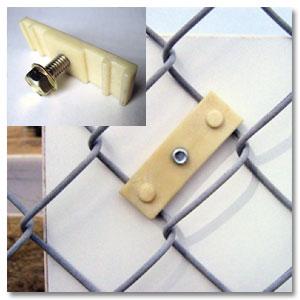
- Traffic sign post requirements depend on the sign size, expected wind loads, and whether the installation is permanent or temporary. MUTCD-compliant installations typically use breakaway support systems for roadside signs to reduce injury risk in vehicle impacts. Common hardware includes galvanized U-channel posts, square steel tubing, or round steel posts paired with appropriate mounting brackets and anti-rotation devices. For fence or barrier installations, purpose-built fence sign mounting hardware is an efficient option. All hardware should be corrosion-resistant and sized to the sign panel's weight and dimensions.
- How often do traffic signs need to be inspected for compliance?
- The MUTCD requires agencies to maintain an assessment or management method to ensure signs meet minimum retroreflectivity standards. While a specific inspection interval is not mandated at the federal level, most agencies conduct nighttime retroreflectivity inspections on a defined schedule, typically every 3 to 7 years depending on sign type and material. Regulatory and warning signs are generally inspected more frequently than guide signs. Any sign showing visible damage, fading, or loss of retroreflectivity should be replaced promptly to maintain traffic sign compliance.
- Do traffic signs need to meet retroreflectivity standards?
- Yes. The MUTCD establishes minimum retroreflectivity levels for all traffic control devices. Engineer grade (Type I), high-intensity grade (Type III), and diamond grade (Type XI) sheeting represent different retroreflectivity performance tiers. Regulatory and warning signs in most applications require at least high-intensity grade sheeting. Diamond grade sheeting offers the highest retroreflectivity and is recommended for high-speed corridors and locations where maximum nighttime visibility is critical. Retroreflectivity inspections should be part of any agency's sign maintenance standards program.
- Are there different height requirements for signs in pedestrian areas versus roadways?
- Yes. Signs installed where pedestrians may pass underneath require a minimum vertical clearance of 7 feet from the bottom of the sign to the walking surface. In overhead installations such as sign bridges or cantilever structures over roadways, clearance requirements increase significantly, often 17 feet or more above the travel lane, depending on road classification and local codes. Pedestrian-area signs must also be positioned to avoid creating hazards or obstructions along accessible routes.
- What are the placement requirements for temporary traffic control signs?
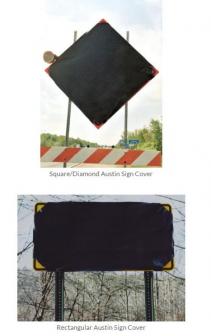
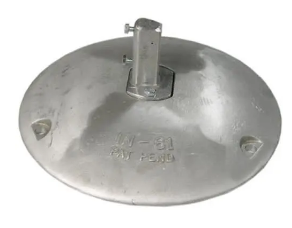
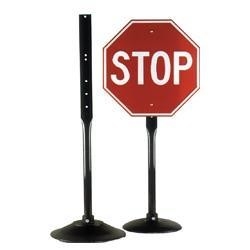
- Temporary traffic control (TTC) signs follow the same MUTCD sign placement standards as permanent signs for height and lateral offset. The key differences involve portability and stability requirements. Temporary signs must be secured against wind displacement, typically using weighted bases or ground anchors. Sign covers or bags are often used to deactivate TTC signs when the work zone is not active, protecting both the sign and ensuring drivers are not confused by conflicting messages. Portable pedestal bases are a practical solution for short-term or relocatable installations.
Understanding MUTCD Sign Requirements
All public roads in the United States must comply with MUTCD sign requirements. Private roads open to public travel, parking facilities, and some campuses may also be subject to MUTCD compliance depending on state law and local ordinance. Understanding which sections of the MUTCD apply to your installation is the first step toward full traffic sign compliance.
The MUTCD is organized by device type. Part 2 covers signs and includes specific guidance on regulatory signs, warning signs, and guide signs. Each category has its own sign location requirements, sizing tables, and retroreflectivity minimums. Agencies and contractors working on public roadway projects should reference the most current edition of the MUTCD and any state-specific supplements that may apply.
For regulatory signs such as speed limit signs and traffic control signs, compliance is non-negotiable. Visit our traffic control signs category to find MUTCD-compliant options across standard sizes and retroreflectivity grades.
Traffic Sign Placement Standards and Setback Requirements
Lateral Placement (Setback from Road Edge)
On conventional two-lane roads, the MUTCD recommends placing the near edge of a sign a minimum of 6 feet from the edge of the traveled way. On divided highways and expressways, the minimum increases to 12 feet from the edge of the shoulder. Signs should not be placed so far from the road that they fall outside a driver's natural cone of vision.
Traffic sign setback requirements also consider the presence of sidewalks, curbs, and drainage features. In constrained urban environments, signs may be mounted on existing infrastructure such as utility poles, bridge structures, or retaining walls when standard setback distances cannot be achieved.
Longitudinal Placement (Distance Before a Feature)
The distance a sign is placed in advance of the feature it references depends on posted speed and road geometry. The MUTCD provides advance placement tables based on operating speed. For example, a warning sign on a 55 mph road is typically placed 500 feet or more in advance of the hazard, while the same sign on a 25 mph urban street may be placed as close as 100 feet ahead.
Angle to the Roadway
Sign faces should be perpendicular to the direction of approaching traffic, with a slight rearward tilt (1 to 5 degrees) recommended to reduce glare from headlights at night and improve retroreflectivity performance. On horizontal curves, signs should be angled to face the approaching driver's line of sight rather than simply pointing perpendicular to the road centerline.
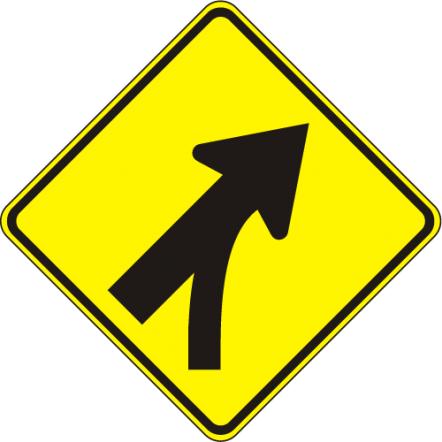
For installations requiring advance merge or lane-change notifications, the Entering Roadway Merge Sign (W4-5) is a standard MUTCD warning sign available in engineer, high-intensity, and diamond grade sheeting.
Traffic Sign Height Requirements and Clearance Standards
Standard Minimum Mounting Heights
The MUTCD establishes these baseline traffic sign mounting heights for ground-mounted signs:
- Conventional roads in rural areas: 5 feet minimum (bottom of sign to ground) in locations where no pedestrians are present, and 7 feet where pedestrians may be present
- Urban areas: 7 feet minimum in all cases
- Shared-use paths and multi-use trails: 8 feet minimum
- Overhead signs (above the travel lane): Minimum 17 feet of vertical clearance above the road surface, subject to local bridge and overhead structure requirements
Sign clearance requirements also apply when signs are mounted on structures. A sign mounted on an overhead gantry or cantilever arm over a travel lane must provide at least the legal vehicle height clearance for that road classification, which is typically 14 to 17 feet depending on road type and jurisdiction.
Maximum Mounting Height
While minimums receive more attention, the MUTCD also cautions against mounting signs too high. Signs placed above the driver's normal field of view reduce conspicuity and reaction time. Ground-mounted signs should generally not exceed 8 feet from the ground to the bottom of the sign unless site conditions require greater clearance.
Low Clearance Considerations
For locations with restricted vertical clearance, such as bridges, underpasses, or parking garages, proper advance warning is required. A Low Clearance Plaque Sign (W12-2P) should be installed in advance of and at the clearance restriction point to alert operators of oversized vehicles.
Traffic Sign Mounting Requirements and Post Standards
Post Selection
Sign post requirements under the MUTCD require that roadside supports be designed to minimize injury in the event of a vehicle impact. This is achieved through breakaway bases, slip-base designs, or the use of yielding materials such as wood or lightweight U-channel steel. The specific post type required depends on sign size, wind load zone, and road classification.
Common post materials and profiles include:
- 2-inch square steel tube (for most standard sign sizes)
- U-channel steel posts (lightweight, common for smaller signs)
- Round galvanized steel pipe (for larger multi-sign assemblies)
- Wood posts (in some rural and low-speed applications)
Sign-to-Post Connection
Sign support standards require that signs be attached to posts in a way that prevents rotation and maintains the correct face angle. Standard aluminum sign blanks with prepunched holes accept carriage bolts, banding straps, or U-bolt assemblies. Anti-rotation clips or brackets are recommended for all installations to prevent signs from spinning in high winds.
For installations on fences or other existing structures, purpose-built hardware simplifies compliance. The Fence Sign Mounting Hardware (HW-FM) includes screws, plastic washers, and mounting backs to secure signs to chain-link or board fences without drilling into post supports.
Temporary and Portable Mounting
Temporary installations use weighted bases, portable pedestals, or ground-spike supports. These systems must be stable enough to withstand expected wind speeds without tipping. Ballasted pedestal bases with cast iron construction are a reliable option for temporary regulatory or directional signage. For work zones and event setups, sign covers allow agencies to quickly deactivate signs when they are not in use, reducing driver confusion and protecting sign faces.
Browse the full range of posts and hardware options to find the right mounting solution for any installation.
Traffic Sign Inspection Requirements and Maintenance Standards
Retroreflectivity Inspections
The most critical element of sign maintenance standards is ensuring adequate retroreflectivity. The MUTCD requires agencies to use one of four accepted methods to manage retroreflectivity compliance:
1. Visual nighttime inspection by a trained observer
2. Measured retroreflectivity using a retroreflectometer
3. Expected sign life (replacing signs on a fixed schedule based on material lifespan data)
4. Blanket replacement (replacing all signs of a given type on a set schedule)
Traffic sign compliance inspections should be documented and records retained. Agencies without a documented management program risk federal funding consequences.
Damage and Defacement Inspections
Beyond retroreflectivity, sign replacement requirements are triggered by physical damage, defacement, fading, or structural failure of the support. A sign that has been bent, struck by a vehicle, obscured by vegetation, or defaced with graffiti must be repaired or replaced promptly. Routine daytime patrol inspections are the most common method for identifying these conditions.
Vegetation Management
Signs can become non-compliant not because of the sign itself but because of vegetation growth that obscures the sign face or reduces sight distance. Ongoing trimming programs are part of a complete sign maintenance standards approach.
Record Keeping
Maintaining a sign inventory with location, installation date, sign type, and material grade enables more efficient retroreflectivity management and helps agencies defend against liability claims. Many agencies now use GIS-based sign management systems to track sign condition and schedule inspections.
Retroreflective Sheeting Grades: Comparing MUTCD Sign Compliance Performance
Choosing the correct retroreflective sheeting grade is a core part of meeting traffic sign installation standards. The table below compares the three primary sheeting grades available from Trafficsigns.com against key compliance criteria.
| Criteria | Engineer Grade (Type I) | High-Intensity Grade (Type III) | Diamond Grade (Type XI) |
|---|---|---|---|
| MUTCD Retroreflectivity Level | Meets minimum for low-speed, low-volume roads | Meets requirements for most regulatory and warning signs | Exceeds requirements, recommended for high-speed and high-volume roads |
| Typical Application | Parking signs, low-speed private roads, supplemental signs | Standard roadway regulatory, warning, and guide signs | Freeway and expressway signs, critical warning signs, school zones |
| Nighttime Visibility | Good at close range | Very good at standard approach distances | Excellent at long distances and at wide angles |
| Service Life Expectancy | 7-10 years (typical) | 7-10 years (typical) | 10+ years (typical) |
| Meets DOT/MUTCD Federal Standards | For applicable sign types and speed zones | Yes, for most standard applications | Yes, exceeds minimum standards |
| Price Range (example: 24" Warning Sign) | Starting ~$44.25 | Starting ~$52.35 | Starting ~$73.35 |
Hardware and Signs for MUTCD-Compliant Installations
Trafficsigns.com supplies the mounting hardware, sign supports, and MUTCD-compliant sign panels needed to meet traffic sign installation standards for any roadway application.
Get MUTCD-Compliant Signs and Mounting Hardware
Trafficsigns.com carries a full selection of traffic signs and installation hardware built to meet federal and state traffic sign installation standards. From sign posts and mounting bases to retroreflective aluminum sign panels across all MUTCD-required sheeting grades, everything you need is available with volume pricing and fast shipping. Browse our complete posts and hardware inventory or shop by sign category to find compliant products for your project.
Shop Posts and Hardware