
A Complete Guide to Traffic Signage Standards, Types, and What Each Category Means
Traffic signage is the backbone of road safety in the United States. Every sign you pass on a highway, in a parking lot, or through a school zone belongs to a specific classification system governed by federal and state standards. Understanding how traffic signage is categorized helps traffic managers, municipalities, contractors, and property owners choose the right sign for every application. This guide breaks down the major types of traffic signage, explains the classification system, and covers the standards that regulate them.
Common Questions About Buying Traffic Signage
- What reflective material grades are available for traffic signs?
- Traffic signs are available in three primary reflective grades: Engineer Grade (standard reflectivity, suitable for low-speed or low-traffic areas), High Intensity (significantly brighter, meets DOT and MUTCD standards for most roadway applications), and Diamond Grade (ultra-reflective, the highest performance option for high-speed roads and critical safety locations). Higher grades cost more per sign but provide better nighttime visibility and longer service life.
- What sizes do standard traffic signs come in?
- Standard traffic sign sizes follow MUTCD guidelines and vary by sign category. Common sizes include 12x18 inches for parking signs, 18x24 inches for regulatory signs, 24x24 inches and 30x30 inches for warning and stop signs, and 36x36 inches or 48x48 inches for construction and high-speed zone applications. Custom sizes are also available for specific installations.
- Can I order traffic signs with custom text or legends?
- Yes. Many standard sign designs are available with custom text fields, including time-of-day restrictions, day-of-week designations, street names, and custom messages. Custom legends are printed directly on reflective aluminum substrate and must conform to MUTCD letter spacing, font, and color requirements for compliant signage.
- Are bulk pricing discounts available for traffic signage orders?
- Yes. Volume pricing tiers apply on many sign types. For example, High Intensity regulatory signs start at a base per-unit price and drop at quantity thresholds of 4, 7, 16, and 50 units. Diamond Grade signs follow similar tiered pricing. Larger orders yield the lowest per-unit cost, making bulk purchasing practical for municipalities, contractors, and property management companies.
- How long does it take to receive a traffic sign order?
- Standard in-stock signs typically ship within a few business days. Custom-legend signs, including roll-up construction signs, require additional production time. Roll-up signs, for example, carry a lead time of approximately 20-25 business days after design approval. It is recommended to plan orders well in advance for project deadlines that require custom or specialty signage.
- What hardware is needed to install a traffic sign?
- Most aluminum traffic signs come with 3/8-inch prepunched mounting holes and are compatible with standard sign posts, U-channel posts, and pedestal base systems. Portable applications can use a pedestal base and standard setup, which supports 12x18, 18x24, and 24x24 inch signs without requiring ground penetration. For temporary installations, sign covers allow existing signs to be concealed and revealed without removal.
- Do traffic signs from Trafficsigns.com meet federal and state standards?
- Yes. All High Intensity and Diamond Grade signs meet DOT and MUTCD state and federal guidelines. Engineer Grade signs meet standard requirements for lower-speed applications. Every aluminum sign features reflective sheeting on .080 aluminum substrate with radius corners, ensuring compliance with federal specifications for sign construction and retroreflectivity.
The Federal Standard That Governs Traffic Signage Classification
The 4 Major Categories of Traffic Signage
1. Regulatory Signs
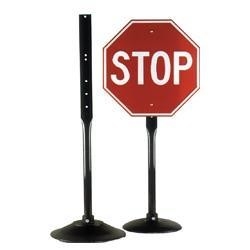
Regulatory signs inform drivers of traffic laws and regulations that apply to a specific location. These include speed limit signs, stop signs, yield signs, turn prohibition signs, and one-way signs. Regulatory signs are generally white with black, red, or green text and use specific shapes such as octagons (stop), circles (railroad advance warning), and inverted triangles (yield). Non-compliance with a regulatory sign is a traffic violation. The Number of Tracks Sign (R15-2p) is an example of a specialty regulatory sign used at railroad crossings.
2. Warning Signs
Warning signs alert drivers to upcoming hazards, changes in road conditions, or situations requiring reduced speed or heightened attention. They are typically diamond-shaped with a yellow or orange background and black legend. Orange warning signs specifically designate construction and maintenance zones. School zone signs fall into a sub-category with fluorescent yellow-green backgrounds for higher visibility. The Day of Week Sign (S4-6) is an example of a school zone supplemental sign.
3. Guide Signs
Guide signs provide route, distance, and directional information. These include green highway route markers, blue service signs indicating fuel and lodging, and brown recreational or cultural interest signs. Guide signs help drivers navigate without requiring lane changes or abrupt decisions.
4. Temporary Traffic Control Signs
Temporary traffic control (TTC) signs are used in construction zones, maintenance areas, and incident management situations. They follow orange and black color conventions for construction zones and often use portable formats such as roll-up signs. The Standard Legend Roll-Up Construction Signs (SL-RU) cover a broad range of standard TTC legends including Road Work Ahead, Flagger Ahead, and Lane Closed Ahead, available in formats from standard mesh to Diamond Grade reflective vinyl.
Traffic Sign Shapes and What They Mean
- Shape is a core element of traffic signage classification. The MUTCD assigns specific shapes to specific sign functions so that a driver can recognize a sign category by shape alone, even in poor visibility conditions.
- Triangle (inverted): Yield signs exclusively.
- Circle: Advance warning signs for railroad crossings, and also used in no-passing zone signs.
- Diamond: Warning signs. The diamond shape universally indicates a hazard or condition ahead.
- Pentagon (pointed top): School advance warning signs.
- Crossbuck (X shape): Railroad grade crossing signs.
- Rectangle (vertical): Regulatory signs including speed limits and turn restrictions.
- Rectangle (horizontal): Guide signs including highway route markers and street name signs.
- Square: Used for a variety of supplemental and informational signs.
Standard Colors Used in Traffic Signage
- White: Regulatory signs including speed limits and lane use controls.
- Yellow: General warning signs for permanent hazards.
- Orange: Temporary traffic control and construction zone signs.
- Green: Guide signs for directional and distance information on highways and roads.
- Blue: Services signs indicating hospitals, rest areas, fuel, food, and lodging.
- Brown: Recreational, cultural, and scenic interest signs.
- Fluorescent Yellow-Green: School zone signs and pedestrian/bicycle crossing warning signs for maximum daytime visibility.
- Fluorescent Orange-Red: Flagger and worker safety applications in some jurisdictions.
Traffic Signage Materials and Construction Standards
Retroflective sheeting comes in the three grades mentioned earlier: Engineer Grade, High Intensity, and Diamond Grade. The minimum retroreflectivity level required by the FHWA depends on the sign category, posting speed, and roadway type. High-volume and high-speed roadways require High Intensity or Diamond Grade sheeting to meet nighttime visibility requirements.
For temporary applications, roll-up signs use flexible substrates including standard mesh, premium mesh, non-reflective vinyl, High Intensity vinyl, and Diamond Grade vinyl. Roll-up signs must include features like polycarbonate corner pockets, anti-kiting straps, and heavy-duty rib kits to remain stable in wind during active work zones.
Sign hardware, including posts, bases, and mounting brackets, is an integral part of a compliant installation. Portable pedestal base systems are used when ground penetration is not possible, and sign covers allow temporary concealment of existing signs during special events or phased construction. Browse the full selection of posts and mounting hardware for compatible installation options.
For installations requiring markers or road-level visual cues alongside signs, pavement markers provide a complementary layer of traffic guidance at the surface level.
Traffic Sign Categories at a Glance
The table below summarizes the main traffic signage categories, their standard colors, shapes, and typical applications to help identify the right sign type for any project.
| Category | Background Color | Primary Shape | Typical Use | Reflectivity Requirement |
|---|---|---|---|---|
| Regulatory | White (with red or black) | Rectangle / Octagon / Inverted Triangle | Speed limits, stop, yield, turn restrictions | Engineer Grade minimum; High Intensity recommended |
| Warning | Yellow | Diamond | Curves, intersections, pedestrian crossings, school zones | High Intensity or Diamond Grade required on high-speed roads |
| Construction / TTC | Orange | Diamond / Rectangle | Work zones, lane closures, flagger locations | High Intensity or Diamond Grade for nighttime work zones |
| School Zone | Fluorescent Yellow-Green | Pentagon / Diamond | School advance warning, crosswalks, speed reduction | High Intensity or Diamond Grade |
| Railroad | Yellow / White | Circle / Crossbuck | Advance warning, number of tracks, low clearance | High Intensity or Diamond Grade |
| Parking | White | Rectangle | No parking, reserved spaces, time restrictions | Engineer Grade or High Intensity |
| Guide | Green / Blue / Brown | Rectangle | Route markers, services, recreation, directional | Engineer Grade minimum on low-speed roads |
Featured Traffic Signage Products
The following products represent commonly needed sign types across the major traffic signage categories. All are built to DOT and MUTCD standards on reflective aluminum or durable flexible substrates.
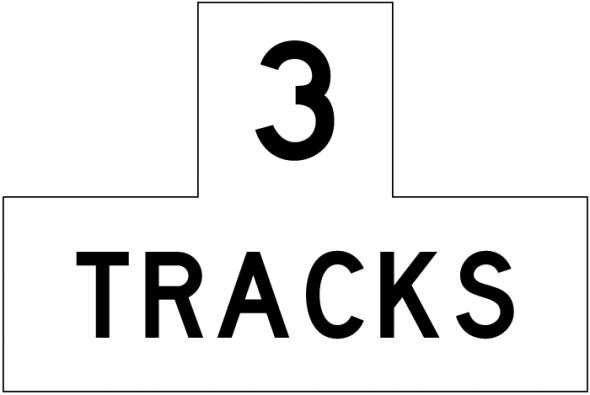 Regulatory Signs / Traffic Control
Number of Tracks Sign - R15-2p
$44.25 - $67.50
Shop on Trafficsigns.com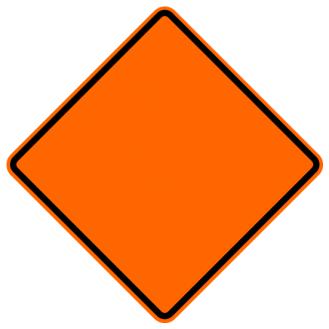 Warning Signs / Construction Zone
Standard Legend Roll-Up Construction Signs - SL-RU
$44.55 - $175.80
Shop on Trafficsigns.com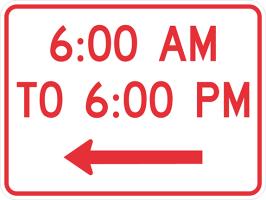 Parking Signs / No Parking
Custom Times of Day (Plaque) Sign - R8-3hP
$21.95 - $58.25
Shop on Trafficsigns.com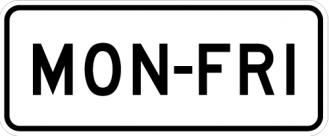
Find the Right Traffic Signs for Your Project
Whether you need MUTCD-compliant regulatory signs for a roadway, construction zone warning signs, school zone markers, or parking lot signs for a private facility, Trafficsigns.com carries the full range of classified traffic signage built to federal and state standards. Browse by category to find the exact sign type your project requires, or explore mounting hardware and installation supplies to complete your setup.
Shop Traffic Signage