
Understand Every Traffic Sign Symbol on the Road
Common Questions About Road Sign Symbols and Meanings
- What sizes are available for road sign symbols?
- Most standard road sign symbols are available in multiple sizes to match their application. Warning signs like the W4-4 series typically come in 24x12, 30x15, 36x18, and 48x24 inch formats. One Way signs such as the R6-1L and R6-1R are available in 36x12 inches, while larger directional signs like the R6-6 and R6-7 come in 24x30 and 30x36 inches. The right size depends on the posted speed limit of the road and the required visibility distance.
- What material grades are road sign symbols made from?
- Road sign symbols at Trafficsigns.com are produced on reflective aluminum in three grades: Engineer Grade (standard reflectivity, ideal for lower-speed roads and parking areas), High Intensity (very reflective, suited for arterial roads and moderate-speed zones), and Diamond Grade (ultra reflective, required or recommended for high-speed highways and critical intersections). All High Intensity and Diamond Grade signs meet DOT and MUTCD state and federal standards.
- What is the price range for road sign symbols?
- Pricing depends on the sign size and reflective material grade. Entry-level engineer grade signs start as low as $21.95 for smaller formats like 12x18 inches. Mid-range warning signs in engineer grade begin around $22.10 for 24x12 sizes. Larger regulatory signs such as the Begin One Way (R6-6) start at $57.95 in engineer grade at the 24x30 size. Diamond Grade and larger sizes increase the per-unit cost, and bulk pricing tiers are available starting at quantities of 4 or more.
- Do bulk orders of road sign symbols qualify for discounts?
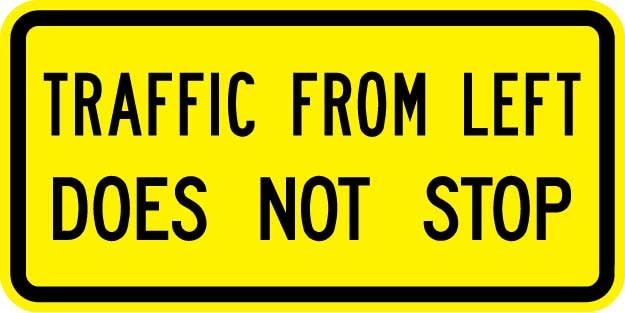
- Yes, at Trafficsigns.com volume pricing tiers apply on most sign models. For example, the W4-4A Traffic From Left Does Not Stop Sign drops from a base of $22.10 to $21.22 at 4 units, $20.33 at 7 units, $19.45 at 16 units, and $18.56 at 50 units in engineer grade. Similar tiered pricing applies across diamond grade and high intensity materials, making bulk orders significantly more cost-effective for municipalities, contractors, and facility managers.
- How are road sign symbols installed?
- Standard road sign symbols come on aluminum blanks with pre-punched 3/8 inch holes and radius corners, making them compatible with standard sign posts, U-channel posts, and square-tube mounting hardware. Signs should be mounted at the height and lateral offset specified by MUTCD guidelines for the road classification. Panel-style signs like One Way signs are typically mounted parallel to the intersecting street.
- How long do reflective road sign symbols last outdoors?
- Engineer Grade reflective sheeting is rated for approximately 7 years of outdoor service life. High Intensity sheeting typically carries a 10-year rating, and Diamond Grade sheeting is rated for 12 years or more under normal outdoor conditions. Actual longevity depends on UV exposure, climate, and whether the sign faces direct weather. Aluminum substrates resist corrosion, and the pre-punched blank construction prevents moisture intrusion at the edges.
- Are the road sign symbols on Trafficsigns.com MUTCD compliant?
- Yes. All High Intensity and Diamond Grade signs sold by Trafficsigns.com meet DOT and MUTCD state and federal guidelines. Signs follow standardized designs, colors, and dimensions as specified in the MUTCD, ensuring they are legally recognized and enforceable on public roads. Engineer Grade signs meet compliance requirements for lower-speed or supplemental applications as permitted by the applicable state standard.
What Are Road Signs and Symbols?
What Do the Different Road Sign Shapes Mean?
What Are the 10 Most Important Road Sign Symbols?
International Road Signs vs. U.S. Road Sign Symbols
For example, in the U.S., speed limit signs display a number on a white rectangle. In Europe, the same restriction is shown as a number inside a red circle. U.S. warning signs use a yellow diamond; international warning signs typically use a white diamond or triangle with a red border.
Despite these differences, many road symbol meanings are universal. Stop signs use the same octagonal red design in most countries following the Vienna Convention. Yield signs use the downward triangle. Arrow symbols for one-way streets are largely consistent globally.
For U.S. installations, all signs must comply with MUTCD standards to be legally enforceable on public roads. International designs are not an acceptable substitute on U.S. public right-of-way, though they may be used on private property for educational or themed purposes.
Road Sign Symbol Material Grades: Side-by-Side Comparison
Choosing the right reflective material grade for your road sign symbols affects both performance and compliance. Use this comparison to match the material to your application.
| Feature | Engineer Grade | High Intensity | Diamond Grade |
|---|---|---|---|
| Reflectivity Level | Standard | Very Reflective | Ultra Reflective |
| Typical Service Life | 7 years | 10 years | 12+ years |
| Best Application | Parking areas, low-speed roads | Arterial roads, collector streets | Highways, high-speed intersections |
| DOT/MUTCD Compliance | Yes (where applicable) | Yes | Yes |
| Starting Price (24x12) | $22.10 | $30.25 | $48.35 |
| Night Visibility | Good | Very Good | Excellent |
| Substrate | Aluminum punched blank | Aluminum punched blank | Aluminum punched blank |
Shop Road Sign Symbols at Trafficsigns.com
All signs are produced on reflective aluminum blanks and meet DOT and MUTCD standards. Select from engineer grade, high intensity, or diamond grade reflective sheeting to match your road classification and visibility requirements.
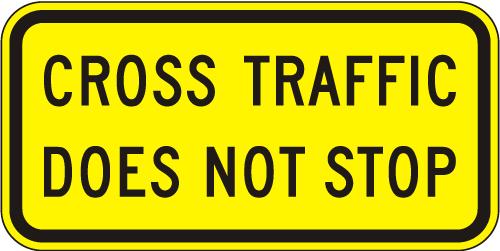
 Warning Signs
Traffic From Left Does Not Stop Sign - W4-4A
$22.10 - $123.75
Shop on Trafficsigns.com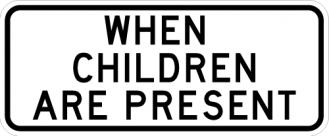 Warning Signs - School Zone
When Children Are Present Sign - S4-2
$22.10 - $59.95
Shop on Trafficsigns.com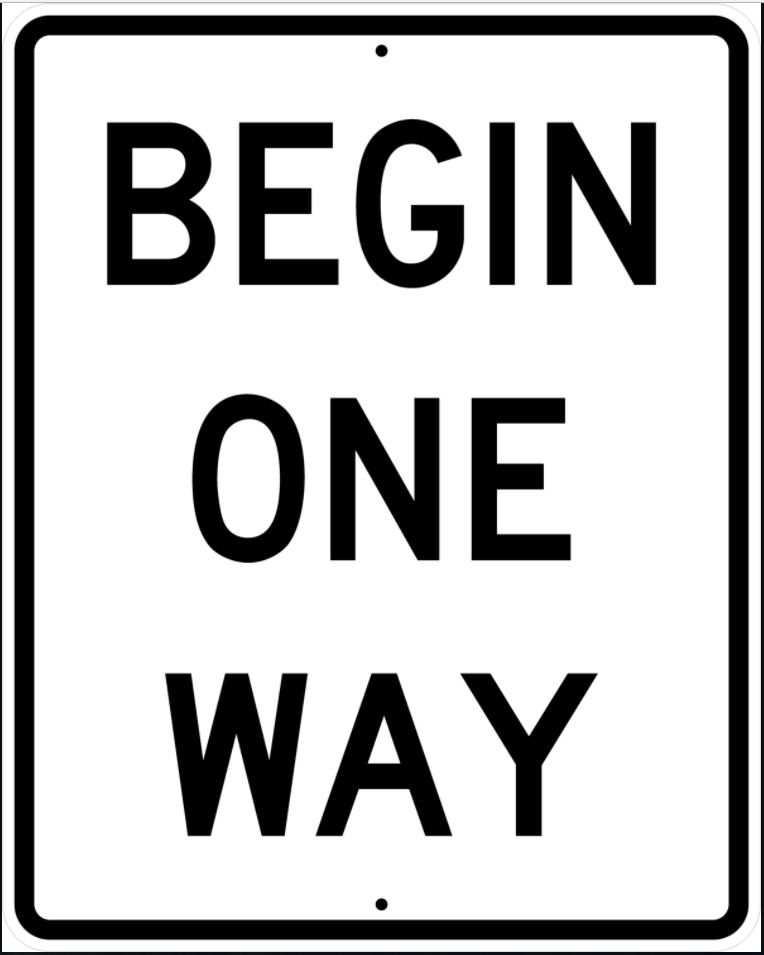 Regulatory Signs - Traffic Control
Begin One Way Sign - R6-6
$57.95 - $123.75
Shop on Trafficsigns.com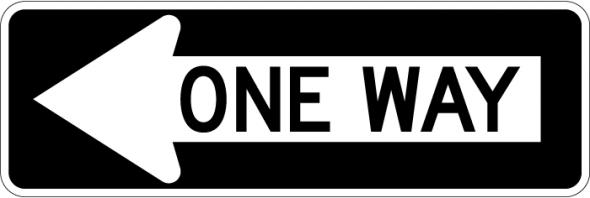 Regulatory Signs - Traffic Control
One Way Left Sign - R6-1L
$33.25 - $58.25
Shop on Trafficsigns.comFind the Right Road Sign Symbols for Your Project
Trafficsigns.com carries a complete inventory of MUTCD-compliant traffic sign symbols for municipalities, contractors, property managers, and facility operators. All signs ship on reflective aluminum blanks in engineer grade, high intensity, or diamond grade sheeting. Browse the full catalog or contact our team for assistance with sign selection, sizing, and volume pricing.
Shop All Traffic Signs