
A complete overview of traffic sign types, meanings, and standards used across the United States
Common Questions About Buying Traffic Signs
- What materials are traffic signs made from?
- Traffic signs sold at Trafficsigns.com are made from reflective sheeting on .080 aluminum blanks with radius corners and pre-punched mounting holes. Reflectivity grades include Engineer Grade (standard reflective), High Intensity (very reflective), and Diamond Grade (ultra reflective). High Intensity and Diamond Grade options meet DOT and MUTCD state and federal standards.
- What sizes do traffic signs come in?
- Sizes vary by sign type and application. Common sizes include 12x12, 12x18, 18x24, 24x24, 24x30, 30x30, 30x36, 36x36, and 48x48 inches. The correct size for your location depends on the posted speed limit, road type, and MUTCD guidelines for that sign category. Larger signs are typically required on higher-speed roads.
- Do your traffic signs meet MUTCD and DOT standards?
- Yes. All High Intensity and Diamond Grade signs sold on Trafficsigns.com meet DOT and MUTCD state and federal guidelines. Signs are manufactured on reflective aluminum with radius corners and pre-punched holes for straightforward compliance and installation.
- Are bulk discounts available on traffic signs?
- Yes. Volume pricing tiers are available on most products. For example, the Do Not Pass Sign (R4-1) in Engineer Grade starts at $21.95 each and drops to $18.44 per unit when ordering 50 or more. Discounts typically begin at quantities of 4, 7, 16, and 50 units, making bulk purchases cost-effective for municipalities, property managers, and contractors.
- How long does it take to receive a traffic sign order?
- Production and shipping timelines depend on the specific product and order volume. Standard in-stock signs ship promptly after order processing. For exact turnaround times on your specific order, contact Trafficsigns.com directly or check the product page for current lead-time information.
- How are traffic signs mounted or installed?
- Most traffic signs from Trafficsigns.com come with 3/8-inch pre-punched holes and radius corners, designed for standard post or bracket mounting. A portable traffic sign stand is also available for temporary or mobile installations where post-mounting is not practical.
- Which reflectivity grade should I choose for my traffic sign?
- Engineer Grade reflective sheeting is appropriate for lower-speed, off-road, or parking applications. High Intensity sheeting is suitable for most public road applications and meets MUTCD standards. Diamond Grade offers the highest retroreflectivity and is recommended for high-speed roadways, school zones, and critical safety locations where maximum nighttime visibility is required.
What Is a Traffic Sign?
Types of Traffic Signs: A Complete Overview
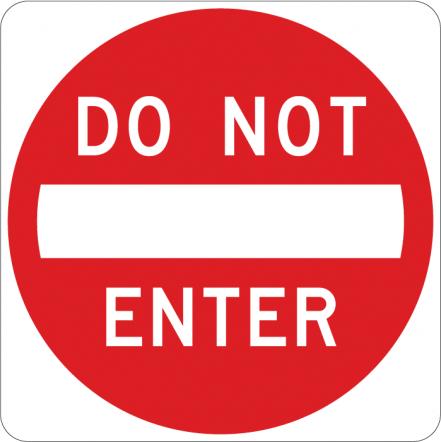
Regulatory signs inform drivers of traffic laws and requirements that must be obeyed. They are typically white with black or red lettering and symbols. Common examples include stop signs, yield signs, speed limit signs, and do-not-enter signs. The Do Not Enter Sign (R5-1), for example, uses the universally recognized red and white design to communicate restricted access. Regulatory signs related to passing restrictions, such as the Do Not Pass Sign (R4-1) and the Do Not Pass on Shoulder sign (R4-18), fall into this category as well. You can browse the full range at the regulatory signs section of the catalog.
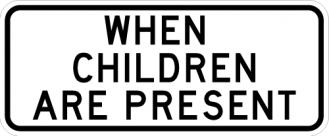
Warning signs alert drivers to potentially hazardous conditions or unexpected road features ahead. They are predominantly yellow (or orange in construction zones) with black symbols and text, and they are typically diamond-shaped. The When Children Are Present Sign (S4-2) is a school zone warning sign used to prompt drivers to reduce speed in areas where children may be crossing or playing nearby.
Guide signs provide directional and distance information to help drivers navigate. These include highway route markers, street name signs, and destination signs. They are generally green with white lettering on freeways and expressways, or brown for recreational and cultural area destinations.
Parking signs regulate where vehicles may or may not park. They appear in a variety of colors and formats, including no-parking signs, reserved parking signs, and time-restricted signs. The Custom Times of Day (Plaque) Sign (R8-3hP) is a practical example, allowing property managers to specify restricted hours clearly and in compliance with MUTCD formats.
School zone signs are a specialized subset that combines elements of regulatory and warning sign design. They typically use fluorescent yellow-green backgrounds, a color adopted specifically to maximize visibility in school areas. Signs like the Bicycle and Pedestrian Crossing Sign (W11-15) are commonly used near school zones to address multiple road users.
Orange background signs are used in work zones to direct traffic around construction or maintenance activities. Signs such as the New Traffic Pattern Ahead Sign (W23-2) inform drivers of changes to road layout in advance, giving them time to adjust speed and position safely.
Signs near railroad crossings and light rail transit corridors form a distinct group. They include crossing advance warning signs, number-of-tracks signs, and prohibition signs. The Number of Tracks Sign (R15-2p), Do Not Drive on Tracks Sign (R15-6a), and Do Not Pass Light Rail Transit Sign (R15-5) are all examples of MUTCD-compliant signs addressing rail-corridor safety.
Object markers are used to highlight fixed hazards within or adjacent to the roadway, such as bridge abutments or median barriers. The Object Marker Center Type 3 Red and White (OM3-C-RW) is a standard delineator used to guide drivers away from center obstacles.
Why Traffic Signs Matter
For property owners and facility managers, the importance of traffic signs also has a legal dimension. Improperly marked parking areas, missing speed limit signs in private lots, or absent warning signs near hazards can expose property owners to liability if an accident occurs. Installing MUTCD-compliant signage is one of the most cost-effective risk-management steps available.
For municipalities and transportation departments, the MUTCD requirements are not optional. Federal funding for roadway projects often depends on compliance with MUTCD standards. This is why every regulatory sign used on a public road must meet specific retroreflectivity, color, and size specifications.
The reflectivity of a sign is also a critical safety factor. Engineer Grade reflective sheeting is adequate for lower-speed environments, but High Intensity and Diamond Grade materials are required in many public roadway applications because they remain visible to drivers at greater distances and in adverse weather conditions. All High Intensity and Diamond Grade signs from Trafficsigns.com meet DOT and MUTCD state and federal guidelines.
For locations that require temporary signage, such as construction sites or event management situations, a portable traffic sign stand allows compliant signs to be deployed quickly without permanent installation.
Traffic Sign Reflectivity Grades Compared
Choosing the right reflective sheeting grade affects visibility, compliance, and long-term performance. The table below outlines the three grades available across the Trafficsigns.com catalog.
| Feature | Engineer Grade | High Intensity | Diamond Grade |
|---|---|---|---|
| Reflectivity Level | Standard | Very Reflective | Ultra Reflective |
| Meets MUTCD Standards | Varies by application | Yes | Yes |
| Best For | Parking lots, private property, low-speed areas | Most public road applications | High-speed roads, school zones, critical safety locations |
| Nighttime Visibility | Good | Very Good | Excellent |
| Typical Price (12x18 example) | Starting at $21.95 | Starting at $25.95 | Starting at $32.95 |
| Substrate | Aluminum (.080) | Aluminum (.080) | Aluminum (.080) |
| Mounting | Pre-punched 3/8" holes | Pre-punched 3/8" holes | Pre-punched 3/8" holes |
Featured Traffic Signs
The following products represent a cross-section of the most commonly used traffic sign categories, all manufactured on reflective aluminum and compliant with DOT and MUTCD standards.
 Warning Signs / School Zone
When Children Are Present Sign - S4-2
$22.10 - $59.95
Shop on Trafficsigns.com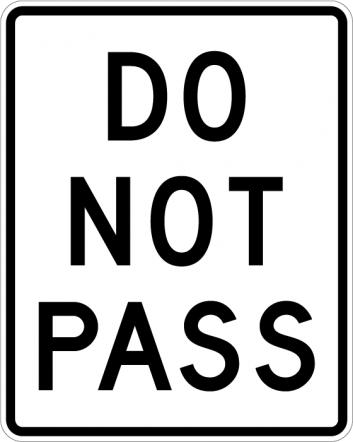
 Parking Signs
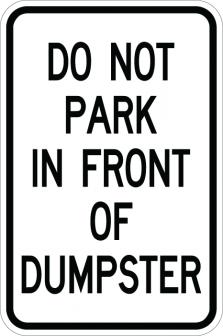
Do Not Park In Front Of Dumpster Sign - AR-122
$21.95 - $25.95
Shop on Trafficsigns.com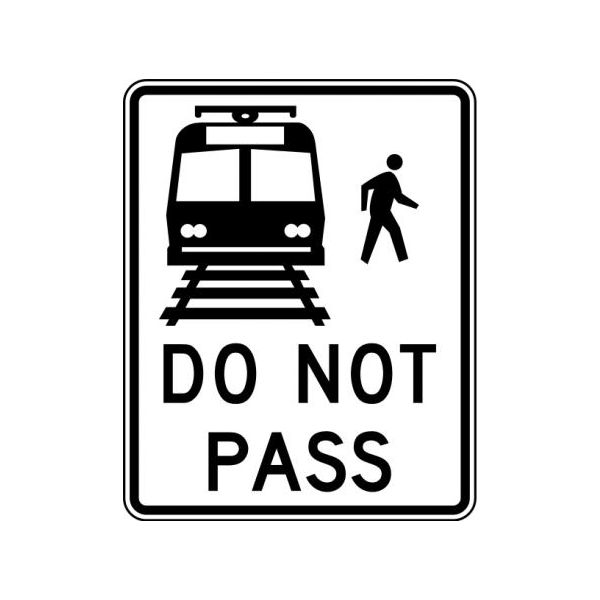 Regulatory Signs / Transit
Do Not Pass Light Rail Transit Sign - R15-5
$57.95 - $92.50
Shop on Trafficsigns.comFind the Right Traffic Sign for Your Location
Trafficsigns.com carries a full catalog of MUTCD-compliant traffic signs for public roads, private property, parking facilities, school zones, and transit corridors. All signs are manufactured on durable reflective aluminum and available in multiple grades to match your compliance requirements and visibility needs. Volume pricing is available on most products, making it easy to outfit an entire facility or roadway corridor at a reduced per-unit cost.
Shop All Traffic Signs