
A practical breakdown of the FHWA's updated manual and what it means for the signs you order, install, and maintain
The Manual on Uniform Traffic Control Devices (MUTCD) is the federal rulebook that governs regulatory, warning, and guide signs on public roads in the United States, as well as private roads open to the public. The 11th Edition, published by the Federal Highway Administration (FHWA) in December 2023, brought the biggest set of revisions to traffic sign standards in over a decade, and FHWA followed it with Revision 1 in December 2025. Today, the 11th Edition with Revision 1 is the current version. For public works departments, contractors, and property managers who purchase signage, understanding what changed matters more than memorizing the full manual, which runs about 1,160 pages. This guide walks through the updates that actually affect the signs you buy, install, and replace.
Common Questions About the MUTCD 11th Edition
- What is the latest version of MUTCD?
- The current version is the 11th Edition of the MUTCD with Revision 1, dated December 2025. The 11th Edition was first published in December 2023 and replaced the 2009 edition (as amended) as the national standard for traffic control devices, including signs, signals, and pavement markings. Revision 1 updated it in December 2025, and FHWA now lists the version with Revision 1 as the official current edition.
- When was the 11th edition of the MUTCD released?
- The FHWA published the 11th Edition in December 2023, and it took effect in early 2024. States are given a set period to adopt it, either by adopting the national manual or by issuing their own state manual or supplement that's in substantial conformance with it. FHWA then issued Revision 1 in December 2025. For exact effective and adoption dates, check FHWA's MUTCD website or your state DOT.
- What are the major changes in the MUTCD 11th edition?
- Key updates include bringing Rectangular Rapid-Flashing Beacons (RRFBs) into the manual itself, in Chapter 4L, after years of use under FHWA interim approval; updated provisions for pedestrian hybrid beacons; a new Part 5 on traffic control device considerations for automated vehicles; updated bicycle facility guidance, including bicycle signals in Chapter 4H; and revised work zone (Part 6) provisions. Railroad and light rail crossings are now covered together in Part 8.
- Where can I find a copy of the MUTCD?
- The full 11th Edition with Revision 1 is available as a free PDF directly from the FHWA's MUTCD website, which also links to each state's manual or supplement. Some transportation organizations sell printed copies if you prefer a physical reference for the office or field truck.
- Do I need to replace all my existing signs right away?
- No. Most jurisdictions allow existing signs that met prior editions to remain in service until they reach the end of their normal service life or fail retroreflectivity requirements, unless FHWA has set a specific target compliance date for that device; those dates are listed in Table 1B-1 of the MUTCD. New installations and replacements, however, should be ordered to current 11th Edition specifications.
- What materials should MUTCD 11th edition compliant signs use?
- Sign faces still rely on reflective sheeting applied to aluminum blanks, available in Engineer Grade (basic reflectivity), High Intensity (stronger nighttime visibility), and Diamond Grade (maximum reflectivity for long viewing distances). Engineer Grade works for white and red regulatory signs, but the MUTCD doesn't allow it on yellow warning signs or orange work zone signs, which need High Intensity or Diamond Grade. Beyond that, the grade choice depends on road speed, sign placement, and budget.
- How do I know if a sign I buy meets the new MUTCD standards?
- Look for sign descriptions that reference the current MUTCD, correct sign codes (like R11-2 or W23-2), and proper reflective sheeting grade. Reputable suppliers manufacture signs to current manual specifications by default, so the sign code and material grade are the two details worth double-checking before you order.
Key Sign Changes You'll See in the MUTCD 11th Edition
The 11th Edition didn't just tweak a few diagrams. It reorganized several parts of the manual and brought a number of devices from interim approval into the manual itself. Rectangular Rapid-Flashing Beacons, long used under FHWA interim approval at pedestrian crossings, are now covered in Chapter 4L with defined rules for where and how they're used. Pedestrian hybrid beacon provisions, now in Chapter 4J, were also updated, and railroad and light rail crossings are now covered together in Part 8.
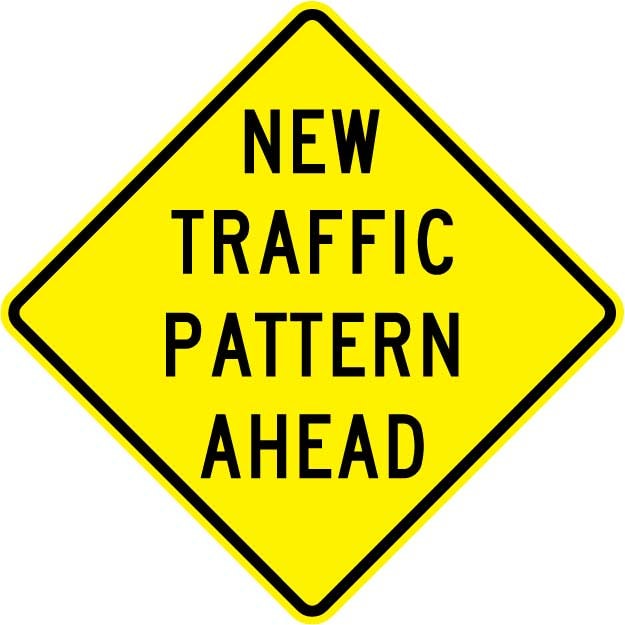
Work zone signage under Part 6 also saw updates, including revised typical applications for temporary traffic control. Familiar signs carry over too. The NEW TRAFFIC PATTERN AHEAD sign (W23-2), which was already in the 2009 edition, is a good example of clear advance communication before a traffic pattern shifts. The MUTCD recommends displaying it for up to 2 weeks and then covering or removing it, so drivers don't learn to ignore it.
Perhaps the most forward-looking change is the new Part 5, which covers traffic control device considerations for automated vehicles. It's an early step, and it signals where future editions are headed as automated vehicle technology grows.
How These Changes Affect the Signs You Order
For agencies and businesses that purchase signage rather than write policy, the practical impact of the 11th Edition shows up in a few familiar categories. Regulatory signs remain the backbone of road closures and traffic control. Products such as the Road Closed Local Traffic Only Sign and the Road Closed To Thru Traffic Sign continue to follow the R11 series designations, built to the current manual's retroreflectivity and material standards. If you manage detours or need to browse the broader lineup, the full regulatory traffic control sign category covers everything from stop control to lane discipline signage like the STAY IN LANE sign (R4-9).
Guide signs were also updated in the current edition, including the general service signs used at rest areas and service locations. The Telecommunication Devices for the Deaf Sign is a good example of a service-oriented guide sign that supplements advance guide signage at rest areas where TDD equipment is available. For agencies updating an entire guide sign package to current standards, the guide sign road signs category is a practical starting point.
Railroad crossing signage rounds out another updated area. In the 11th Edition, railroad and light rail crossings are covered together in Part 8, replacing the separate light rail part in the previous edition. Grade crossing signs, including the Number of Tracks plaque (R15-2P) mounted with the Crossbuck at a crossing, remain critical for driver awareness where roadways intersect active rail lines.
MUTCD 10th Edition vs. 11th Edition: What's Different
A side-by-side look at how key traffic control device categories shifted between the previous manual and the current MUTCD 11th Edition.
| Category | 10th Edition (2009, as amended) | 11th Edition (2023, with Revision 1 in 2025) |
|---|---|---|
Rectangular Rapid-Flashing Beacons (RRFBs) | Used under FHWA interim approval rather than included in the manual | Included in the manual itself (Chapter 4L), with defined rules for where and how they're used |
Pedestrian Hybrid Beacons | Covered in the previous edition's signal chapters | Updated provisions, now in Chapter 4J |
Automated Vehicle Considerations | Not addressed in the manual | New Part 5 covering traffic control device considerations for automated vehicles |
Bicycle Facility Signage | Basic shared-use path and bike lane signage | Updated guidance, including bicycle signals (Chapter 4H) |
Work Zone Traffic Control (Part 6) | Prior typical applications with periodic interim revisions | Updated typical applications for temporary traffic control |
Retroreflectivity Standards | Minimum retroreflectivity tables established under the 2007 federal rule | Minimum maintained retroreflectivity requirements carried forward, with updates |
Sign Material Options | Engineer Grade, High Intensity, and Diamond Grade sheeting per ASTM D4956 | Same sheeting categories; engineer grade still isn't permitted on yellow or orange signs |
MUTCD-Compliant Traffic Signs Built for the Current Manual
Every sign below is made with reflective sheeting on aluminum blanks to meet current MUTCD requirements. White regulatory signs are available in engineer grade, high intensity, or diamond grade; yellow and orange warning signs need high intensity or diamond grade.
 Warning Signs
New Traffic Pattern Ahead Sign - W23-2
Display for up to 2 weeks, then cover or remove
$44.25 - $256.95
Shop on Trafficsigns.com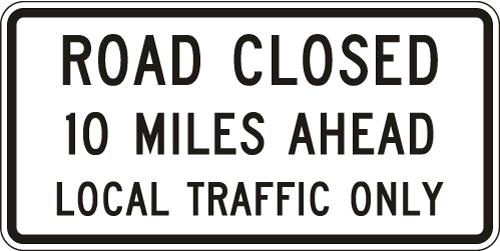 Regulatory Signs
Road Closed Local Traffic Only Sign - R11-3a
$110.00 - $165.00
Shop on Trafficsigns.com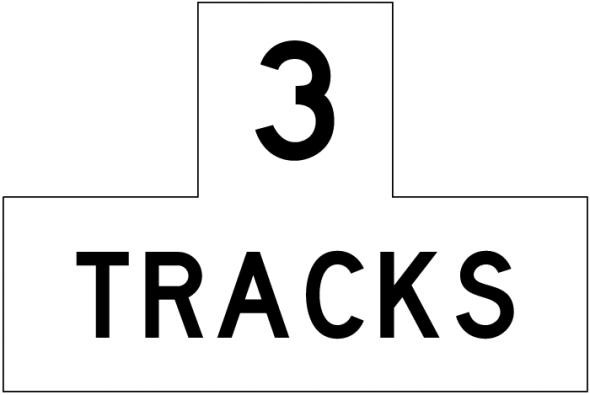 Regulatory Signs
Number of Tracks Sign - R15-2p
MUTCD R15-2P plaque, mounted with the Crossbuck
$44.25 - $67.50
Shop on Trafficsigns.com Guide Signs
Telecommunication Devices for the Deaf Sign - D9-21
$34.15 - $148.50
Shop on Trafficsigns.com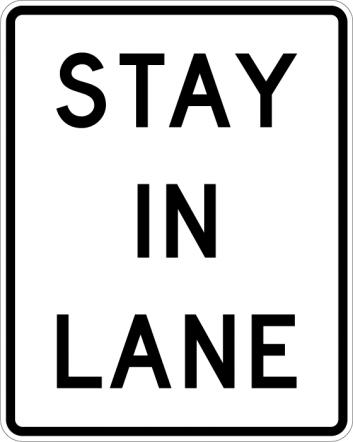 Regulatory Signs
Stay In Line Sign - R4-9
MUTCD name: STAY IN LANE (R4-9)
$33.25 - $195.50
Shop on Trafficsigns.comOrder MUTCD 11th Edition Compliant Signs Today
Whether you're replacing outdated regulatory signs, updating a work zone package, or filling a gap in your guide sign inventory, Trafficsigns.com manufactures every sign to current federal traffic sign standards. Browse the full catalog of regulatory and traffic control signs to find the exact codes and reflective grades your project requires.
Shop Regulatory Signs