
Understanding crashworthy sign supports and where MUTCD and AASHTO standards require them
A breakaway traffic sign post is a support system engineered to yield, snap, or separate at its base when struck by a vehicle, reducing the risk of serious injury to the occupants. Rather than acting as a rigid obstacle, a properly designed breakaway sign post absorbs and redirects impact energy so the post falls away from the vehicle's path. These systems are standard practice on public roadways, highway shoulders, and any location where a fixed sign support sits within the clear zone of moving traffic. This guide covers how breakaway posts work, when they're required, and which sign post systems fit different roadside applications.
Common Questions About Breakaway Sign Posts
- What is a breakaway sign post?
- A breakaway sign post is a roadside sign support designed to fracture, hinge, or release from its foundation when hit by a vehicle. Instead of stopping the vehicle abruptly, the post gives way, lowering the force transferred to occupants. Common designs include slip base plates, breakaway couplers on tubular posts, and frangible transformer bases used on larger structures.
- What is a breakaway pole?
- A breakaway pole refers to the same concept applied to taller or heavier supports, such as light poles or large sign structures. It uses a similar mechanism, typically a slip base or frangible base, that separates cleanly on impact so the pole falls clear of the vehicle instead of remaining upright and rigid.
- What is a passive safe sign post?
- Passive safe (sometimes called crashworthy) refers to any sign support tested and certified under AASHTO's Manual for Assessing Safety Hardware (MASH) or the older NCHRP Report 350 criteria. A passive safe sign post has been crash-tested at highway speeds and shown to minimize windshield intrusion and occupant risk, regardless of the exact breakaway mechanism used.
- How much does a sign post cost?
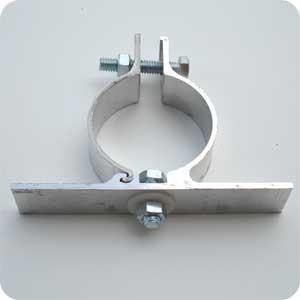
- Pricing depends on the post type, gauge, and hardware involved. A Tubular Posts Breakaway System socket assembly starts around $64.15, with volume pricing available for larger orders. Add-on hardware like post clamps starts under $10 per set. Full pricing depends on post length, base weight, and whether you need a fixed pedestal or a breakaway assembly.
- When is a breakaway post actually required?
- Breakaway posts are required whenever a sign support sits within the roadway clear zone, generally within 30 feet of the edge of travel lanes on higher-speed roads, unless the post is shielded by a guardrail or other roadside hazard barrier. State DOT specifications and the MUTCD both reference this clear zone requirement for permanent traffic control devices.
- Can I use a fixed pedestal base instead of a breakaway system?
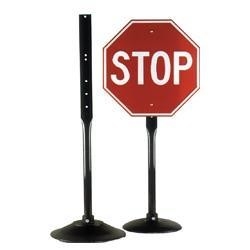
- Fixed pedestal bases, like a pedestal base and standard, are appropriate for parking lots, private drives, and other off-roadway locations where vehicle speeds are low and the sign isn't within a public clear zone. They should not be substituted for breakaway hardware on public roadways subject to state DOT oversight.
- Do breakaway posts meet federal and state DOT standards?
- Yes, when purchased as certified assemblies. Systems sold for public roadway use should reference applicable MUTCD sign post requirements and AASHTO breakaway standards testing. Always confirm the specific post and base combination has documentation showing it passed crash testing for the intended application before installation on a state or federal route.
How Breakaway Sign Post Systems Work
Each of these approaches is tested against AASHTO breakaway standards, which measure occupant risk factors like windshield header impact velocity and change in vehicle velocity. A post that passes these tests is classified as crashworthy, meaning it can be installed within a roadway clear zone without acting as a fixed hazard.
Where Breakaway Posts Are Required vs. Where Fixed Posts Work
Off-roadway applications are different. Signs in parking lots, private driveways, warehouse yards, or pedestrian-only areas generally use fixed installations since vehicle speeds are lower and the location isn't governed by the same clear zone rules. A heavy-duty pedestal base and standard with an 18 or 24 pound cast iron base works well for these lower-risk settings. Browse the full range of posts and hardware to compare breakaway and fixed options side by side.
Breakaway vs. Fixed Sign Post Options
Compare common sign post systems to determine which fits your installation location and traffic exposure.
| Post System | Breakaway Mechanism | Typical Location | Notes |
|---|---|---|---|
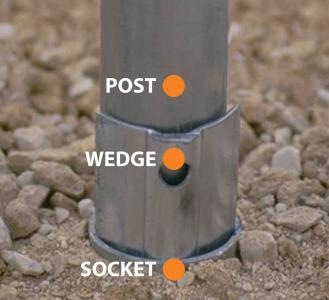
| Tubular Post Breakaway System | Socket and wedge release, no ground anchoring | Public roadway shoulders, small regulatory signs | Fits 2 3/8" O.D. posts; installs without concrete or bolts |
| U-Channel Breakaway Post | Perforated steel shears at ground-level breakaway point | State and county roads, warning and guide signs | Long-standing MUTCD sign post standard for steel posts |
| Slip Base System | Bolted plate assembly separates on impact | Larger sign structures, overhead supports | Requires periodic bolt torque inspection |
| Fixed Pedestal Base | None; rigid mounting | Parking lots, private property, low-speed areas | Not for use within a public roadway clear zone |
Sign Post Systems and Hardware
Shop breakaway posts, mounting clamps, and base hardware built for roadside and off-road sign installations.

Build a Compliant Roadside Sign Installation
Whether you're outfitting a highway shoulder with a certified breakaway assembly or setting up a fixed base for a parking lot, we stock the posts and hardware to get the job done right. Browse breakaway sign post systems, clamps, and base options built to MUTCD and AASHTO specifications.
Shop Posts and Hardware