What Is a Crossbuck Sign and Where Is It Required?

What Is a Crossbuck Sign and Where Is It Required?

Understanding Railroad Crossbuck Sign Meaning, Requirements, and Compliance

The crossbuck sign is one of the most recognized traffic control devices in the United States. Found at railroad grade crossings across the country, this distinctive X-shaped sign serves a critical safety function: alerting drivers that they are approaching a railroad crossing and must yield to any oncoming trains. Whether you are a transportation department, private railroad operator, or facility manager responsible for a grade crossing, understanding crossbuck sign requirements under MUTCD guidelines is essential for maintaining compliance and protecting public safety.

Common Buyer Questions About Crossbuck Signs

What material are crossbuck signs made from, and how durable are they?
Crossbuck signs sold at Trafficsigns.com are made from high-quality reflective aluminum. The R15-1 Railroad Crossing Crossbuck Sign is available in High Intensity and Diamond Grade reflective sheeting, both of which meet DOT and MUTCD state and federal standards. Aluminum construction makes these signs weather-resistant, rust-resistant, and suitable for long-term outdoor installation at active grade crossings.
What size crossbuck sign do I need?
The standard crossbuck sign (R15-1) is available in a 48x9 inch format, which is the MUTCD-specified size for highway-rail grade crossings. For specific applications, consult your state DOT or MUTCD guidelines to confirm the required dimensions for your crossing type and roadway classification.
What is the difference between High Intensity and Diamond Grade reflective material?
High Intensity reflective sheeting offers very high retroreflectivity suitable for most public roadway applications. Diamond Grade provides ultra-high retroreflectivity and is the premium option for high-speed roads, areas with limited ambient lighting, or locations requiring maximum nighttime visibility. Both grades meet DOT and MUTCD standards. Diamond Grade carries a slightly higher price per sign.
How much does a crossbuck sign cost, and are bulk discounts available?
The R15-1 Railroad Crossing Crossbuck Sign starts at $89.95 for High Intensity grade. Quantity pricing is available: orders of 4 or more drop to $86.35 per sign, 7 or more to $82.75, 16 or more to $79.16, and 50 or more to $75.56. Diamond Grade versions start at $107.50 with similar tiered discounts. Bulk orders offer meaningful per-unit savings for larger projects.
Does the crossbuck sign come pre-punched for mounting?
Yes. The R15-1 crossbuck sign is provided as a standard punched blank, meaning it arrives with pre-drilled mounting holes for straightforward post installation. No additional drilling is required on-site.
How long does production and shipping take for crossbuck signs?
Production and shipping times vary based on order size and current volume. Contact Trafficsigns.com directly for current lead times on your specific order quantity. Smaller orders typically ship faster than large bulk orders.
Are these signs compliant with federal and state DOT requirements?
Yes. The R15-1 Railroad Crossing Crossbuck Sign meets DOT and MUTCD state and federal standards. The sign uses High Intensity and Diamond Grade reflective materials as specified by MUTCD guidelines for highway-rail grade crossing signage.

Crossbuck Sign Meaning: What Does This Sign Tell Drivers?

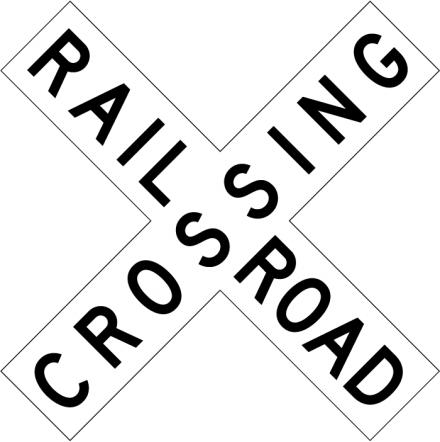
The crossbuck sign meaning is straightforward but carries significant legal weight. This white X-shaped sign, bearing the words 'RAILROAD CROSSING' on two diagonal planks, communicates that a railroad grade crossing is ahead. Under traffic law in all U.S. states, a crossbuck sign carries the same legal force as a yield sign. Drivers are required to slow down, look both ways for approaching trains, and only proceed when the tracks are clear.
The crossbuck sign in driving education is often described as a regulatory sign rather than a simple warning. This distinction matters: drivers are not merely encouraged to use caution; they are legally obligated to yield. If a driver is involved in a collision at a crossbuck-signed crossing, failure to yield is treated the same as running a yield sign.
When a crossbuck sign appears alongside flashing lights or a gate, the driver's obligation increases. With flashing lights, drivers must stop completely and wait until the lights stop. With a gate, drivers must never go around or under a lowered gate under any circumstances.

Where Are Crossbuck Signs Required?

Railroad crossbuck sign requirements are established by the Manual on Uniform Traffic Control Devices (MUTCD), which is the federal standard governing all traffic signs on public roads. Under MUTCD Section 8B, the R15-1 crossbuck sign must be installed at every public highway-rail grade crossing in the United States.
Specifically, crossbuck signs are required at:
- All public highway-rail grade crossings, including paved and unpaved roadways
- Both sides of a crossing when a road crosses multiple tracks
- Crossings with or without active warning devices such as gates and flashing lights
- Light rail transit crossings in semiexclusive alignments
Private crossings are handled differently. While MUTCD requirements technically apply to public roads, many state DOTs and private railroad operators voluntarily install crossbuck signs at private crossings as a safety best practice.
The number of crossbuck signs at a single location depends on the number of tracks. A single-track crossing requires one crossbuck assembly. A multi-track crossing requires a supplemental 'NUMBER OF TRACKS' plaque mounted below the crossbuck to indicate how many sets of tracks the driver will cross.
In addition to the crossbuck itself, MUTCD requires advance warning signs such as the W10-1 Railroad Crossing Sign to be placed in advance of the crossing, giving drivers additional notice before reaching the grade crossing location.

The History of the Crossbuck Sign

The crossbuck sign has roots in the late 19th century and early 20th century, when the rapid expansion of the American rail network created urgent safety problems at grade crossings. Before standardized signage, railroads used a variety of warning methods including painted boards, watchmen, and locally designed markers.
The X-shaped crossbuck design was standardized in the United States during the 1920s and 1930s as part of broader efforts to unify traffic control devices nationwide. The shape was chosen partly because it is visually distinct from other sign shapes and is recognizable even when partially obscured by vegetation or poor lighting.
The MUTCD, first published in 1935, formally established the crossbuck as the standard sign for highway-rail grade crossings. Over the decades, materials evolved from wood to steel and eventually to the reflective aluminum used today. Modern crossbuck signs use retroreflective sheeting that returns light from headlights directly back toward the driver, dramatically improving nighttime visibility compared to the painted wood signs of earlier eras.

Crossbuck Sign Types and Related Railroad Crossing Signs

The standard crossbuck (R15-1) is the centerpiece of any grade crossing installation, but MUTCD may require or recommends several companion signs depending on the crossing's geometry, traffic type, and physical conditions. Understanding the full sign system helps transportation managers and contractors specify the correct package for any crossing.
Key signs used alongside the crossbuck include:
- W10-1 Railroad Crossing Sign: Installed in advance of the grade crossing to give drivers early warning. This diamond-shaped warning sign is typically posted 100 to 500 feet before the crossing depending on posted speed.
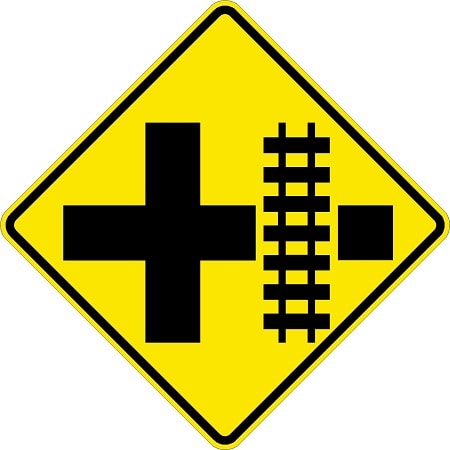
- W10-2R and W10-2L Parallel Railroad Crossing Signs: Required when a highway runs parallel and close to light rail or railroad tracks, warning turning drivers that a grade crossing is immediately ahead.
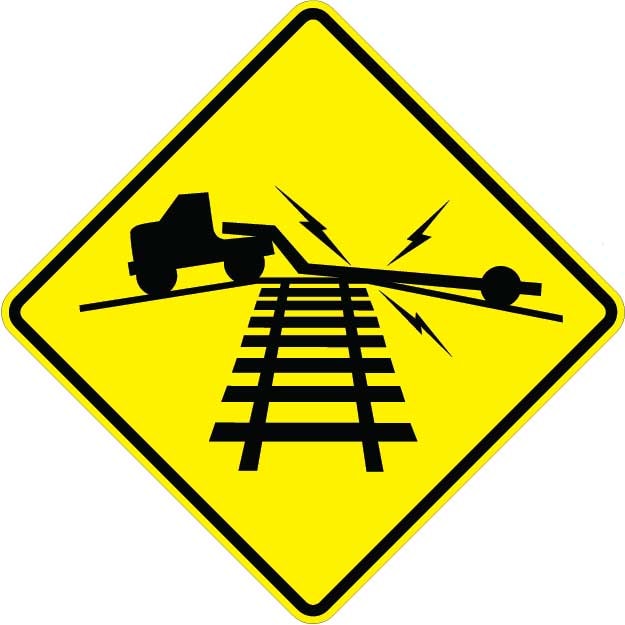
- W10-5 Low Ground Clearance Railroad Sign: Required when the crossing profile creates a hang-up risk for long-wheelbase vehicles or low-clearance trailers. This sign protects trucks and trailers that could become stuck on the tracks.
- W10-11 Storage Space Railroad Crossing Sign:  Used where limited storage space exists beyond the tracks, helping drivers recognize the need to avoid stopping on the crossing.
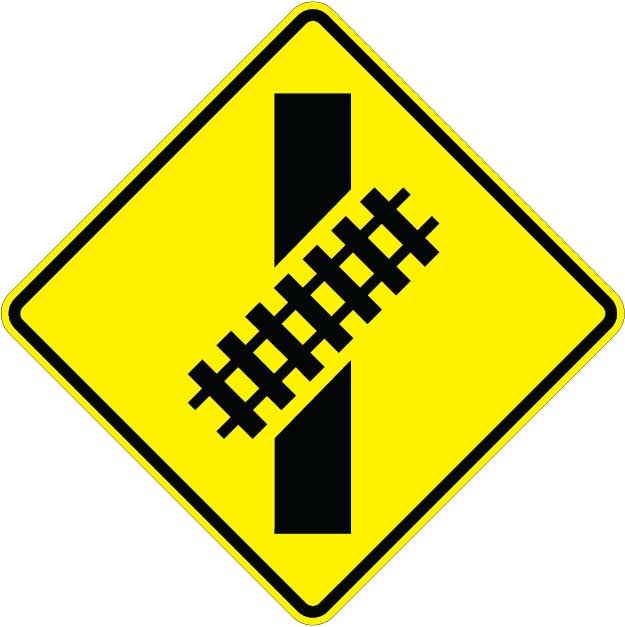
- W10-12 Skewed Railroad Crossing Sign: Installed when tracks cross a road at an acute angle, warning drivers that the crossing geometry differs from a standard perpendicular crossing.
All of these signs are available through Trafficsigns.com in High Intensity and Diamond Grade reflective aluminum, meeting MUTCD and DOT standards.

Crossbuck and Railroad Crossing Sign Options Compared

The following table compares the key railroad crossing signs available from Trafficsigns.com, including their MUTCD designation, application, and starting price by grade.

Sign NameSKUApplicationStarting Price (High Intensity)Starting Price (Diamond Grade)Available Sizes
Railroad Crossing Crossbuck SignR15-1Required at all public highway-rail grade crossings$89.95$107.5048x9
Railroad Crossing Advance Warning SignW10-1Advance warning sign posted before the crossing$52.35$73.3524", 30", 36", 48"
Parallel Railroad Crossing Sign (Right)W10-2RWarns turning drivers on parallel roadways$36.15$47.1518x18, 24", 30", 36", 48"
Parallel Railroad Crossing Sign (Left)W10-2LWarns turning drivers on parallel roadways$52.35$73.3524", 30", 36", 48"
Low Ground Clearance Railroad SignW10-5Crossings with abrupt profiles that risk vehicle hang-up$52.35$73.3524x24, 30x30, 36x36, 48x48
Storage Space Railroad Crossing SignW10-11Indicates safe stopping storage space at crossing$87.95$111.9530x30, 36x36, 48x48
Skewed Railroad Crossing SignW10-12Crossings where tracks intersect at an acute angle$36.15$47.1518x18, 24x24, 30x30, 36x36, 48x48

Shop Railroad Crossing Signs

All signs are manufactured from reflective aluminum and meet DOT and MUTCD state and federal standards. Select from High Intensity or Diamond Grade reflective sheeting to match your visibility requirements.
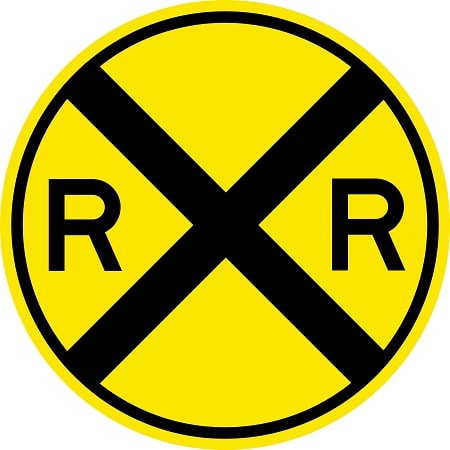
Railroad Crossing Crossbuck Sign R15-1 reflective aluminum Regulatory Signs

Railroad Crossing Crossbuck Sign - R15-1

From $89.95

Shop on Trafficsigns.com
Railroad Crossing Advance Warning Sign W10-1 reflective aluminum Warning Signs

Railroad Crossing Sign - W10-1

From $52.35

Shop on Trafficsigns.com
Low Ground Clearance Railroad Crossing Sign W10-5 reflective aluminum Warning Signs

Low Ground Clearance Railroad Sign - W10-5

From $52.35

Shop on Trafficsigns.com
Parallel Railroad Crossing Sign W10-2R right arrow reflective aluminum Warning Signs

Parallel Railroad Crossing Sign - W10-2R

From $36.15

Shop on Trafficsigns.com
Skewed Railroad Crossing Sign W10-12 reflective aluminum Warning Signs

Skewed Railroad Crossing Sign - W10-12

From $36.15

Shop on Trafficsigns.com

Order MUTCD-Compliant Crossbuck Signs Today

Trafficsigns.com supplies railroad crossbuck signs and the full range of MUTCD-required grade crossing signage in High Intensity and Diamond Grade reflective aluminum. All signs ship with standard pre-punched mounting holes and meet DOT and federal standards. Browse the complete selection of railroad crossing signs or contact our team for help specifying the right signs for your project.

Shop Railroad Crossing Signs