
The engineering behind every reflective road sign that keeps drivers safe after dark
Reflective traffic signs rely on a specialized coating called retroreflective sheeting to bounce headlight beams straight back toward a driver's eyes. This optical principle is why a stop sign glows brightly from hundreds of feet away at night, even though it has no internal power source. Understanding how retroreflective sheeting works, and which grade fits your project, helps you choose signage that meets MUTCD reflectivity standards and holds up to years of outdoor exposure.
Reflective Traffic Signs: Common Questions
- What does a reflective sign mean?
- A reflective sign is coated with retroreflective sheeting, a material embedded with tiny glass beads or prismatic lenses that redirect light back toward its source instead of scattering it randomly. When headlights hit a reflective road sign, the beam bounces directly back to the driver, making the sign appear illuminated even though it has no internal light source. This is why reflective traffic signs stay legible well after sunset.
- What are the 4 types of traffic signs?
- Traffic signs generally fall into four categories: regulatory signs (stop, yield, speed limit), warning signs (curves, crossings, construction), guide signs (route markers, mile markers, destination signs), and informational or service signs (rest areas, hospitals). Each category follows its own MUTCD shape and color rules, but nearly all of them require retroreflective sheeting for nighttime visibility.
- What is the difference between Class 1 and Class 2 reflective signs?
- Class 1 and Class 2 are older reflective sheeting classifications that roughly correspond to today's engineer grade and high intensity materials. Class 1 sheeting uses embedded glass beads and offers moderate reflectivity, similar to engineer grade film. Class 2 sheeting uses a denser bead or prismatic structure for stronger reflectivity, closer to high intensity prismatic sheeting. Most manufacturers, including Avery Dennison, now market these products under the engineer grade, high intensity, and diamond grade naming system rather than the older class numbers.
- Do road signs have to be reflective?
- Yes. The Manual on Uniform Traffic Control Devices (MUTCD) requires nearly all regulatory, warning, and guide signs on public roads to use retroreflective sheeting or be independently illuminated. This MUTCD reflectivity requirement exists because a disproportionate share of traffic fatalities occur at night, even though nighttime driving accounts for a much smaller share of total miles traveled.
- How long does retroreflective sheeting last outdoors?
- Lifespan depends on the grade and climate. Engineer grade sheeting typically holds up for 7 to 10 years, high intensity prismatic sheeting for 10 to 12 years, and diamond grade sheeting for up to 12 years or more with proper mounting on aluminum blanks. UV exposure, coastal salt air, and repeated freeze-thaw cycles can shorten these ranges, so matching the grade to your climate matters as much as picking the sign material itself.
- Can I get custom reflective aluminum signs in specific colors and sizes?
- Yes. Custom reflective aluminum signs are available in multiple sizes and background colors, with your choice of engineer grade, high intensity, or diamond grade sheeting. For example, the Custom Reflective Aluminum Diamond Signs ship in sizes from 12 x 12 inches up to 48 x 48 inches with radius corners and pre-punched mounting holes, and a pre-production proof is provided before your order goes to print.
- What's the price difference between engineer grade, high intensity, and diamond grade signs?
- Engineer grade sheeting is the most budget-friendly option, high intensity prismatic sheeting typically runs 20 to 40 percent more, and diamond grade sheeting carries the highest upfront cost because of its ultra-reflective microprismatic construction. On a 24 x 24 inch aluminum sign, engineer grade might run in the mid $50s while the same size in diamond grade climbs closer to $90, though bulk quantity discounts bring per-unit pricing down significantly on larger orders.
How Retroreflective Sheeting Turns Headlights Into Visibility
Engineer grade films like the Avery Dennison T-1500 Series rely on embedded glass beads for this effect. It is dependable, widely used, and meets baseline MUTCD reflectivity requirements, but it delivers less brightness at wide viewing angles compared to prismatic sheeting.
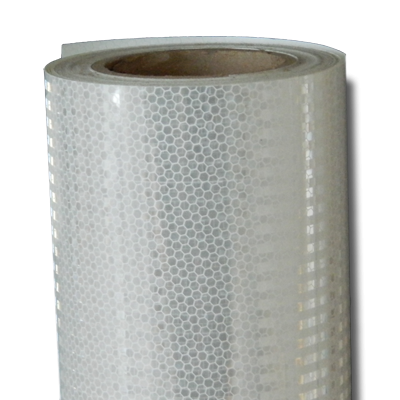
High intensity prismatic and diamond grade sheeting, such as the Avery Dennison T-6500 Series, replace glass beads with a microprismatic lens structure. These tiny cube-corner prisms capture light more efficiently and return a sharper, brighter reflection back toward a driver's headlights and eyes, even at extended distances or when a driver is approaching at an angle on a curve. That extra brightness is why diamond grade sheeting is often specified for high-speed highways, overhead guide signs, and locations where road safety depends on maximum sign legibility.
Types & Options: Engineer Grade, High Intensity, and Diamond Grade Sheeting
Comparing Reflective Sheeting Grades
Each sheeting grade balances reflectivity, cost, and application differently. Use this comparison to match the right material to your reflective road sign project.
| Sheeting Grade | Reflectivity Level | Best For | Relative Cost | MUTCD Compliance |
|---|---|---|---|---|
| Engineer Grade | Reflective (beaded) | Low-speed streets, parking lots, private signage | $ | Meets baseline MUTCD reflectivity standards |
| High Intensity Prismatic | Very Reflective | Intersections, regulatory and warning signs, moderate to high-speed roads | $$ | Meets DOT and MUTCD state/federal standards |
| Diamond Grade | Ultra Reflective | Highways, curves, overhead guide signs, high-risk nighttime locations | $$$ | Meets DOT and MUTCD state/federal standards |
Reflective Sheeting and Custom Signs
Explore retroreflective film for custom fabrication alongside ready-to-order reflective aluminum signs in engineer grade, high intensity, and diamond grade sheeting.
 Retroreflective Sheeting
Avery Dennison T-6500 Series High-Intensity Prismatic Retroreflective Film
$592 - $1,185
Shop on Trafficsigns.com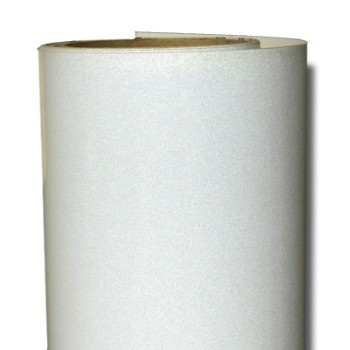 Retroreflective Sheeting
Avery Dennison T-1500 Series Beaded Engineering Grade Retroreflective Film
$405 - $810
Shop on Trafficsigns.com Custom Reflective Signs
Custom Reflective Aluminum Diamond Signs
$27.85 - $266.95
Shop on Trafficsigns.com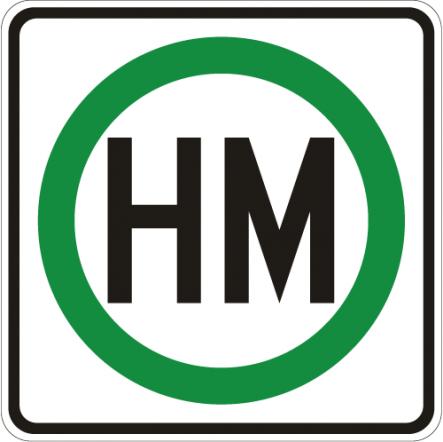
Ready to Upgrade Your Signage's Nighttime Visibility?
Upgrade your signage with retroreflective sheeting built for real-world visibility. We carry engineer grade, high intensity prismatic, and diamond grade options to match any road safety requirement, from private parking lots to state highway corridors.
Shop Custom Reflective Signs