What Should You Do If Traffic Signs Are Missing or Damaged?

What Should You Do If Traffic Signs Are Missing or Damaged?

A practical guide to reporting damaged traffic signs, understanding who repairs them, and sourcing compliant replacements fast.

A missing stop sign, a bent yield sign, or a faded speed limit sign is more than an eyesore. It's a safety hazard that can lead to accidents, confusion, and liability questions for drivers, property managers, and local governments alike. This guide walks through what to do when you spot damaged traffic signs or a knocked down traffic sign, who is actually responsible for fixing it, and how to source a properly rated replacement once the old sign is beyond repair.

Common Questions About Buying Replacement Traffic Signs

What material holds up best for a replacement traffic sign left outdoors year-round?
Aluminum sign blanks with reflective sheeting are the standard for outdoor traffic signs. Engineer grade sheeting offers solid reflectivity for lower-speed residential roads, while high intensity and diamond grade sheeting provide brighter, longer-lasting retroreflectivity for higher-speed corridors and highways. All three grades meet DOT and MUTCD standards and are built to withstand sun, rain, and temperature swings for years.
What sizes are available for common regulatory and warning replacement signs?
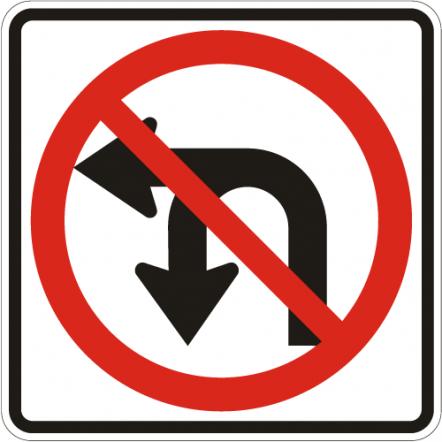
Most signs, including the Do Not Enter Sign (R5-1) and the No U-Turn or Left Turn Sign (R3-18), are available from 12" x 12" up to 48" x 48", depending on the design. Matching the original sign's size to the road classification matters, since MUTCD sets minimum sizing based on posted speed and road type.
How do I know which MUTCD code to order to match a sign that was knocked down or stolen?
Traffic signs use standardized MUTCD codes, like R5-1 or W10-13, that are often printed on the back of the original sign or listed in a municipality's sign inventory. If the code isn't visible in a photo of the damaged sign, compare the wording and symbol against our regulatory and warning sign categories, or reach out for help matching the exact design.
Do you offer bulk pricing for municipalities or contractors replacing multiple signs at once?
Yes. Tiered pricing kicks in starting at 4 units and increases in savings at 7, 16, and 50 units. For example, the No U-Turn or Left Turn Sign (R3-18) drops from $34.15 to $28.69 per sign at the 50-unit tier in engineer grade, 18x18 size.
How fast can I get a replacement sign after ordering?
Standard printable signs typically ship within a few business days of order confirmation. Since a missing or damaged sign is often a safety and liability concern, it's best to order as soon as the need is confirmed rather than waiting on a full inventory review.
What hardware or tools do I need to install a replacement sign on an existing post?
Most replacement signs use standard punched blanks with pre-drilled holes sized for common u-channel and round posts. You'll need galvanized bolts, nuts, and a wrench or driver for most installations. If the post itself was knocked down, you'll need a new post and possibly a base or anchor, not just the sign face.
Can I order a temporary sign to cover a gap while a permanent replacement is being processed?
Yes. Many agencies use a Road Closed Local Traffic Only sign or a Road Closed to Thru Traffic sign to manage traffic safely while a permanent regulatory or warning sign is being sourced.

Who Maintains and Repairs Traffic Signs?

Responsibility for traffic sign maintenance depends entirely on the road's jurisdiction. State departments of transportation maintain signs along state highways and numbered routes. County road departments handle rural and unincorporated roads. City public works departments are responsible for signs on municipal streets. Private roads, parking lots, and gated communities fall to the property owner, HOA, or management company, which is why so many private lots use the same regulatory and warning sign designs as public roads, just without a government agency behind the maintenance schedule. If you're unsure who maintains traffic signs on a specific stretch of road, the fastest way to find out is to check the road's classification on your state DOT's website or call the local public works non-emergency line.

How to Report a Missing or Damaged Traffic Sign

Reporting a broken traffic sign takes just a few minutes and can prevent a serious accident. Note the exact cross streets or nearest address, since crews often can't locate a report with a vague description. Take a photo if it's safe to do so, especially for a knocked down traffic sign lying in a ditch or shoulder. Then report it through one of these channels: your city or county's 311 or non-emergency service line, the state DOT's online maintenance request form, or local police non-emergency dispatch if the sign is a stop sign, yield sign, or another sign controlling right-of-way at an intersection (these get priority because of the immediate safety risk). Most agencies log the report and dispatch a crew to repair or replace the sign, often within days for a critical regulatory sign and within a few weeks for a less urgent guide or informational sign.

What Happens If You Damage a Street Sign?

If you hit a street sign with your vehicle, you're generally responsible for the cost of repair or replacement, even on public property. Most jurisdictions treat a damaged sign the same as any other public property damage: the municipality can bill you or your insurance for materials, labor, and equipment used to fix or replace it. Leaving the scene after striking a fixed object like a sign post can also trigger a separate citation for leaving the scene of an accident, sometimes with more serious consequences than the property damage itself, since it's treated as a hit-and-run in many states regardless of injury. If you accidentally knock down a sign, the safest move is to stop, document the damage with photos, and report it to local police or public works right away rather than driving off. This protects you legally and speeds up the repair for other drivers relying on that sign.

Repair or Full Replacement: Making the Right Call for a Knocked Down Sign

Not every damaged sign needs a full teardown. A sign face with minor fading or a small dent can sometimes be reused if the reflective sheeting is still intact and legible, while a bent u-channel post can occasionally be straightened and reset. But a sign that's been struck by a vehicle, riddled with bullet holes, faded past retroreflectivity standards, or sheared off at the post base needs full traffic sign replacement, both the post and the sign. For municipalities and contractors doing in-house repairs, keeping a stock of 12x12 aluminum sign blanks on hand makes it possible to fabricate common replacements quickly instead of waiting on a full custom order for every incident.

Traffic Sign Types and the Most Overlooked Sign on the Road

MUTCD organizes signs into three main categories: regulatory signs (things like Do Not Enter, No U-Turn, and speed limits, which carry the force of law), warning signs (yellow diamond signs alerting drivers to hazards like curves, crossings, or school zones), and guide signs (which provide route numbers, destinations, and directions). You can browse examples of the third category in our guide signs and road signs collection. As for which sign drivers ignore most, the yield sign consistently tops the list. Because it doesn't require a full stop the way a stop sign does, many drivers treat it as optional rather than a legal requirement to slow down and give way, which is part of why yield-controlled intersections see disproportionately high crash rates when the sign is missing or obscured.

How Much Does It Cost to Replace a Damaged or Missing Traffic Sign?

The cost of a replacement sign face alone varies by size and reflective grade. A small 12" x 12" Do Not Enter Sign in engineer grade runs about $19.05, while a larger 48" x 48" version in diamond grade reflective sheeting for a high-speed corridor can run over $250. When a municipality replaces a knocked down sign, the total cost usually includes the sign face, a new post, mounting hardware, and crew labor, which commonly pushes the full job to somewhere between $150 and $400 depending on the sign type and site conditions. Custom or oversized highway signs on diamond grade sheeting cost more due to material and fabrication requirements.

Reflective Sheeting Grades for Replacement Signs

Reflective grade affects both nighttime visibility and price. Here's how the three grades compare, using real pricing from a 12" x 12" Do Not Enter Sign (R5-1).

Reflective GradeVisibility LevelBest Suited ForExample Price (12x12 R5-1)
Engineer GradeReflectiveLow-speed residential streets, subdivisions, parking areas$19.05
High IntensityVery ReflectiveCounty and city roads with moderate to higher speeds$21.05
Diamond GradeUltra ReflectiveHighways, night-heavy corridors, and DOT-mandated retroreflectivity zones$25.05

Common Replacement Signs for Damaged or Missing Signage

These are among the most frequently reported missing road signs and knocked down signs. Each is available in multiple sizes and reflective grades to match your road's classification.
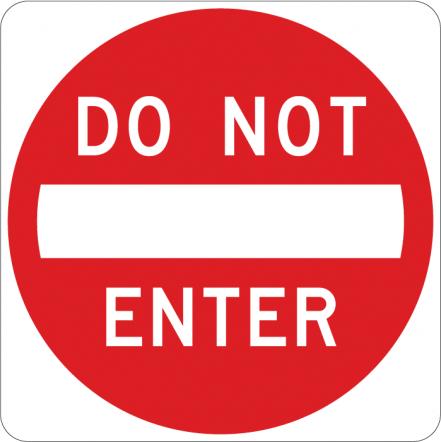
Do Not Enter Sign R5-1 Regulatory Signs

Do Not Enter Sign - R5-1

$19.05 - $256.95

Shop on Trafficsigns.com
No U-Turn or Left Turn Sign R3-18 Regulatory Signs

No U-Turn or Left Turn Sign - R3-18

$34.15 - $256.95

Shop on Trafficsigns.com
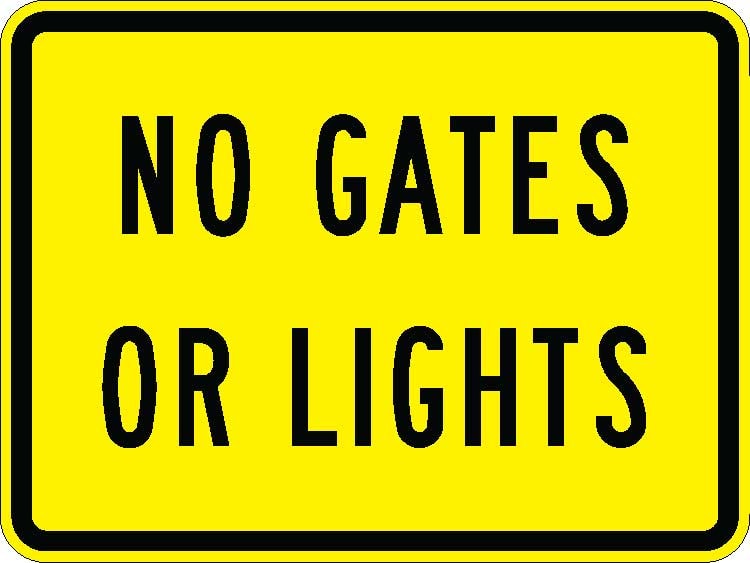
No Gates or Lights Sign W10-13 Warning Signs

No Gates or Lights Sign - W10-13

$57.95 - $92.50

Shop on Trafficsigns.com
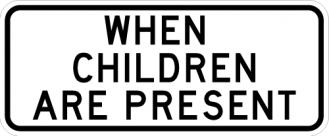
When Children Are Present Sign S4-2 School Zone Signs

When Children Are Present Sign - S4-2

$22.10 - $59.95

Shop on Trafficsigns.com

Ready to Replace a Damaged or Missing Sign?

Whether you're a municipal crew handling a knocked down sign or a property manager replacing a faded warning sign, we stock DOT and MUTCD compliant signs in engineer grade, high intensity, and diamond grade reflective sheeting, ready to ship fast.

Shop Regulatory Signs