
Keep students, faculty, and visitors safe with DOT-compliant signage built for busy campus roads
A university campus functions like a small city, with pedestrians, cyclists, buses, delivery vehicles, and student drivers all sharing the same roads and parking lots. The right mix of university traffic signs reduces confusion, prevents accidents, and helps campus safety officers manage traffic flow during move-in weekends, game days, and everyday class changes. This guide breaks down the categories of campus traffic signs every facilities team should have on hand, along with sizing, material, and compliance details to help you order with confidence.
Common Questions About Buying University Traffic Signs
- What size traffic signs does a university campus need?
- Most campus roads use standard 24 inch to 30 inch signs for warning and regulatory postings, while pedestrian-heavy walkways often call for smaller 18x24 or 12x18 formats. The Bicycle and Pedestrian Crossing Sign is available in 24, 30, and 36 inch square sizes, so you can match sign size to sightline distance and posted speed on that particular road segment.
- What is the difference between engineer grade, high intensity, and diamond grade reflective sheeting?
- Engineer grade sheeting is reflective and cost-effective, suitable for lower-speed campus roads and pedestrian paths. High intensity sheeting reflects more light back to drivers and is a common choice for main campus loops. Diamond grade offers the strongest nighttime visibility and is often specified for signs near vehicle-heavy intersections or areas with limited street lighting. All three grades on our signs meet DOT and MUTCD state and federal standards.
- Can university signs be customized with our campus name or specific wording?
- Standard regulatory and warning signs like stop signs, speed limit signs, and pedestrian crossing signs follow fixed MUTCD wording and symbols so they remain legally recognizable to drivers. For campus-specific messaging such as building names, lot numbers, or visitor parking directions, our directional and parking sign templates can be adapted with custom text while keeping the required legend format intact.
- Do you offer bulk pricing for ordering signs across an entire campus?
- Yes. Most of our regulatory and warning signs include quantity tiers that lower the per-unit price as order volume increases, typically starting at 4 units and scaling up through 50-plus. This makes it cost-effective to standardize signage across multiple parking lots, dorm entrances, and pedestrian crossings in a single order.
- How long does production and shipping take for a large campus order?
- Standard aluminum signs are typically produced and shipped within a few business days, though exact timing depends on quantity, reflective grade, and current order volume. For phased projects like a full campus signage refresh, we recommend placing orders early in the semester break so installation crews have signs on hand before students return.
- How are these signs typically mounted around campus?
- Campus traffic signs are made from aluminum standard punched blanks designed for U-channel posts, square posts, or existing sign structures. Facilities crews commonly bolt them to galvanized steel posts set in concrete along roadways and walkways, following the mounting height guidelines used for public roads.
- Are these signs durable enough for year-round outdoor exposure?
- Yes. All signs are constructed on aluminum blanks with reflective sheeting rated for long-term outdoor use, so they hold up through rain, snow, UV exposure, and temperature swings without the fading or cracking that lower-grade materials experience over a few seasons.
Why Traffic Sign Planning Matters for University Campuses
Campus roads see a unique mix of traffic patterns that most municipal streets do not: heavy pedestrian crossings between classes, cyclists commuting to and from dorms, shuttle buses on fixed routes, and a constant stream of visitor and delivery vehicles unfamiliar with the layout. A well-planned system of campus road signs reduces the guesswork for all of these groups. Facilities and campus safety departments typically start with a signage audit, mapping out where student traffic is heaviest, where visitor parking needs clear directional cues, and where existing signs have faded or fallen out of compliance with current MUTCD standards. Getting this right up front avoids piecemeal sign replacement later and keeps the whole campus visually consistent.
Pedestrian and Bicycle Safety Signage
Pedestrian crossing signs are often the highest-priority purchase for any university, since foot traffic between class buildings, libraries, and dorms is constant throughout the day. The Pedestrian Crossing Stop Sign works well at marked crosswalks near high-traffic intersections, requiring vehicles to come to a full stop rather than simply yield. For campuses with dedicated bike paths, the Bicycle and Pedestrian Crossing Sign alerts drivers to watch for both cyclists and walkers at shared crossing points.
Some areas of campus, such as construction zones or restricted courtyards, need the opposite message. In those cases, a No Pedestrians Bicycles Motor-Driven Cycles Sign clearly restricts entry to keep people away from active work zones or maintenance areas. Bicycle infrastructure also benefits from supporting signage: the Bicycle Parking Area Sign directs cyclists to designated racks, and a No Parking Bike Lane Sign keeps vehicles from blocking bike lane access near academic buildings.
Speed Limit and Traffic Control Signs
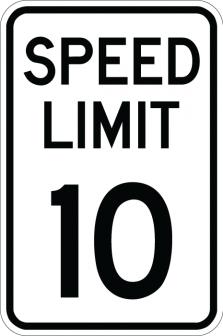
Speed limit signs are essential wherever vehicles share space with pedestrians, and campus interior roads typically post lower limits than surrounding city streets. Many facilities teams start with a basic speed limit sign like the Speed Limit 10 style posting for parking loops and service drives, then step up to higher-posted limits on perimeter roads. Areas near active classroom buildings during drop-off hours may also call for a End School Speed Limit Sign style transition, and roads with lower nighttime traffic sometimes use a Night Speed Limit Sign to adjust limits after dark.
Multiple entry roundabouts, increasingly common on newer campus layouts, rely on directional arrow signage such as the Roundabout Directional Arrow (3 Chevrons) Sign or the four-chevron version to guide drivers through the circle safely. Standard stop signs remain the backbone of any campus road network, controlling right-of-way at intersections between parking structures, dorms, and academic buildings.
Parking Signs for Students, Staff, and Visitors
University parking signs need to communicate a lot of information quickly: who can park where, for how long, and under what conditions. Dedicated student lots benefit from clear identification signage, while faculty, staff, and visitor parking areas each need their own distinct postings to avoid confusion (and avoidable towing disputes). Accessible parking signs are a legal requirement near every academic building and residence hall entrance, and should be paired with proper van-accessible signage where required by code.
Service and emergency access routes need their own treatment. An Emergency Parking Only Sign keeps fire lanes and ambulance access points clear at all times, which matters most during move-in weekends and large campus events when informal parking tends to spread into restricted zones. Bus stop areas near student unions or transit hubs also need dedicated postings, such as a No Parking Bus Stop Sign, to keep loading zones clear for shuttle and transit operations.
Emergency Vehicle and Wayfinding Signs
Fast, unobstructed emergency vehicle access is one of the most critical parts of campus traffic management. The Emergency Vehicle Sign alerts drivers to watch for ambulances, fire trucks, and campus security vehicles that may be entering or crossing traffic near stations, health centers, or public safety buildings. Beyond emergency signage, directional signs guide new students and visitors through a campus layout that can otherwise feel like a maze on move-in day. Clear, consistent campus wayfinding, paired with well-placed regulatory and warning signs, does more for overall traffic safety than any single sign on its own. Combining these categories into one coordinated system is what actually reduces incidents on campus roads, rather than adding signs one at a time as problems come up.
University Sign Categories at a Glance
Use this quick reference to match the right sign category to the traffic concern on your campus.
| Sign Category | Primary Purpose | Example Sign | Typical Campus Location |
|---|---|---|---|
| Pedestrian & Bicycle Safety | Alert drivers to foot and bike traffic at crossings | Bicycle and Pedestrian Crossing Sign (W11-15) | Crosswalks between academic buildings and dorms |
| Traffic Control & Speed Management | Set and enforce safe vehicle speeds and right-of-way | Speed Limit 10 (AR-719), Pedestrian Crossing Stop Sign (R1-6a) | Interior campus roads, parking loops, roundabouts |
| Parking Regulation | Direct student, staff, and visitor parking and restrict fire lanes | Emergency Parking Only Sign (R8-4) | Parking structures, lots, and building entrances |
| Emergency & Wayfinding | Support fast emergency response and visitor navigation | Emergency Vehicle Sign (W11-8) | Near public safety buildings, health centers, main entrances |
Popular University Traffic Signs
These campus traffic signs cover the most common safety needs, from crosswalks and speed control to emergency vehicle alerts.
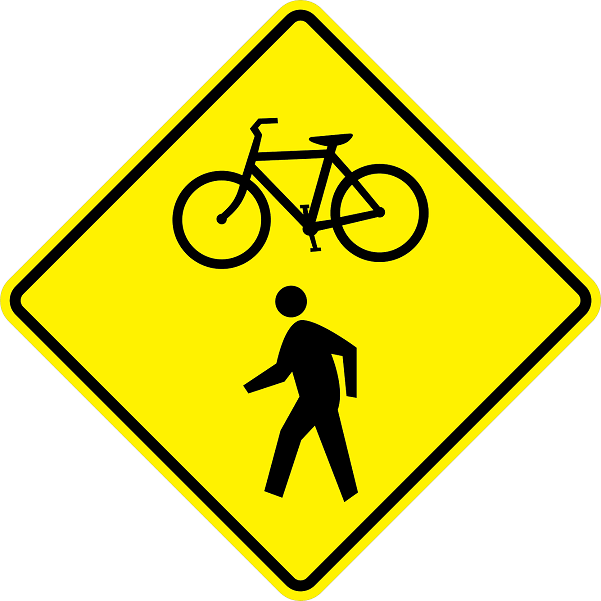 Warning Signs
Bicycle and Pedestrian Crossing Sign - W11-15
$44.25 - $195.50
Shop on Trafficsigns.com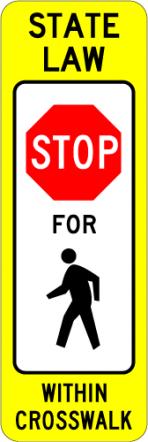
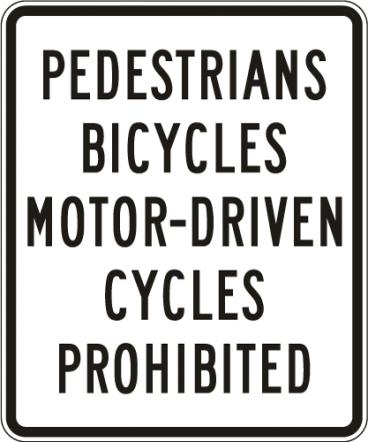 Regulatory Signs
No Pedestrians Bicycles Motor-Driven Cycles Sign - R5-10a
$33.25 - $123.75
Shop on Trafficsigns.com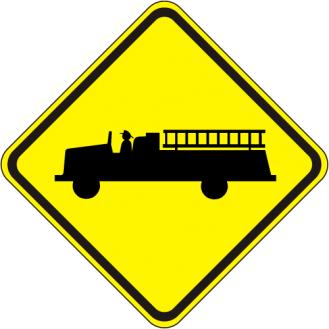
Outfit Your Campus with Reliable, Compliant Signage
From pedestrian crossings to parking regulation, Trafficsigns.com carries the DOT and MUTCD compliant signs university facilities teams rely on. Browse our full selection to build a coordinated signage plan for your campus.
Shop University Traffic Signs