
Two categories of traffic control devices, two different jobs on the road
Drivers encounter both traffic signs and traffic signals every day, but the two terms are not interchangeable. A traffic sign is a fixed, unpowered device that communicates a rule, warning, or piece of information through words or symbols. A traffic signal, in MUTCD terms, is a power-operated device that warns or directs traffic, from the red, yellow, and green lights at an intersection to flashing beacons and pedestrian signals. Understanding the difference matters for municipalities, contractors, and property managers who are responsible for specifying, purchasing, or maintaining traffic control devices under MUTCD guidelines.
Common Questions About Traffic Signs and Signals
- What is the difference between a sign and a signal?
- A sign is a static object, typically reflective sheeting mounted on an aluminum blank, that displays a fixed message such as a speed limit, warning, or directional instruction. A signal is a power-operated device that changes or flashes to warn or direct traffic, most often with red, yellow, and green lights that control when vehicles or pedestrians may proceed. Both can carry legal force: a STOP sign is just as binding as a red light. The difference is that a sign's message never changes, while a signal's does.
- Is a traffic signal the same as a traffic light?
- Mostly, yes. In everyday use, "traffic light" means the red, yellow, and green light assembly that controls an intersection. The MUTCD's formal term is "highway traffic signal," and it's broader: it covers any power-operated device that warns or directs traffic, including intersection signals, pedestrian signals, pedestrian hybrid beacons, and flashing beacons. All of them are powered devices, distinct from static traffic signs.
- What are the three main types of traffic signs?
- The MUTCD groups most traffic signs into three categories: regulatory signs (stop signs, yield signs, speed limits), warning signs (curves ahead, pedestrian crossings, cross traffic that does not stop), and guide signs (route markers, mileage, destination information). You can browse examples in our regulatory sign, warning sign, and guide sign categories to see how each type is designed and labeled.
- What is not considered a traffic signal?
- Static devices like signs and pavement markings are not traffic signals, and neither are manual flagging operations. The MUTCD also lists a few powered devices that don't count as highway traffic signals, including railroad crossing flashing-light signals (covered in Part 8 of the MUTCD), work zone warning lights like barricade lights, and most power-operated signs. Flashing beacons, on the other hand, are treated as traffic signals even though they only flash. A sign like the Pedestrian Traffic Signal Sign - R10-3c is mounted at a pedestrian push button to tell people how to request a crossing; the sign itself is not the signal.
- What materials and reflective grades are used for traffic signs?
- Our regulatory and warning signs are produced on .080 aluminum with reflective sheeting in three grades: Engineer Grade (standard reflectivity), High Intensity (very reflective), and Diamond Grade (ultra reflective for maximum nighttime visibility). Engineer Grade works for white and red regulatory signs like STOP signs, but the MUTCD doesn't allow it on yellow warning signs or plaques, which need High Intensity or Diamond Grade.
- What sizes are available for regulatory and warning signs?
- Sizes vary by sign and by road type. The MUTCD sets sizes for conventional roads, expressways, and freeways, with larger signs on faster, wider roads. For example, a STOP sign is 30 x 30 inches on single-lane conventional roads and 36 x 36 on multi-lane roads, while most diamond-shaped warning signs are 30 x 30 or 36 x 36. Smaller rectangular sizes, like 24 x 12 or 24 x 18, are typical for plaques mounted below a main sign. If you need a nonstandard size or a blank to fabricate a custom message, our sign blanks are cut to order in aluminum sheet.
- How long does production and shipping take, and how are signs installed?
- Signs are manufactured to order and ship out quickly since there is no signal wiring or electrical hardware involved. Each sign comes with 3/8 inch prepunched holes and radius corners so it mounts directly to a standard U-channel post or existing pole with common hardware. There is no electrical work or ongoing bulb maintenance, although signs on public roads still need the road agency's approval. Simplicity is one practical reason agencies use signs where they can, and the MUTCD backs that up: a traffic signal should only be installed when an engineering study shows that one of its signal warrants is met.
What Counts as a Traffic Control Device?
The Manual on Uniform Traffic Control Devices (MUTCD), published by the Federal Highway Administration, defines traffic control devices as any sign, signal, marking, or other device placed on or beside a road to regulate, warn, or guide traffic. Both traffic signs and traffic signals fall under this umbrella, along with pavement markings and temporary devices used in work zones. The MUTCD sets specific standards for shape, color, size, and placement so that every device means the same thing regardless of which state or city installed it. This is why a stop sign in one state looks identical to a stop sign 2,000 miles away, and why a red traffic light means the same thing everywhere in the country. Agencies and contractors sourcing compliant hardware can review our regulatory signs and warning signs categories, both manufactured to these federal specifications.
Traffic Signs: Static Instructions Drivers Read
Traffic signs communicate a fixed message and never change on their own. The MUTCD sorts them into three functional groups. Regulatory traffic signs tell drivers what they must or must not do, such as stop signs, yield signs, and speed limit postings; our stop and yield sign category covers these along with the ALL-WAY plaque (R1-3P) mounted below each STOP sign at all-way stop intersections. (The MUTCD doesn't permit plaques reading "4-WAY.") Warning traffic signs alert drivers to conditions ahead, like curves, pedestrians, or intersections where cross traffic does not stop, and are collected in our road condition and warning sign category. Guide signs provide route, distance, and destination information and are found in our guide sign category. None of these signs require power, wiring, or a controller cabinet, which keeps installation and long-term maintenance simple compared to a powered signal.
Traffic Signals: Powered Devices That Control the Flow of Traffic
A traffic signal is an active, power-operated device. The most familiar is the red, yellow, and green traffic light at an intersection, which changes on a timer or in response to sensors, giving one direction of traffic the right-of-way while stopping another. Pedestrian signals work the same way, using walk and don't walk indications to control crossing movements. Under the MUTCD, flashing beacons, pedestrian hybrid beacons, and lane-use control signals also count as traffic signals, even though some of them only flash to warn drivers.
Signs still play a supporting role near signals: the Pedestrian Traffic Signal Sign - R10-3c is mounted at the push button to tell pedestrians how to request a walk signal. Some powered devices fall outside the MUTCD's traffic signal category altogether. Railroad crossing flashing-light signals have their own rules in Part 8 of the MUTCD, and work zone warning lights such as the Type A, C, and 3-Way Solar LED Warning Light are covered with other temporary traffic control devices in Part 6.
Where Signs and Signals Work Together
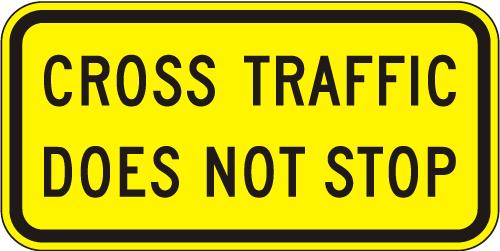
Many roadway locations use signs and signals as a paired system rather than a substitute for one another. Light rail crossings are a good example: the railroad's flashing-light signals warn of an approaching train, while nearby regulatory signs from our traffic control sign category reinforce the rule, such as signs marking a dedicated transit lane or prohibiting drivers from passing a stopped train. Warning plaques that say cross or oncoming traffic does not stop serve a similar supporting role at intersections that rely on stop signs instead of signals. Mounted below a STOP sign, the CROSS TRAFFIC DOES NOT STOP (W4-4P), TRAFFIC FROM LEFT (RIGHT) DOES NOT STOP (W4-4aP), and ONCOMING TRAFFIC DOES NOT STOP (W4-4bP) plaques remind drivers not to assume the other direction will stop. The MUTCD recommends the W4-4aP or W4-4bP where STOP signs control every approach but one. When a project calls for a custom message or a nonstandard mounting size, our sign blanks give fabricators a compliant aluminum base to start from.
Traffic Sign vs Traffic Signal at a Glance
Use this comparison to see how the two traffic control devices differ across material, function, and maintenance.
| Feature | Traffic Signs | Traffic Signals |
|---|---|---|
Definition | Static device with a fixed message (regulatory, warning, or guide information) | Power-operated device that warns or directs traffic (MUTCD "highway traffic signal") |
Power Source | None; relies on reflective sheeting for visibility | Electricity, grid-connected or solar, timed or sensor-controlled |
Message Type | Fixed instruction, warning, or destination information | Changing or flashing indications, such as red, yellow, and green lights or walk/don't walk symbols |
Common Examples | Stop signs, yield signs, speed limit signs, and warning plaques like CROSS TRAFFIC DOES NOT STOP (W4-4P) | Intersection traffic lights, pedestrian walk/don't walk signals, pedestrian hybrid beacons, flashing beacons (railroad crossing lights are covered separately in MUTCD Part 8) |
Typical Material | Reflective sheeting on .080 aluminum: Engineer Grade for white and red regulatory signs; High Intensity or Diamond Grade for yellow warning signs | Polycarbonate lens housings with LED or incandescent lamps |
Governing Standard | MUTCD regulatory, warning, and guide sign specifications | MUTCD Part 4: Highway Traffic Signals |
Maintenance Needs | Occasional cleaning and reflectivity checks; long service life with minimal upkeep | Regular electrical maintenance, lamp replacement, and timing adjustments |
Shop Signs That Work Alongside Traffic Signals and Stop-Controlled Intersections
These regulatory signs and warning plaques are commonly installed at intersections and crossings where a sign, rather than a full traffic signal, provides the necessary right-of-way information. The yellow Does Not Stop plaques need high intensity or diamond grade sheeting under the MUTCD.
 Warning Sign
Cross Traffic Does Not Stop Sign - W4-4P
MUTCD W4-4P plaque, mounted below a STOP sign
$22.10 - $123.75
Shop on Trafficsigns.com Warning Sign
Oncoming Traffic Does Not Stop Sign - W4-4B
MUTCD W4-4bP plaque, mounted below a STOP sign
$22.10 - $123.75
Shop on Trafficsigns.com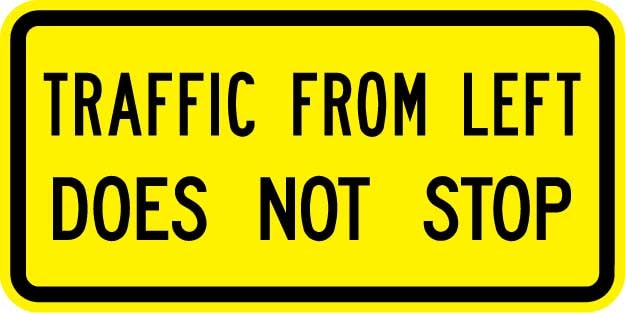 Warning Sign
Traffic From Left Does Not Stop Sign - W4-4A
MUTCD W4-4aP plaque, mounted below a STOP sign
$22.10 - $123.75
Shop on Trafficsigns.com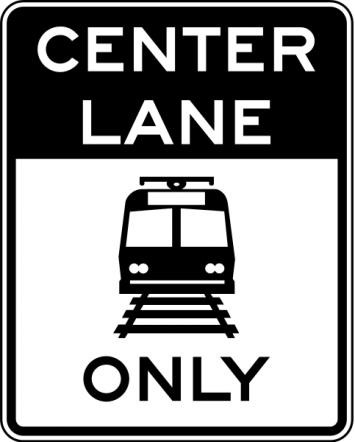 Regulatory Traffic Control Sign
Center Lane Light Rail Only Sign - R15-4c
$44.25 - $73.35
Shop on Trafficsigns.comFind the Right Traffic Control Device for Your Site
Whether you need a regulatory sign, a warning sign, or hardware to support a signal-controlled intersection, our catalog is built to MUTCD and DOT specifications so you can order with confidence. Browse our full lineup of regulatory traffic signs to compare sizes, reflective grades, and pricing tiers before you buy.
Shop Regulatory Traffic Signs