
Two red-and-white regulatory signs, two very different jobs on the road
Drivers often lump the Do Not Enter sign and the Wrong Way sign together because both are red, both are square-ish, and both show up near one-way streets and ramps. But in the do not enter vs wrong way sign comparison, each sign has a distinct MUTCD classification and a distinct moment when it's supposed to catch a driver's eye. Understanding that difference matters whether you're managing a parking facility, a private campus, or a public roadway, because installing the wrong sign in the wrong spot can leave a real gap in your traffic control plan.
Common Questions About Do Not Enter and Wrong Way Signs
- What does the do not enter wrong way sign mean?
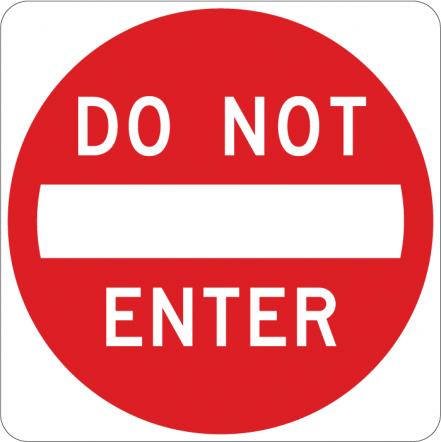
- These are two separate signs that often appear together at the same location. The Do Not Enter sign (R5-1) is posted at the point where entry is prohibited, such as the entrance to a one-way street or an exit-only ramp. The Wrong Way sign (R5-1a) is posted a bit further along, on the same side of the road, aimed at a driver who has already entered against traffic. Under the MUTCD, the Do Not Enter sign is required at places like the start of a one-way road and the end of a freeway exit ramp. The Wrong Way sign is usually optional, but it's required on freeway exit ramps where wrong-way entry could happen.
- What does a wrong way sign mean?
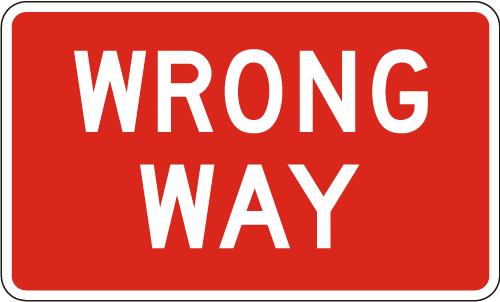
- A wrong way traffic sign tells a driver they are traveling against the correct flow of traffic on a one-way road, ramp, or divided highway. It's a corrective, urgent message aimed at someone who has already made a wrong turn, most commonly seen on freeway off-ramps where a driver could otherwise head straight into oncoming lanes. Because a wrong-way driver on a ramp or divided highway risks a head-on crash, this sign uses bold, unmistakable lettering and a horizontal layout designed for quick recognition at speed.
- Is a do not enter sign a warning sign?
- No. The Do Not Enter sign is a regulatory traffic sign, not a warning sign. Warning signs (like diamond-shaped yellow signs) alert drivers to a condition ahead. Regulatory signs like the R5-1 Do Not Enter sign carry the force of law: they tell drivers what they are legally required or prohibited from doing. That's why it uses the red-and-white color scheme reserved for prohibitive traffic control rather than the yellow used for cautionary warnings.
- What does the do not enter sign indicate?
- The Do Not Enter sign indicates that vehicles are prohibited from entering a roadway, driveway, or lane from that specific point. It's commonly placed at the entrance to one-way streets, highway exit ramps, private drives, and restricted access roads. It doesn't tell drivers already traveling wrong-way what to do next; that job belongs to the Wrong Way sign further down the road.
- What sizes and materials are available for R5-1 and R5-1a signs?
- For public roads and private roads open to the public, the MUTCD sets the Do Not Enter sign (R5-1) at 30" x 30" on single-lane conventional roads, 36" x 36" on multi-lane roads and expressways, and 48" x 48" on freeways. The Wrong Way sign (R5-1a) is 36" x 24" on conventional roads and 42" x 30" on multi-lane roads and freeways, with a 30" x 18" minimum. Smaller sizes, like a 12" x 12" or 24" x 24" Do Not Enter or an 18" x 12" Wrong Way, are best kept to parking lots and garages, which fall outside the MUTCD's definition; check with your state DOT or local agency for any rules that apply there. Both signs come in Engineer Grade (reflective), High Intensity (very reflective), and Diamond Grade (ultra reflective) sheeting on aluminum, so you can match reflectivity to the speed and lighting conditions of your location.
- Do you offer bulk pricing on Do Not Enter and Wrong Way signs?
- Yes. Both signs are priced on quantity tiers starting at 4 units and stepping down further at 7, 16, and 50 units. For example, the 18" x 12" R5-1a in Engineer Grade (a parking-lot size) drops from a base price of $21.95 to $18.44 at 50-plus units, which makes it practical for parking garages, campuses, or multi-lot properties ordering signage for several entrances at once.
- How are these signs mounted and how long do they last outdoors?
- Both the Do Not Enter Sign - R5-1 and Wrong Way Sign - R5-1a come on standard punched aluminum blanks, so they mount directly to U-channel posts or existing sign poles with standard hardware, no drilling required. Because they're aluminum with reflective sheeting rather than a printed banner material, they're built for continuous outdoor exposure and won't need seasonal takedown or storage the way a temporary banner would.
Why Two Separate Signs Exist for Wrong-Direction Traffic
Where Each Sign Belongs on Your Property or Roadway
Choosing the Right Size and Reflective Grade
Do Not Enter Sign vs Wrong Way Sign: Side-by-Side Comparison
| Feature | Do Not Enter Sign (R5-1) | Wrong Way Sign (R5-1a) |
|---|---|---|
MUTCD Designation | R5-1 | R5-1a |
Shape | Square | Horizontal rectangle |
Message Style | White bar on a red circle with the words DO NOT ENTER | Text-based, reads "WRONG WAY" |
Primary Purpose | Prohibits vehicles from entering a road, ramp, or driveway; required at places like the start of a one-way road and freeway exit ramps | Warns a driver already traveling wrong-way to stop and turn around; usually optional, but required on freeway exit ramps |
Typical Placement | At the entrance point of a one-way street, ramp, or restricted drive | Further along the wrong-direction path, on the same side of the road as the Do Not Enter sign, facing wrong-way traffic |
MUTCD Sizes (roads open to the public) | 30" x 30" (single-lane), 36" x 36" (multi-lane, expressway), 48" x 48" (freeway); smaller sizes for parking lots only | 36" x 24" (conventional), 42" x 30" (multi-lane, freeway), 30" x 18" minimum; smaller sizes for parking lots only |
Available Reflective Grades | Engineer Grade, High Intensity, Diamond Grade | Engineer Grade, High Intensity, Diamond Grade |
Classification | Regulatory sign | Regulatory sign |
Shop Do Not Enter and Wrong Way Traffic Signs
 Parking Signs
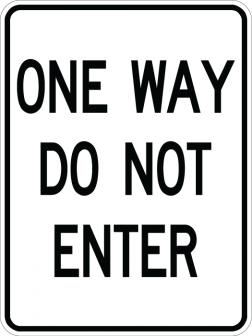
One Way Do Not Enter Sign - AR-716
For parking lots and garages
$21.95 - $45.25
Shop on Trafficsigns.com
 Parking Signs
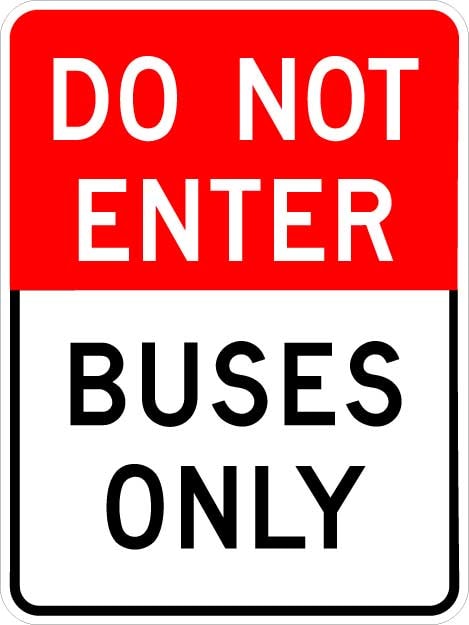
Do Not Enter Buses Only Sign - AR-165
For parking lots and garages
$33.25 - $72.45
Shop on Trafficsigns.comGet the Right Regulatory Signs for Your Property
Whether you need a Do Not Enter sign for a single driveway or a full set of wrong way traffic signs across a parking structure, Trafficsigns.com stocks DOT and MUTCD compliant options in every size and reflective grade discussed above. Order individually or save with quantity pricing on orders of 4 or more.
Shop Regulatory Traffic Signs