
Two essential traffic control devices, two very different jobs on the road
Traffic signs and delineators both keep drivers safe, but they communicate in different ways. Traffic signs use words, symbols, and shapes to give instructions, warnings, or directions. Delineators use reflective surfaces and physical positioning to outline the edge of a travel lane, mark a curve, or channel traffic through a work zone. Understanding when to use each one, and how they work together, is key to building a compliant and effective traffic control plan.
Common Questions About Traffic Signs and Delineators
- What is a delineator in traffic?
- A delineator is a retroreflective marker mounted on a crash-safe post along the side of the road. It shows drivers the edge of the roadway and its alignment, especially through curves and lane reductions, at night and in poor weather. Unlike a traffic sign, a delineator doesn't carry written instructions or symbols. Delineators are covered in Chapter 3G of the Manual on Uniform Traffic Control Devices (MUTCD), which treats them as guidance devices rather than warning devices. The flexible orange tubes used in work zones, often sold as delineators, are called tubular markers in the MUTCD and have their own rules for channeling traffic.
- Can you drive over delineators?
- Tubular markers and flexible delineator posts are designed to bend or fold flat when struck and then spring back upright, which is why they're popular in work zones. However, driving over them intentionally isn't recommended. They're placed to define a boundary, and repeatedly running them over damages the reflective sheeting, weakens the base, and reduces their visibility for the next driver. The MUTCD requires delineators to be mounted on crashworthy supports, and work zone channelizing devices like tubular markers must be crashworthy too, so a rigid post that could damage a vehicle shouldn't be used where traffic might hit it.
- What's the difference between a tubular marker and a traffic cone?
- In work zones, both cones and tubular markers (the flexible tubes often sold as delineators) are channelizing devices under the MUTCD. Both must be mostly orange, at least 18 inches tall, and at least 28 inches tall at night or on high-speed roads, with white reflective bands for nighttime use. The main difference is visibility: the MUTCD notes that tubular markers have less visible area than other devices and should be used where space is too tight for more visible ones, such as between opposing lanes. Cones are easier to move for short-term work, while tubular markers attached to the pavement or a weighted base, like those in our posts and hardware category, stay in place better for longer setups.
- How much do delineators cost?
- Pricing depends on the style. Standard aluminum delineator posts, like the Aluminum Delineator - HW-AD, start around $6.25 per unit with volume discounts at 5 and 10 units. Flexible open-top delineators with recycled rubber bases, such as the Open Top Delineators - HW-DC-OT, run between roughly $21.85 and $24.85 depending on height and reflective sheeting grade. Traffic signs vary more widely by size and reflective grade, from around $33 for a small engineer grade sign to well over $200 for large diamond grade signs.
- Are delineators required to meet MUTCD standards?
- Yes, on roads open to public travel. Under the MUTCD, roadway delineators must have reflectors at least 3 inches across that are visible from 1,000 feet on high beams, mounted on crashworthy supports. They should generally sit about 4 feet high and 2 to 8 feet outside the shoulder, spaced roughly 200 to 530 feet apart on straight highway sections and closer on curves. Their color must match the edge line: white on the right side, yellow on the left side of divided highways and one-way roads, and red on the back of delineators that face wrong-way traffic. Work zone tubular markers follow separate MUTCD rules for color, height, and reflective bands. Our delineator posts and traffic control signs are built to meet MUTCD requirements, and you can check with your state DOT or local agency for any added local rules.
- When should I use a traffic sign instead of a delineator?
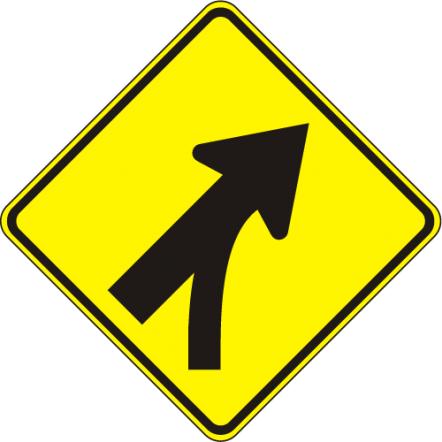
- Use a sign when drivers need specific information: a regulation to follow, a hazard to anticipate, or a direction to a destination. Use a delineator when you need to physically outline a path, such as marking the edge of a detour lane or highlighting a sharp curve. In most real-world traffic control plans, the two work together. A curve warning sign alerts drivers to the upcoming bend, while a line of curve delineators shows them exactly where the road goes.
- Do delineator posts come with mounting bases included?
- It depends on the model. Aluminum delineator posts are typically designed to mount to existing guardrail, fencing, or a separate post using standard hardware. Flexible open-top delineators come with their own recycled rubber bases (available in 8, 10, 12, and 18 lb weights) so they can be set up quickly without additional anchoring hardware.
How Traffic Signs and Delineators Serve Different Purposes
Types of Delineators and Where They're Used
Traffic Signs vs. Delineators at a Glance
| Feature | Traffic Signs | Delineators |
|---|---|---|
Primary Function | Communicate rules, warnings, or directions using text and symbols | Physically mark the edge of a lane, curve, or path (guidance devices) |
Typical Materials | .080 aluminum with reflective sheeting: engineer grade for white regulatory signs; high intensity or diamond grade for yellow warning and orange work zone signs | Durable polyethylene (flexible tubular markers) or reflective aluminum (rigid delineators) on crashworthy supports |
Common Sizes | 18" x 18" up to 60" x 30" and larger depending on sign type | 28" and 42" heights for flexible posts; standard punched blanks for rigid posts |
Installation | Mounted to posts, poles, or structures with standard punched holes | Set into recycled rubber bases or mounted directly to guardrail and fencing |
MUTCD Classification | Regulatory (R-series), Warning (W-series), Guide (D, M, and other series) | Delineators: Chapter 3G (and Section 6J.04 in work zones); tubular markers: Section 6K.04; object markers: Chapter 2C |
Approximate Price Range | $33 to over $250 depending on size and reflective grade | $6 to $25 per unit depending on style and reflectivity |
Best Use Case | Delivering a specific instruction, warning, or destination message | Guiding drivers through curves, lane shifts, and low-visibility roadway edges |
Choosing the Right Combination for Your Project
Shop Traffic Signs and Delineators
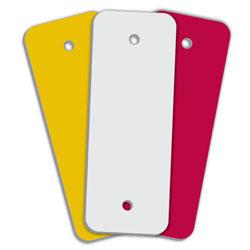 Posts & Hardware
Aluminum Delineator - HW-AD
$5.63 - $6.25 (volume pricing)
Shop on Trafficsigns.com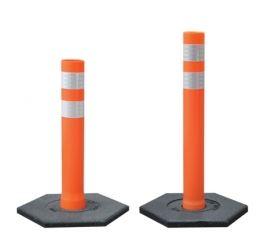
Ready to Outfit Your Roadway or Work Zone?
From reflective delineator posts to MUTCD-compliant warning and regulatory signs, we carry the traffic control devices you need to keep drivers safe and your project compliant. Browse our full selection of posts, hardware, and delineator options to find the right fit for your job.
Shop Posts & Hardware