
A practical guide to intersection control, traffic engineering studies, and the federal standards that determine where stop signs belong
Stop sign requirements are not left to guesswork. Every properly installed stop sign on a public roadway is backed by a traffic engineering study, a documented warrant, and specific placement rules found in the Manual on Uniform Traffic Control Devices (MUTCD). Whether you manage a municipal road department, oversee a private development, or need compliant signage for a parking facility, understanding stop sign warrants helps you make informed decisions about intersection control, right of way, and roadway safety. This guide breaks down what triggers a stop sign installation, how sizing and mounting height are regulated, and where to find MUTCD-compliant signs ready to ship.
Common Questions About Buying Stop Signs and Intersection Control Devices
- What is the minimum size for a stop sign under MUTCD standards?
- The MUTCD sets 30 inches by 30 inches as the standard size for a STOP sign on conventional roads, with 24 inches by 24 inches permitted as a minimum on low-speed, low-volume roadways where sight distance is adequate. Higher-speed roads, multi-lane approaches, and intersections with poor visibility typically call for the 36 inch by 36 inch oversized version. When ordering regulatory signs, match the size to the posted speed and approach conditions rather than defaulting to the smallest option.
- What is the height requirement for mounting a stop sign?
- For roadside installations, the MUTCD specifies a minimum clearance of 7 feet from the bottom of the sign to the pavement surface in rural areas, and typically higher in urban and pedestrian-heavy locations to maintain sightlines. Signs mounted in parking lots or on private roadways can often use lower mounting heights, but should still clear pedestrian traffic and any nearby signage such as a paired 4-Way Stop Sign (R1-3) or supplemental plate.
- What material and reflective grade should I choose for a stop sign?
- All stop signs and related regulatory signs sold on trafficsigns.com are aluminum with reflective sheeting in Engineer Grade, High Intensity, or Diamond Grade. Engineer Grade offers dependable reflectivity for lower-speed and private applications, High Intensity performs better at highway speeds and in low-light conditions, and Diamond Grade delivers the strongest nighttime visibility for high-traffic or high-liability intersections. All three grades meet DOT and MUTCD federal and state standards.
- How much do compliant stop signs and intersection signage cost, and are bulk discounts available?
- Pricing scales with size, reflective grade, and quantity. Most regulatory signs, including one-way and lane-control signs used alongside stop-controlled intersections, start in the $20 to $60 range for standard sizes and increase for oversized signs or Diamond Grade sheeting. Volume tiers automatically apply at 4, 7, 16, and 50 unit thresholds, which makes multi-sign municipal or HOA orders significantly more affordable per unit.
- How long does production and shipping take for stop signs and traffic control signage?
- Standard signs made from in-stock aluminum blanks and reflective sheeting typically ship within a few business days. Custom sizes, non-standard messages, or large bulk orders for a subdivision or municipality may require additional production time. Planning ahead for a new intersection control project or a scheduled installation date helps avoid delays.
- Can I order a complete four-way stop sign kit instead of individual signs?
- Yes. If a traffic engineering study confirms an all-way stop warrant, a bundled four-way stop kit is often more efficient than ordering each sign separately. Kits typically include the required stop signs plus supplemental plates, reducing the chance of mismatched sizing or reflective grade across a single intersection.
- What's the best way to install and mount a stop sign on private property or a new roadway?
- Stop signs should be mounted on a rigid post set to the correct height and clear of obstructions, positioned so approaching drivers have a clear line of sight before the intersection. On private roadways and parking areas, pair the sign with appropriate supporting signage, such as stop for pedestrians signage near crosswalks, to reinforce right of way expectations for both drivers and pedestrians.
What Determines Stop Sign Requirements at an Intersection
Stop sign placement is governed by warrants, not preference. Under the MUTCD, a stop sign warrant analysis evaluates traffic volume on each approach, crash history, sight distance, and the relationship between the roadways meeting at the intersection. A local agency or private engineer conducts a traffic engineering study to determine whether a two-way stop, an all-way stop, or another form of intersection control is appropriate. Installing a stop sign without a supporting warrant can actually reduce safety, since drivers who repeatedly encounter unwarranted stops may become less attentive at intersections where a stop is genuinely required. This is why municipalities and private property managers alike are encouraged to base decisions on documented traffic data rather than requests alone, and why roadway control devices like advance intersection lane control signage are often used to prepare drivers before they reach a controlled approach.
MUTCD Stop Sign Specifications: Size, Height, and Placement
Once a warrant is confirmed, the MUTCD dictates the physical specifications of the sign itself. Standard STOP signs use the familiar red octagon at 30 inches by 30 inches, with 24 inch by 24 inch signs permitted only on lower-speed roadways where the smaller size remains legible from an appropriate stopping distance. High-speed or multi-lane approaches call for the 36 inch by 36 inch oversized sign to ensure visibility. Mounting height matters just as much as sign size: rural installations require at least 7 feet of clearance from the road surface to the bottom of the sign, while urban and pedestrian-heavy areas often use greater clearance to avoid obstructing sightlines. Placement also matters, signs must sit far enough back from the intersection to give approaching drivers adequate time to stop, and should be positioned on the right side of the approach in line with standard traffic sign placement practices used for regulatory signs generally.
Four-Way Stops, Multi-Way Control, and Right of Way Rules
A four-way stop is warranted when an engineering study shows that traffic volumes on the intersecting roads are roughly comparable, when crash patterns indicate a need for shared right of way, or when specific minimum volume thresholds outlined in MUTCD Section 2B.07 are met. At an all-way stop, right of way generally goes to whichever vehicle arrived first, with ties resolved by yielding to the vehicle on the right. Drivers are required to bring the vehicle to a complete stop, not simply slow down, and most state driving manuals reference a full stop rather than a fixed count of seconds, though many driver education programs use a three-second pause as a practical guideline to confirm the vehicle has actually stopped and the intersection is clear. For intersections that qualify for multi-way control, a properly sized 4-Way Stop Sign (R1-3) paired with supplemental plates communicates the control clearly to all approaches.
State-Specific Stop Sign Requirements: California, Texas, Pennsylvania, and Beyond
The MUTCD provides the national baseline, but individual states publish supplements that can adjust sizing minimums, placement setback distances, or warrant thresholds for local roads. California and Texas both maintain state-specific traffic manuals that generally mirror the federal MUTCD while adding guidance for state highways and local jurisdictions. In Pennsylvania, stop sign placement follows PennDOT's adopted version of the MUTCD, which requires signs to be placed on the right side of the approach, set back far enough to avoid obstructing the intersection, and mounted at heights consistent with federal minimums. Anyone specifying stop sign requirements for a project spanning multiple states should confirm local supplements before finalizing sign size, reflective grade, or mounting height, since a sign that satisfies MUTCD guidelines nationally may still need to meet an additional state-level detail.
Intersection Control Options Compared
Stop signs are one of several intersection control tools available under the MUTCD. This comparison outlines when each type of control typically applies and which sign supports it.
| Control Type | Typical Warrant Basis | Best For | Related Sign |
|---|---|---|---|
Two-Way Stop | Minor road intersects a major road with adequate sight distance and clear traffic hierarchy | Low-volume intersections with an obvious right-of-way pattern | Standard STOP sign on minor approaches |
All-Way (Four-Way) Stop | Engineering study shows comparable volumes on all approaches, documented crash history, or minimum volume thresholds under MUTCD 2B.07 | Intersections needing shared right of way among balanced traffic flows | 4-Way Stop Sign (R1-3) |
Yield Control | Traffic volumes too low to warrant a full stop but merging still requires caution | Ramps, low-conflict merges, and roundabout approaches | Yield sign (R1-2) |
Signalized Intersection | Traffic volumes exceed stop-sign warrant thresholds identified in a traffic engineering study | High-volume urban intersections with heavy cross traffic | Right/Left on Red Arrow After Stop sign (R10-17A) |
Regulatory and Intersection Signage for Warranted Traffic Control
Once a stop sign warrant or supporting intersection control need has been confirmed, these MUTCD-compliant regulatory signs help round out a complete, code-compliant installation.
 Regulatory Signs / Traffic Control Signs
4 Way Stop Sign - R1-3
$14.95 - $48.35
Shop on Trafficsigns.com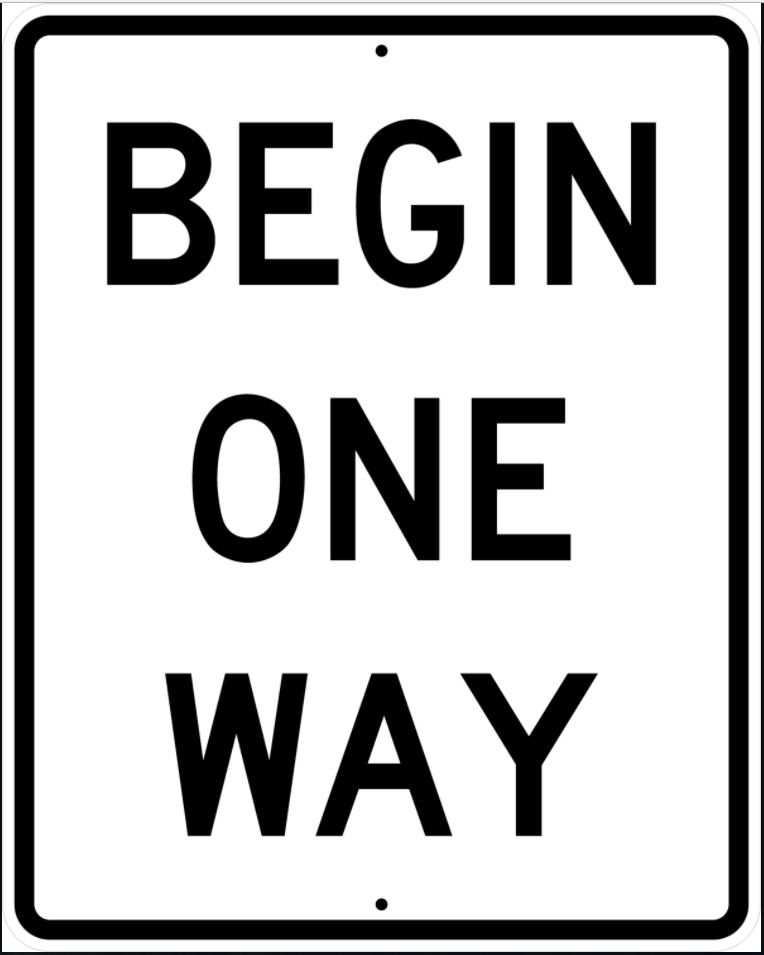 Regulatory Signs / Traffic Control Signs
Begin One Way Sign - R6-6
$57.95 - $123.75
Shop on Trafficsigns.com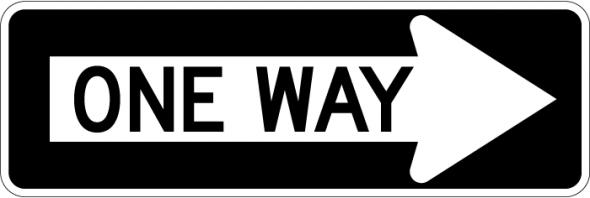 Regulatory Signs / Traffic Control Signs
One Way Right Sign - R6-1R
$33.25 - $58.25
Shop on Trafficsigns.com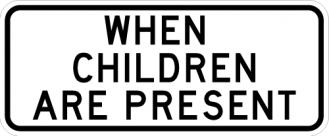 Warning Signs / School Zone Signs
When Children Are Present Sign - S4-2
$22.10 - $59.95
Shop on Trafficsigns.com Regulatory Signs / Traffic Control Signs
Stop Signs - R1-1
$31.50 - $121.90
Shop on Trafficsigns.comOrder MUTCD-Compliant Stop Signs and Intersection Control Kits
Whether a traffic engineering study just confirmed a new all-way stop warrant or you are updating signage on an existing roadway, trafficsigns.com stocks stop signs, four-way stop kits, and supporting regulatory signs built to DOT and MUTCD standards. Choose the reflective grade and size that fits your intersection's speed and visibility needs, and order in bulk to take advantage of quantity pricing tiers.