
Signs of Wear, Compliance Guidelines, and MUTCD Replacement Standards
Buyer Questions: Traffic Sign Replacement
- How often should traffic signs be replaced?
- There is no single universal replacement interval, but the MUTCD requires agencies to maintain minimum retroreflectivity levels and replace signs that fall below those thresholds. In practice, engineer grade reflective sheeting typically lasts 7-10 years, high intensity grade lasts 10 years or more, and diamond grade sheeting can perform for 12 years or longer under normal conditions. A documented inspection and sign management program helps determine when individual signs need replacement.
- What materials are used on replacement traffic signs, and which is most durable?
- Replacement traffic signs from Trafficsigns.com are built on heavy-duty aluminum substrates with reflective sheeting bonded to the face. Three sheeting grades are available: Engineer Grade (reflective, entry-level performance), High Intensity Grade (very reflective, suitable for most roadway applications), and Diamond Grade (ultra-reflective, meets the highest retroreflectivity thresholds and is ideal for high-speed or high-risk locations). Diamond Grade sheeting carries the longest service life and is the best choice for signs that will not be inspected frequently.
- What sizes are available for replacement traffic signs?
- Standard replacement signs are available in common MUTCD-compliant sizes including 12x12, 12x18, 18x18, 18x24, 24x18, 24x24, 30x30, 36x36, and 48x48 inches, depending on sign type. Custom sizes can also be ordered. Size selection should match the original posted sign dimensions and the speed environment of the roadway per MUTCD specifications.
- Can I order custom replacement signs with specific text or a logo?
- Yes. Custom reflective aluminum signs are available in multiple sizes and sheeting grades. You can submit your own design files or work from standard templates. A pre-production proof is provided for approval before manufacturing begins. Custom options include standard rectangular signs, square signs, and diamond-shaped signs in both standard and orange reflective finishes.
- What are the price ranges for replacement traffic signs, and are bulk discounts available?
- Standard signs start at around $21.95 for smaller parking and regulatory signs. Custom reflective aluminum signs begin at approximately $27.85 for 12x12 engineer grade. Prices increase with size and sheeting grade, with diamond grade commanding a premium over engineer and high intensity options. Volume pricing tiers apply starting at quantities of 2 or more units, with per-unit costs dropping significantly at quantities of 6, 11, and 20 or more. Agencies replacing multiple signs in a program cycle can realize substantial savings through bulk ordering.
- How quickly are replacement signs produced and shipped?
- Standard catalog signs are typically processed and shipped promptly. Custom signs require a proof approval step before production begins, which adds some lead time. For urgent replacements, contacting Trafficsigns.com directly to discuss production timelines and expedited shipping options is recommended.
- How are aluminum traffic signs installed after delivery?
- All aluminum signs from Trafficsigns.com include 3/8-inch prepunched mounting holes and radius corners for safe, straightforward installation. Signs mount to standard U-channel, square tube, or wood posts using appropriate hardware. Installation should follow MUTCD height and lateral placement guidelines for the sign type and roadway classification. No special tools or finishes are required beyond standard sign installation hardware.
Traffic Sign Lifespan: How Long Do Traffic Signs Last?
- Engineer Grade sheeting typically provides compliant retroreflectivity for 7 to 10 years.
- High Intensity Grade sheeting generally maintains performance for 10 years or more.
- Diamond Grade sheeting often exceeds 12 years of service before retroreflectivity drops below minimum thresholds.
These figures assume aluminum substrates in reasonable environmental conditions. Signs in coastal or high-humidity environments, areas with extreme UV exposure, or locations prone to vandalism and vehicle strikes may need replacement sooner. Physical damage, including bending, perforation, or significant fading from debris abrasion, can reduce effective lifespan regardless of sheeting grade.
Aluminum sign blanks resist corrosion far better than older steel substrates, which is one reason aluminum traffic signs have become the dominant material for roadway applications. A custom reflective aluminum sign built on a quality aluminum substrate with premium sheeting can deliver service life that far exceeds the minimum replacement thresholds agencies track.
MUTCD Retroreflectivity Requirements and Sign Replacement Compliance
The MUTCD does not mandate a fixed replacement schedule. Instead, it requires that agencies use one or more approved assessment methods to ensure signs meet minimum retroreflectivity levels:
1. Retroreflectometer measurement: Direct measurement of retroreflected luminance using calibrated instruments against MUTCD minimum retroreflectivity levels by sign color.
2. Visual nighttime inspection: Trained personnel assess signs from a moving vehicle under low-beam headlights to identify signs that appear obviously degraded.
3. Expected sign life (blanket replacement): Agencies replace all signs of a given type on a fixed cycle based on documented performance data for the sheeting grade used.
4. Control signs: A set of new signs is maintained as baseline references to compare field signs against during inspection.
For regulatory signs (white background), warning signs (yellow background), and guide signs (green background), minimum retroreflectivity levels differ. Diamond Grade sheeting is the preferred solution for locations where maintaining compliance with minimum retroreflectivity levels over the longest possible interval is the priority.
Agencies that implement a formal traffic sign maintenance program, including documented inspection schedules and replacement records, are better positioned to demonstrate MUTCD compliance and reduce liability exposure from degraded signage.
Signs That a Traffic Sign Needs Immediate Replacement
- Physical damage: Bent, cracked, or perforated sign faces impair legibility and may create safety hazards.
- Missing or obstructed signs: Signs that have been knocked down, stolen, or heavily obscured by vegetation must be replaced promptly.
- Faded or bleached face: Significant color shift, particularly on yellow warning signs or white regulatory signs, reduces daytime contrast and legibility.
- Delaminating sheeting: Retroreflective sheeting that has begun to separate from the substrate performs poorly and degrades rapidly.
- Graffiti or vandalism: Markings that partially or fully obscure the sign message require immediate replacement.
- Corrosion or rust: More common on older steel-backed signs, surface corrosion compromises structural integrity and reflective adhesion.
Damaged traffic signs at high-risk locations, such as stop signs, yield signs, wrong-way signs, and curve warnings, should be treated as urgent replacements. A road closed or restricted-access sign that is damaged or illegible at a detour point creates an immediate hazard. Keeping replacement inventory on hand for high-priority sign types reduces the gap between identification and reinstallation.
Building a Sign Replacement Schedule and Maintenance Program
For agencies using the expected sign life method, replacement cycles are built directly from documented sheeting performance data. Engineer Grade signs installed more than 10 years ago should be flagged for assessment. High Intensity and Diamond Grade installations can carry longer intervals, but should still be included in periodic visual inspections.
Private property managers, parking facility operators, and municipalities with smaller sign inventories can benefit from the same systematic approach on a smaller scale. A simple spreadsheet tracking sign type, installation date, location, and last inspection date is sufficient for many operations.
For signs that require custom messaging, such as site-specific warnings or facility-specific regulatory signs, custom reflective aluminum options in square and vertical formats can be ordered to match exact specifications and sheeting grade requirements. Ordering replacements in advance of anticipated compliance deadlines avoids gaps in sign coverage.
Sheeting Grade Selection for Replacement Traffic Signs
Engineer Grade is the baseline option for low-speed environments and locations where signs are inspected and replaced on a frequent cycle. It meets minimum MUTCD standards for many applications but carries the shortest effective service life of the three grades.
High Intensity Grade provides significantly greater retroreflectivity and is appropriate for most arterial and collector road applications. It offers a good balance between upfront cost and service life, making it the common choice for municipal replacement programs.
Diamond Grade delivers the highest retroreflectivity and the longest service life. It is the preferred specification for high-speed roadways, locations with limited inspection access, and any sign type where early retroreflectivity failure would create significant safety risk. Diamond Grade signs also meet the most stringent DOT and MUTCD state and federal guidelines, including those for signs in critical warning applications.
All aluminum traffic signs from Trafficsigns.com are manufactured with reflective sheeting on aluminum, radius corners, and 3/8-inch prepunched holes for direct field installation. Both High Intensity and Diamond Grade options meet DOT and MUTCD state and federal guidelines.
Retroreflective Sheeting Grade Comparison
Selecting the correct sheeting grade for replacement traffic signs determines compliance durability and total lifecycle cost. Use this comparison to match sheeting performance to your roadway environment and inspection schedule.
| Sheeting Grade | Retroreflectivity Level | Typical Service Life | Best Applications | MUTCD Compliance |
|---|---|---|---|---|
| Engineer Grade | Reflective (entry level) | 7-10 years | Low-speed roads, parking areas, private property | Meets minimum requirements for many sign types |
| High Intensity Grade | Very Reflective | 10+ years | Arterial roads, collector streets, municipal programs | Exceeds minimum requirements; meets DOT and MUTCD guidelines |
| Diamond Grade | Ultra Reflective (highest) | 12+ years | High-speed roads, limited-access locations, critical warnings | Meets highest DOT and MUTCD state and federal standards |
Replacement Traffic Signs and Custom Reflective Aluminum Signs
Trafficsigns.com stocks a full range of MUTCD-compliant replacement traffic signs on aluminum substrates with reflective sheeting in engineer, high intensity, and diamond grade options. Custom signs are also available with a pre-production proof for approval before manufacturing.
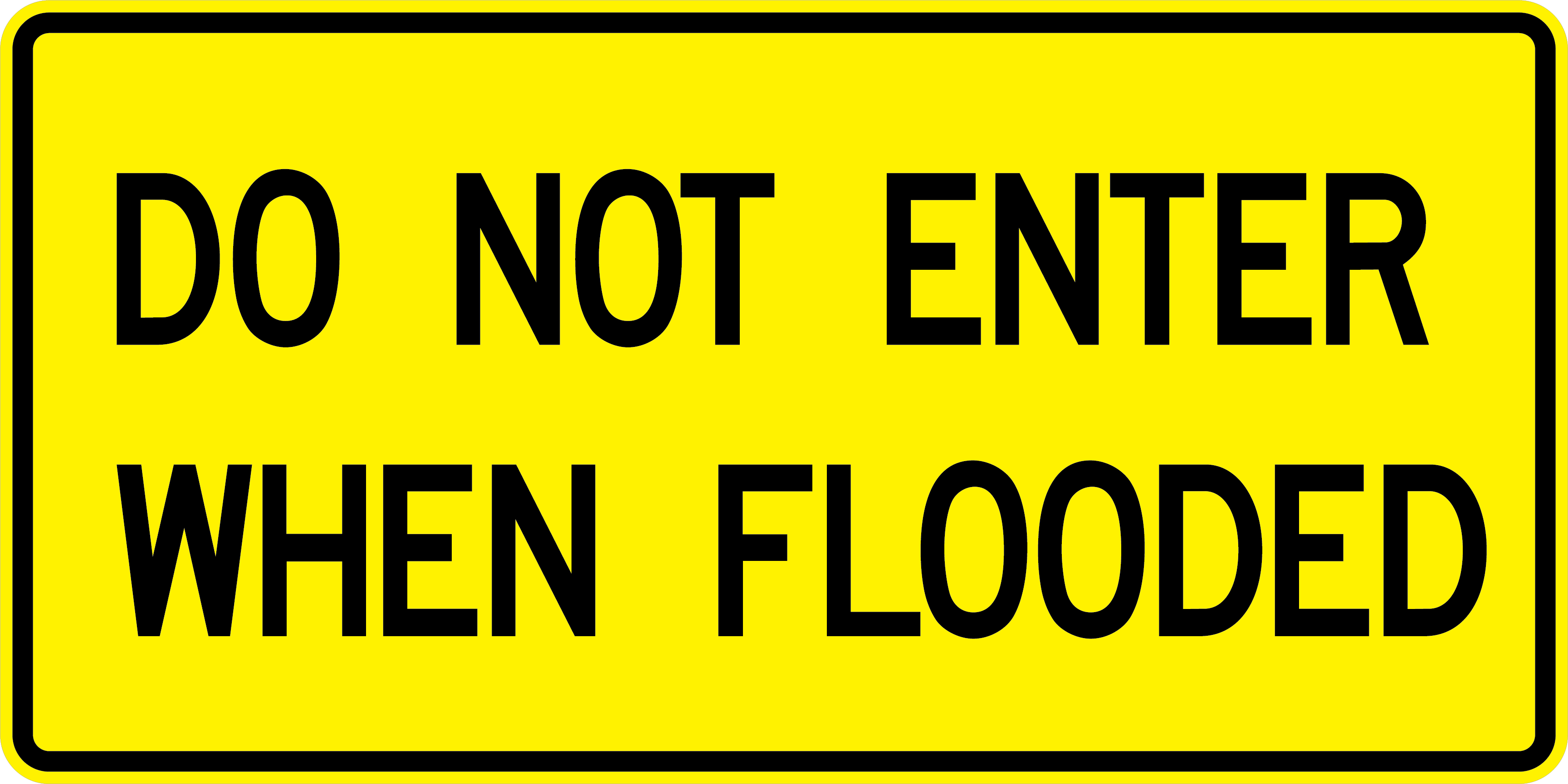 Warning Signs / Road Condition Signs
Do Not Enter When Flooded Warning Sign (W8-103)
$86.25 - $123.75
Shop on Trafficsigns.com Custom Signs
Custom Reflective Aluminum 18 x 24 Sign (CR-18-24)
$42.95 - $68.95
Shop on Trafficsigns.com Custom Signs / Warning
Custom Orange Reflective Aluminum Diamond Sign (CS-D-O)
$27.85 - $266.95
Shop on Trafficsigns.com Custom Signs
Custom Reflective Aluminum 12 x 18 Sign (CR-12-18)
$29.95 - $49.95
Shop on Trafficsigns.com Custom Signs / Warning
Custom Orange Reflective Aluminum Square Sign (CS-S-O)
$27.85 - $266.95
Shop on Trafficsigns.comReady to Order Replacement Traffic Signs?
Trafficsigns.com supplies MUTCD-compliant replacement traffic signs on aluminum substrates with your choice of engineer, high intensity, or diamond grade reflective sheeting. Standard and custom sizes are available with volume pricing on larger orders. Browse the full catalog or contact our team to discuss your sign replacement program needs.
Shop Replacement Traffic Signs