
How roadway authorities use engineering judgment and MUTCD standards to determine traffic sign placement
Questions Buyers Ask About Traffic Signs
- What materials and reflective grades are used in your traffic signs?
- Our traffic signs are made from aluminum standard punched blanks and are available in three reflective grades: engineer grade (reflective), high intensity (very reflective), and diamond grade (ultra reflective). All high intensity and diamond grade signs meet DOT and MUTCD state and federal retroreflectivity standards, so sign visibility holds up at night and in low-light conditions.
- What sizes do traffic signs come in?
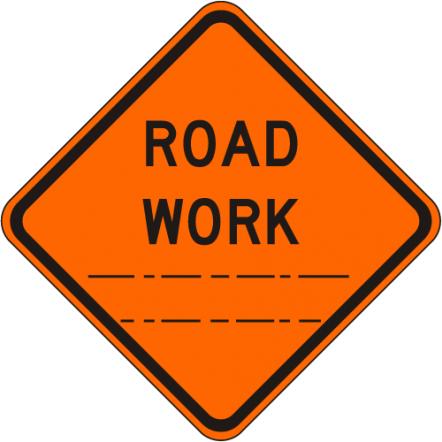
- Sizes vary by sign type and MUTCD classification. Diamond-shaped warning signs like the Road Work (distance) Sign - W20-1 are available from 24 inches up to 48 inches square, while regulatory signs such as the Road Closed Sign - R11-2 range from 24x18 inches to 48x30 inches. If you need a custom footprint, blank aluminum stock is also available through our sign blanks inventory.
- Are these signs compliant with MUTCD and DOT standards?
- Yes. Every sign listed on Trafficsigns.com is manufactured to meet DOT and MUTCD state and federal guidelines, covering sheeting reflectivity, sign dimensions, and legend legibility. This matters for any roadway authority or public works department that needs documentation showing compliance during an engineering study or audit.
- Do you offer bulk pricing for public works departments and contractors?
- Yes. Most signs carry tiered quantity discounts, typically starting at 4 units and increasing at 7, 16, and 50 units. For example, the Road Work Ahead Roll-Up Construction Signs - W20-1-RU drops from a base price to a lower per-unit rate once you order 3 or more, which helps transportation departments and contractors managing multiple work zones stay on budget.
- How long does production and shipping take for a larger order?
- Standard signs typically ship within a few business days of order confirmation, though timelines can extend slightly for diamond grade sheeting or oversized panels due to manufacturing demand. If you're coordinating a road work zone or detour rollout, order ahead of your project start date to allow buffer time for delivery.
- What's involved in installing a traffic sign once it arrives?
- Signs come with 3/8 inch prepunched holes for mounting to standard posts, u-channel, or existing sign structures. Installation height and setback from the roadway should follow MUTCD placement standards for your road classification, which we cover in detail below. Local public works crews or a licensed contractor typically handle installation on public rights-of-way.
- How should unused signs be cared for and stored?
- Store aluminum signs flat or vertically in a dry area away from direct sunlight when not deployed, particularly seasonal detour or construction signage. Reflective sheeting can lose some retroreflectivity with prolonged UV exposure, so rotating stock and inspecting sheeting condition periodically extends usable sign life.
Who Determines Traffic Sign Placement?
This matters because a common question people ask is where they can legally put up signs. The answer depends entirely on the property involved. On private property, such as a parking lot or private drive, the property owner has more latitude, though local sign ordinances and ADA requirements still apply. On any public road or right-of-way, an individual, business, or contractor cannot simply install a stop sign, speed limit sign, or road closed sign without going through the governing transportation department. Doing so without authorization can create liability issues and is often against state law, since unauthorized signage can confuse drivers or contradict an official traffic control plan.
For temporary situations like construction or utility work, contractors usually need a permit from the local public works office before deploying signage such as the Road Work Ahead Roll-Up Construction Signs - W20-1-RU, even on a road they're actively working on.
How MUTCD Sign Warrants and Engineering Studies Guide Placement
A frequently asked question is what counts as an appropriate location for a road sign. MUTCD guidance ties placement to the driver's decision point: a warning sign needs enough advance distance for a driver to see it, read it, and react before reaching the hazard, with required distances increasing at higher posted speeds. Guide signs need to appear far enough ahead of a decision point (like an exit or turn) that a driver has time to change lanes safely. Signs are also placed with a clear line of sight, free from obstructions like foliage, utility poles, or parked vehicles, since sign visibility is only useful if drivers can actually see the sign in time.
Mounting height matters too. MUTCD standards generally call for a minimum mounting height of 7 feet from the pavement surface to the bottom edge of the sign in areas with pedestrian traffic, such as urban sidewalks, and typically 5 feet in rural areas without pedestrian activity. These heights keep signs clear of pedestrians while remaining within a driver's normal line of sight. Departments managing detours or lane closures often reference these same standards when placing signs like the Road Closed Local Traffic Only Sign - R11-3a, which needs to be visible well before a driver reaches the closure point.
The Four Categories of Traffic Signs and Where Each One Belongs
Regulatory signs (red, white, and black, often rectangular or octagonal) convey laws drivers must obey, such as speed limits, stop requirements, or road closures. Warning signs (yellow, diamond-shaped) alert drivers to upcoming hazards or changing roadway conditions, like merging traffic or road work ahead. Guide signs (predominantly green, with blue and brown used for services and recreation) provide directional and informational guidance, similar to the Telecommunication Devices For The Deaf Sign - D9-21, which supplements advance guide signage at rest areas. Construction and maintenance signs (orange) mark temporary work zones, detours, and lane shifts, and are removed once conditions return to normal, as with the End Road Work - G20-2 sign used to close out a work zone.
Each category has its own MUTCD numbering series and its own placement rules, which is why traffic engineering studies are category-specific. A warrant that justifies a warning sign for a sharp curve won't necessarily justify a regulatory sign for the same location, and vice versa.
Traffic Sign Categories at a Glance
Each sign category serves a distinct engineering purpose. Here's how the four main categories compare in color, function, and typical use.
| Category | Color / Shape | Purpose | MUTCD Series | Example Sign |
|---|---|---|---|---|
| Regulatory | Red, white, black; rectangular or octagonal | Convey traffic laws drivers must legally obey | R-series | Road Closed Sign (R11-2) |
| Warning | Yellow, diamond-shaped | Alert drivers to hazards or changing conditions ahead | W-series | Road Work (distance) Sign (W20-1) |
| Guide | Green, blue, or brown; rectangular | Provide directional and informational guidance | D-series / G-series | Telecommunication Devices For The Deaf Sign (D9-21) |
| Construction / Maintenance | Orange, diamond or rectangular | Mark temporary work zones and detours | W20 / G20 series | End Road Work (G20-2) |
Traffic Control Signs for Roadway Authorities and Contractors
Every sign below is manufactured to MUTCD and DOT specifications and is commonly used by public works departments, contractors, and transportation departments when placement warrants call for it.
 Warning Signs > Construction Signs
Road Work (distance) Sign - W20-1
$44.25 - $256.95
Shop on Trafficsigns.com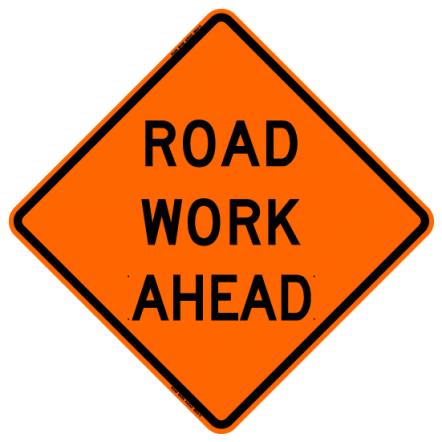 Warning Signs > Construction Signs
Road Work Ahead Roll-Up Construction Signs - W20-1-RU
$44.55 - $213.75
Shop on Trafficsigns.com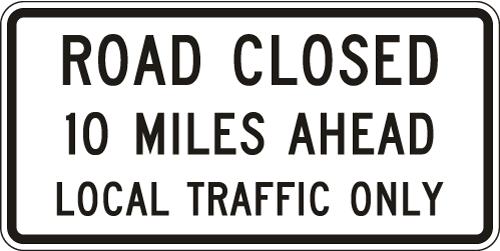 Regulatory Signs > Traffic Control Signs
Road Closed Local Traffic Only Sign - R11-3a
$110.00 - $165.00
Shop on Trafficsigns.com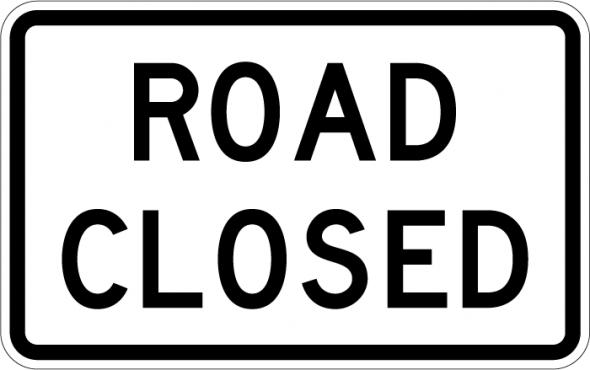 Regulatory Signs > Traffic Control Signs
Road Closed Sign - R11-2
$33.25 - $148.50
Shop on Trafficsigns.com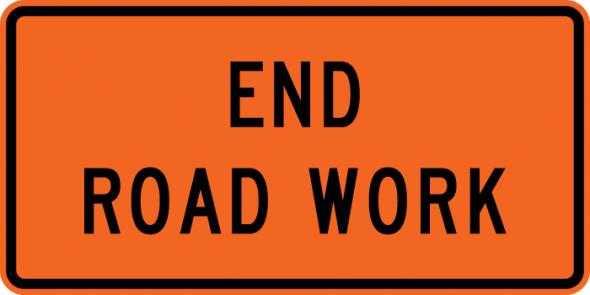
Ready to Order Compliant Traffic Signs for Your Project?
Whether you're a public works department outfitting a work zone or a contractor managing a road closure, Trafficsigns.com carries MUTCD-compliant signage in engineer grade, high intensity, and diamond grade reflectivity. Browse our road work signage built for correct placement, durability, and DOT compliance.
Shop Road Work Signs