
The bright yellow-green color isn't decorative. It's a federally recognized safety standard.
If you've noticed a speed limit sign near a school glowing an almost neon yellow-green instead of the standard black-and-white, you're not imagining it. Fluorescent yellow-green (FYG) is a specific color required by the Manual on Uniform Traffic Control Devices (MUTCD) for school zone and pedestrian warning signs. It's designed to catch a driver's eye faster than traditional colors, especially during dawn, dusk, and the split-second glance drivers give before they realize children are nearby. This page breaks down why the color matters, what school zone speed limit signs are required to look like, and how to buy compliant signage for your district, HOA, or municipality.
Common Buyer Questions About School Zone Speed Limit Signs
- What materials are school zone speed limit signs made from, and how durable are they outdoors?
- All of our school zone speed limit signs are made from aluminum standard punched blanks, available in Engineer Grade (reflective), High Intensity (very reflective), Diamond Grade (ultra reflective), and Fluorescent Yellow-Green (ultra reflective) for maximum school zone visibility. Aluminum resists rust, warping, and fading, and the reflective sheeting is built to hold up through years of sun, rain, and temperature swings without deteriorating.
- What sizes are available for school zone speed limit signs?
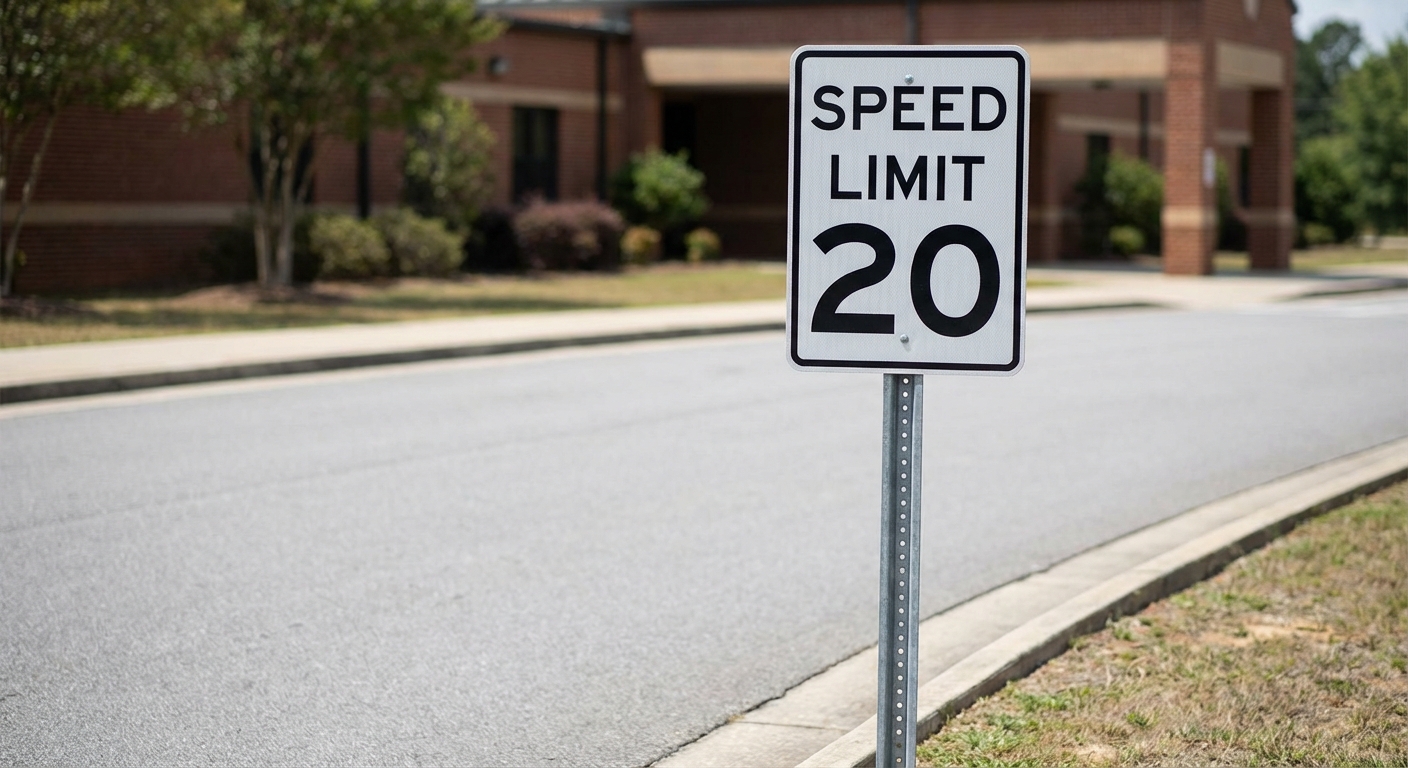
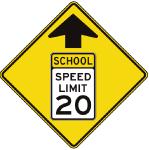
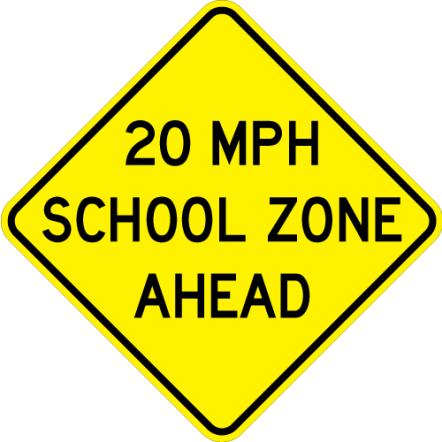
- Sizes vary by sign type. The School Speed Limit Sign S5-1 comes in 24"x48" and 36"x72", while smaller warning signs like the School Speed Zone Ahead Sign S4-5 are offered in 24"x24", 30"x30", 36"x36", and 48"x48". Choosing the right size depends on posted road speed, sign placement distance from the roadway, and local DOT guidance.
- Can I get school zone signs in fluorescent yellow-green, and does it cost more?
- Yes. Several school zone signs, including the S5-1, S4-5, and S4-5a, offer a yellow-green fluorescent ultra reflective option. It typically runs a bit higher than standard High Intensity sheeting because of the added retroreflective and fluorescent pigment technology, but it's the material most municipalities now specify for new installs since it improves driver reaction time in low light.
- Do you offer bulk pricing for schools or municipalities ordering multiple signs?
- Yes. Every sign on our site uses tiered quantity pricing, with discounts kicking in at 4, 7, 16, and 50+ units. If you're outfitting an entire district or several intersections, ordering in bulk brings the per-sign cost down noticeably compared to buying one at a time.
- How long does production and shipping take for custom school zone signs?
- Standard signs are typically produced and shipped within a few business days since they use printable, standard punched blank templates rather than fully custom tooling. Larger bulk orders or oversized signs (like 48"x48") may need a little additional production time, so we recommend ordering ahead of the school year if you're outfitting multiple zones.
- What's the best way to mount and install a school zone speed limit sign?
- Our signs ship with standard punched blanks, which means they're pre-drilled to fit U-channel posts or existing sign hardware using standard bolts. Most school zone signs are mounted 7 feet from the ground to the bottom of the sign along the roadway shoulder, per MUTCD placement guidance, though local jurisdictions may have specific requirements.
- Do your signs meet MUTCD and DOT requirements for school zones?
- Yes. All of our school zone signage, including High Intensity, Diamond Grade, and Fluorescent Yellow-Green options, is manufactured to meet DOT and MUTCD state and federal standards, so districts and municipalities can install with confidence that the signage will pass compliance review.
Why Fluorescent Yellow-Green? The Science Behind the Color
The MUTCD officially added fluorescent yellow-green to its standard color palette for pedestrian, bicycle, and school warning signs because of how the human eye processes color under low-light and peripheral-vision conditions. Fluorescent pigments absorb ultraviolet light and re-emit it as visible light, which makes the sign appear brighter than its surroundings even on overcast days or during the low-angle sun of early morning drop-off and afternoon pickup. Studies cited by the Federal Highway Administration found that drivers recognize fluorescent yellow-green warning signs measurably faster than standard yellow signs, which translates directly into more reaction time before reaching a crosswalk or school zone speed limit sign. That's why signs like the School Speed Zone Ahead Sign S4-5 and its companion S4-5a offer a yellow-green fluorescent ultra reflective finish alongside standard High Intensity and Diamond Grade sheeting. Many state DOTs, including several districts in Arizona and across the Northeast, have shifted their entire school warning sign inventory to fluorescent yellow-green over the past two decades, phasing out the older black-and-yellow versions as they age out.
Types & Options Overview: School Zone Speed Limit Signs and Related Signage
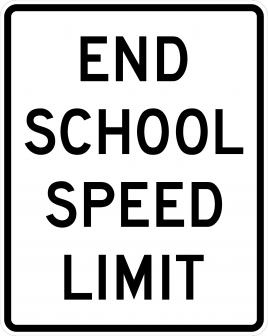
School zone traffic signs generally fall into a few functional categories, and most zones use a combination of them rather than a single sign. Speed limit signs, like the School Speed Limit Sign S5-1, post the actual reduced speed (commonly 15 or 20 mph) that applies during school hours. Warning signs, including S4-5 and S4-5a, tell drivers a reduced speed zone is coming up. When Children Are Present signs (S4-2) are used where the reduced limit only applies while children are actively present, which is why some flashing beacons only activate during arrival and dismissal windows. The End School Zone Sign S5-2 and the End School Speed Limit Sign S5-3 mark where the reduced zone terminates, which matters for enforcement since a driver technically isn't violating a school zone limit once they've passed a properly posted end sign. Crossing-specific signage, like the S1-1 School Crossing sign, differs from a general pedestrian crossing sign in that it specifically flags a marked school crossing point rather than a generic mid-block or intersection crossing (compare to a standard Pedestrian Crossing Sign W11-2). Some jurisdictions also pair school zones with Begin/End Higher Fines Zone signs (R2-10 and R2-11) to reinforce that violations near schools carry increased penalties.
School Zone Enforcement, Hours, and Common Driver Questions
Drivers researching school zone signs online tend to ask a handful of recurring questions, and the answers usually come back to how the signage and enforcement windows are actually posted. In New York City, yes, you can absolutely receive a ticket for exceeding a posted school zone speed limit, and NYC's automated school zone speed camera program actively issues civil penalties (not points) for violations recorded during active enforcement hours, which generally run on school days. A number of drivers on forums like Reddit have been surprised by camera tickets they didn't expect, often because they assumed cameras only ran during drop-off and pickup rather than the full posted enforcement window, so it pays to read the posted hours on the sign itself rather than assume. In Arizona, school zone signage generally follows the same MUTCD framework used nationwide: the S1-1 School Crossing warning sign, S4-2 When Children Are Present signs (often paired with flashing beacons), and fluorescent yellow-green speed zone signs, with some cities layering in photo enforcement in specific corridors. As for how to beat a school zone camera ticket, the honest answer is that most successful contests come down to whether the signage and beacon operation actually met legal requirements at the time of the citation, not evasion tactics, which is exactly why municipalities invest in DOT and MUTCD-compliant, properly maintained signage rather than faded or non-standard signs that could get a citation thrown out on a technicality. And yes, you can buy speed limit signs directly through us for schools, HOAs, private roads, and municipal projects; just confirm with your local jurisdiction before installing any regulatory sign along a public roadway, since official-looking signage on public streets typically requires authorization even when purchased legitimately. If your zone also needs consistent nighttime enforcement signage, pairing a school zone sign with a Night Speed Limit Sign R2-3 can clarify hours when flashing beacons aren't in use.
Sign Material Options Comparison
School zone speed limit signs are available in four reflective grades. Here's how they compare for visibility and typical use.
| Material Grade | Reflectivity Level | Best For | Nighttime Visibility |
|---|---|---|---|
| Engineer Grade | Reflective | Low-traffic residential school zones, budget-conscious orders | Good |
| High Intensity | Very Reflective | Standard school zones, moderate traffic roads | Very Good |
| Diamond Grade | Ultra Reflective | High-speed approaches, arterial roads near schools | Excellent |
| Fluorescent Yellow-Green | Ultra Reflective | School warning and speed zone signs where fast driver recognition is critical | Excellent, plus enhanced daytime and low-light contrast |
Shop School Zone Speed Limit Signs
Browse our most requested school zone signage, available in Engineer Grade, High Intensity, Diamond Grade, and Fluorescent Yellow-Green where noted, all built to MUTCD and DOT standards.
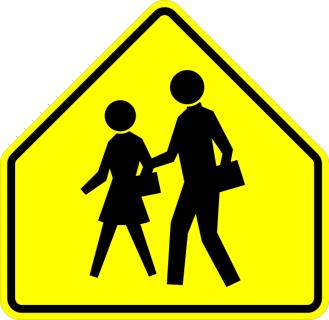
Outfit Your School Zone with Compliant, High-Visibility Signage
Whether you're updating a single crossing or outfitting an entire district, our School Zone Safety Kit bundles the speed limit, warning, and crossing signs districts most commonly order, all built to DOT and MUTCD standards with reflective or fluorescent yellow-green finishes available.
Shop the School Zone Safety Kit