
Understanding warning beacons, stop beacons, and MUTCD guidance for high-attention traffic signs
Some intersections, school zones, and curves carry more risk than others, and a static sign alone does not always grab a driver's attention fast enough. Flashing beacons solve that problem by adding a separate flashing signal next to a standard sign, increasing its conspicuity in low light, fog, or heavy traffic. This guide explains when beacons are used (and the few cases where the MUTCD requires them), how the different beacon types work with different signs, and which trafficsigns.com products are commonly paired with them.
Common Questions About Flashing Beacon Signs
- What makes a flashing beacon sign different from a standard traffic sign?
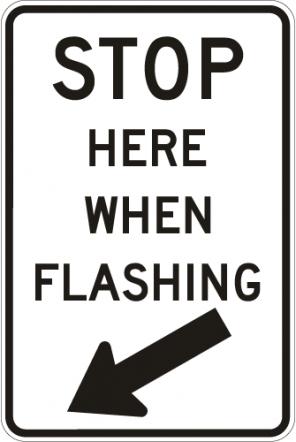
- A flashing beacon sign uses the same aluminum sign blank and reflective sheeting as a standard sign, but it is installed with a separate battery, solar, or hardwired beacon that flashes independently of the sign face. The beacon does not change the sign's legal message; it draws additional attention to it. This pairing is common on school speed limit signs, warning signs at curves and crossings, and STOP signs at high-risk intersections. The Stop Here When Flashing Sign - R8-10 is a different case: under the MUTCD, it's used at railroad crossings to show drivers where to stop when the railroad's own flashing-light signals are active.
- What materials are these signs made from, and how well do they hold up outdoors?
- Every sign designed for beacon use starts as aluminum with standard punched blanks, then is finished in one of three reflective grades: engineer grade, high intensity, or diamond grade. Engineer grade works for white regulatory signs, but the MUTCD doesn't allow it on yellow warning signs or orange work zone signs, which need high intensity or diamond grade. Diamond grade offers the strongest nighttime reflectivity and is a popular choice for signs paired with beacons. All grades are built to withstand sun, rain, and temperature swings without significant fading.
- What sizes are available for flashing beacon-compatible signs like stop signs and speed limit signs?
- Sizing depends on the sign type. The Stop Here When Flashing Sign - R8-10a is available in 24x30, 30x36, and 36x42 inch formats, while School Speed Limit Sign - S5-1 comes in 24x48 and 36x72 inch options. Larger formats are typically specified for higher-speed roads or wider viewing distances, so check your local traffic engineering guidance before ordering.
- Can I get a custom message on a sign designed for beacon mounting, or do I need a standard MUTCD template?
- Most flashing beacon signs, including stop beacon and speed limit sign beacon applications, follow standard MUTCD wording and layout because they carry regulatory or warning authority on public roads. This keeps the sign legally enforceable and recognizable to drivers. Custom text is generally reserved for supplemental plaques rather than the core sign face.
- How does pricing work, and are there discounts for ordering multiple signs?
- Pricing is based on sign size and reflective grade. For example, engineer grade pricing starts around $34 to $86 depending on the product and size, with high intensity and diamond grade options priced higher for improved reflectivity. Bulk pricing tiers automatically reduce the per-unit cost as quantity increases, which matters for school districts, municipalities, or contractors ordering signage for multiple locations at once.
- How long does production and shipping take once I place an order?
- Standard aluminum signs in engineer grade, high intensity, or diamond grade typically ship within a few business days of order confirmation since they use standard punched blanks and stock sizing. Roll-up construction signs, like the Reduced Speed Limit Ahead Roll-Up Construction Signs - W3-5-RU, follow a similar timeline. Beacon hardware sourced separately may have its own lead time, so plan installation dates accordingly.
- How are these signs installed, and do they need a separate mounting bracket for the beacon?
- The sign itself mounts to a standard post using its punched holes, the same as any other regulatory or warning sign. The beacon unit is a separate signal mounted above or below the sign using its own bracket hardware. For signs that say WHEN FLASHING, the MUTCD prohibits flashing LEDs in the sign's border or legend, so a separate beacon is required, and a stop beacon should sit 12 to 24 inches from the edge of the sign it supplements. The beacon hardware is typically sold separately from the sign because beacon power sources (solar, battery, or hardwired) vary by installation site. Municipal traffic departments usually specify beacon hardware based on local power access and mounting height requirements.
When Do Traffic Signs Need Flashing Beacons?
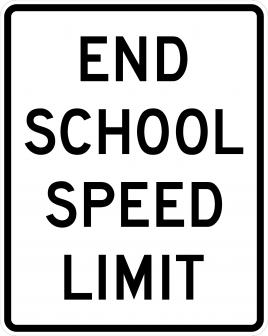
Flashing beacons get added to a sign when a location carries a higher-than-average risk of driver inattention or delayed reaction. Most beacons are optional, but the MUTCD does require them in a few cases. School zones are the most familiar example. A School Speed Limit Sign - S5-1 marks the start of a reduced speed zone, and if it uses the words WHEN FLASHING, the MUTCD requires a flashing yellow Speed Limit Sign Beacon with it. The beacon flashes during arrival and dismissal times to show that the lower limit is active right now, not just in general. At the other end of the zone, the MUTCD requires an End School Speed Limit Sign - S5-3 to show where the reduced limit ends; it doesn't usually carry a beacon.
Stop-controlled intersections with limited sight distance are another common pairing, using a flashing red Stop Beacon with the STOP sign. The Stop Here When Flashing Sign - R8-10 is often confused with these, but it's a railroad crossing sign: it shows drivers where to stop when the railroad's own flashing-light signals are active. Curves, advisory speed zones, and construction areas also benefit from beacon pairing, particularly where a driver's normal speed needs a visible, attention-grabbing cue rather than a passive sign alone.
Types of Flashing Beacon Configurations Under MUTCD
The Manual on Uniform Traffic Control Devices (MUTCD) recognizes four types of flashing beacons, and each one has its own color and job. Choosing the wrong one for a location is a common compliance mistake:
- Intersection Control Beacon: flashes yellow or red over an intersection to warn or control traffic there.
- Warning Beacon: flashes yellow. It supplements warning signs, obstruction markers, midblock crosswalks, and regulatory signs that say WHEN FLASHING. It can't be used with STOP, DO NOT ENTER, WRONG WAY, or SPEED LIMIT signs, and it should flash only while the condition or rule is in effect.
- Speed Limit Sign Beacon: flashes yellow, and is used only with a Speed Limit sign, such as a school speed limit that applies only when flashing.
- Stop Beacon: flashes red, and is used only with a STOP, DO NOT ENTER, or WRONG WAY sign.
A common warning beacon setup is a curve warning sign with a yellow Advisory Speed plaque (W13-1P) mounted below it on rural roads where drivers need to slow down before a curve. The orange version of the advisory speed plaque is meant for work zones. Roll-up and portable signage, like the Reduced Speed Limit Ahead Roll-Up Construction Signs - W3-5-RU, is often paired with portable flashing units in active work zones where the beacon setup needs to move with the crew from site to site.
Choosing the Right Sign and Reflective Grade for Beacon Mounting
Because a beacon draws the eye first, the sign it is mounted on still needs strong reflectivity to hold attention once a driver looks directly at it. Diamond grade sheeting is our recommended choice for most beacon-paired signs on higher-speed roads since it reflects headlight beams at a wider range of angles than engineer or high intensity grade. Municipalities working within tighter budgets often specify high intensity grade for lower-speed residential school zones, reserving diamond grade for state highways and rural roads with limited street lighting. These are our recommendations rather than MUTCD rules, and many states set their own sheeting requirements, so check with your state DOT or local agency.
Size matters just as much as reflectivity. A sign mounted at highway speed needs a larger format so drivers have enough time to read and react, which is why products like the Combined Maximum and Minimum Speed Limits sign (R2-4a) come in multiple sizes: 24x48 inches on conventional roads, stepping up to 36x72 on expressways and 48x96 on freeways. For agencies comparing full sign programs across a district, browsing the full warning signs and speed limit signs categories side by side makes it easier to standardize sizing and material grade across every beacon-equipped location.
Beacon-Compatible Sign Options at a Glance
Here is how common flashing beacon applications compare across sign type, typical use case, and starting price by reflective grade.
| Sign | Typical Beacon Use | Available Reflective Grades | Starting Price |
|---|---|---|---|
Stop Here When Flashing Sign (R8-10) | Railroad crossings: shows where to stop when the railroad's flashing-light signals are active (not a stop beacon) | Engineer, High Intensity, Diamond Grade | $69.95 |
Stop Here When Flashing Sign (R8-10a) | Railroad crossings: alternate design of the R8-10, used with the railroad's flashing-light signals | Engineer, High Intensity, Diamond Grade | $57.95 |
School Speed Limit Sign (S5-1) | Flashing yellow Speed Limit Sign Beacon; required when the sign says WHEN FLASHING | Engineer, High Intensity, Diamond Grade (school panel also available in fluorescent yellow-green) | $86.25 |
End School Speed Limit Sign (S5-3) | Required at the end of a reduced school speed zone; usually not beacon-equipped | Engineer, High Intensity, Diamond Grade | $57.95 |
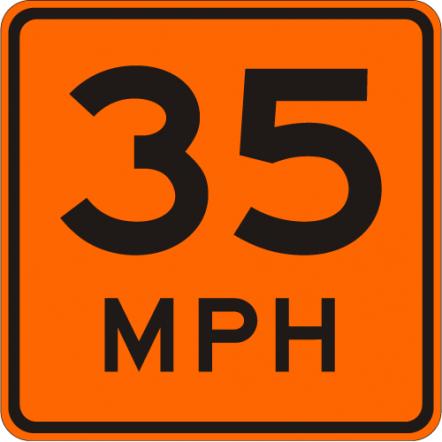
Advisory Speed plaque (W13-1-O, orange) | Orange version for work zones; the yellow W13-1P goes below a curve sign, often with a flashing yellow Warning Beacon | High Intensity, Diamond Grade (engineer grade isn't permitted on yellow or orange signs) | Varies by size and grade |
Signs Commonly Paired With Flashing Beacons
These are sign types often used where beacons or flashing signals come into play, from school speed zones to railroad crossings and work zones. White regulatory signs are available in engineer grade, high intensity, or diamond grade; yellow and orange signs need high intensity or diamond grade under the MUTCD.
 Railroad / Regulatory Signs
Stop Here When Flashing Sign - R8-10
For railroad grade crossings
$69.95 - $195.50
Shop on Trafficsigns.com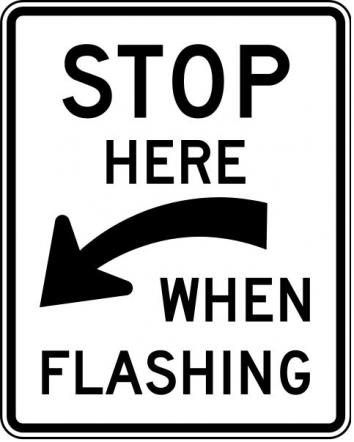 Railroad / Regulatory Signs
Stop Here When Flashing Sign - R8-10a
For railroad grade crossings
$57.95 - $159.95
Shop on Trafficsigns.com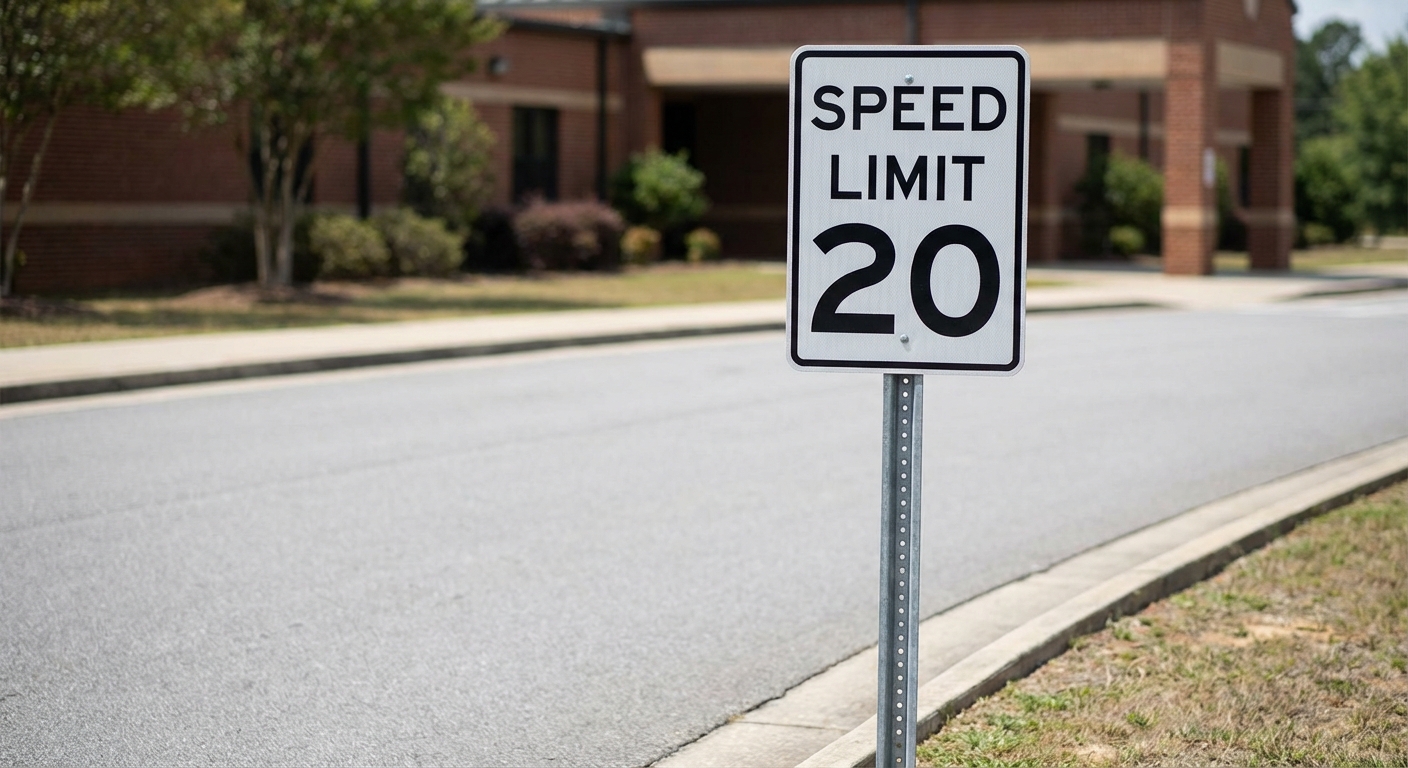
 Curve and Turn Warning Signs
Advisory Speed Limit - W13-1-O
Orange version for work zones
$34.15 - $111.95
Shop on Trafficsigns.comReady to Equip Your Location With the Right Beacon-Ready Sign?
Browse our full range of DOT and MUTCD compliant regulatory and warning signs, available in engineer grade, high intensity, and diamond grade reflective sheeting to match any beacon setup and traffic condition.
Shop Speed Limit Signs