
The logic behind traffic sign repetition, MUTCD spacing guidance, and how consistent placement keeps every driver informed
Drivers frequently notice the same speed limit, weight limit, or fine zone sign posted more than once along a single stretch of highway. This isn't an installation error or budget padding. Repeated traffic signs are a deliberate part of roadway design, driven by federal guidance, driver behavior research, and legal enforceability requirements. Understanding why signs repeat helps fleet managers, municipalities, and property owners plan smarter traffic control sign layouts instead of guessing at placement.
Common Questions About Repeated Traffic Signs
- Why do I see the same speed limit sign posted multiple times on one road?
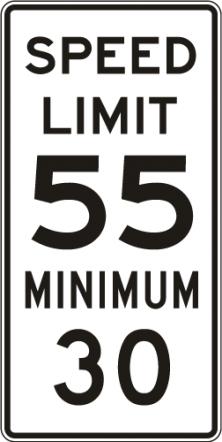
- Speed limit sign placement follows a simple principle: a driver who enters a roadway partway through a zone still needs to know the limit. Long corridors, major intersections, and side street entrances all create new decision points where a driver could have missed the original posting. Repeating the sign, such as the Speed Limit Sign R2-1, closes that gap. The MUTCD recommends adding Speed Limit signs beyond interchanges and major intersections, and anywhere drivers may need a reminder. Repeated posting can also matter for enforcement, but those rules come from state law, so check with your state DOT or local agency.
- How far apart should regulatory signs like speed limit or weight limit signs be spaced?
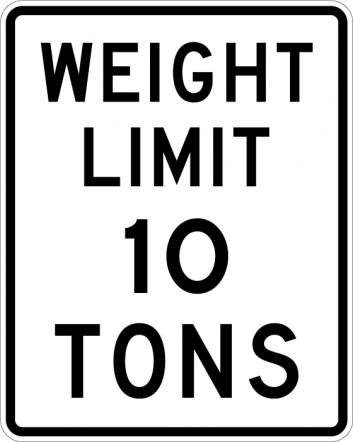
- There's no single fixed distance for every road. The MUTCD doesn't set a fixed interval for repeating Speed Limit signs, so agencies set their own spacing based on factors like speed, sight distance, and how often driveways, ramps, and cross streets join the road. Check with your state DOT or local traffic engineering office for the spacing used in your area. Weight limits work differently: the MUTCD requires a weight limit sign at the restricted bridge or road section, plus an additional sign in advance, showing a distance or direction, so truck drivers can detour or turn around before they reach it. You'll find these in our traffic control signs collection.
- What material should I choose for signs that need to be posted repeatedly along a long route?
- Repeated regulatory signs, like speed limit and weight limit signs, are commonly ordered in engineer grade (standard reflective), high intensity (very reflective), or diamond grade (ultra reflective) sheeting on aluminum blanks. Yellow warning signs need high intensity or diamond grade, since the MUTCD doesn't allow engineer grade on them. For rural routes with limited lighting or longer distances between postings, high intensity or diamond grade improves visibility at night and in poor weather.
- Can I order the same sign in bulk for multiple locations along a route?
- Yes. Signs like the Axle Weight Limit Sign R12-2 are priced with quantity break tiers starting at 4, 7, 16, and 50 units, so ordering identical signs for multiple mile markers or intersections lowers the per-unit cost as the order grows.
- Do all repeated signs along a road need to match in size and material?
- Consistency is strongly recommended, since drivers rely on recognizing a familiar shape, color, and size at a glance. Most agencies specify one size and reflectivity grade for a given route classification, though sizes can step up on higher speed roads. Mixing sizes at random locations undermines the visual pattern drivers rely on.
- How should repeated signs be mounted so spacing and height stay consistent?
- Signs are manufactured on standard punched blanks designed for u-channel posts, which makes it easy to set every sign in a repeated series at the same mounting height. Keeping height and lateral offset from the roadway consistent across every posting reinforces the pattern drivers expect and reduces confusion at each new location.
- How long does production take when ordering signs for multiple locations on the same project?
- Production timelines depend on order size, material grade, and sign size, since larger diamond grade signs and bigger bulk orders take more time to print and finish than a single small engineer grade sign. Planning your full route layout before ordering helps you place one combined order instead of several smaller ones.
Why Traffic Sign Repetition Happens
MUTCD Guidance on Traffic Sign Spacing and Placement
Common Repeated Signs Drivers Encounter and What They Mean
How Repeat Intervals Differ by Sign Type
| Sign Type | Typical Repeat Points | Why It's Repeated | Shop This Category |
|---|---|---|---|
Speed Limit (R2-1; R2-4a where a minimum speed also applies) | Where a limit begins or changes, and again beyond interchanges and major intersections | Reinforces the posted limit for drivers entering mid-zone; enforcement rules vary by state | |
Weight/Axle Limit (R12 series) | At the restricted bridge or road section, plus a required advance sign showing a distance or direction | Gives truck drivers time to detour or turn around before reaching the restriction | |
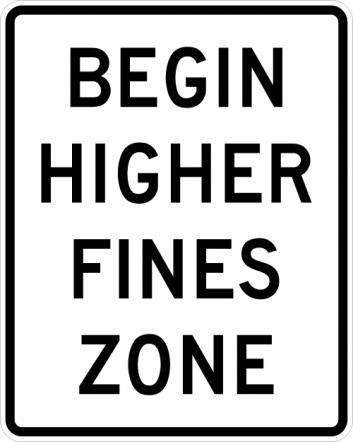
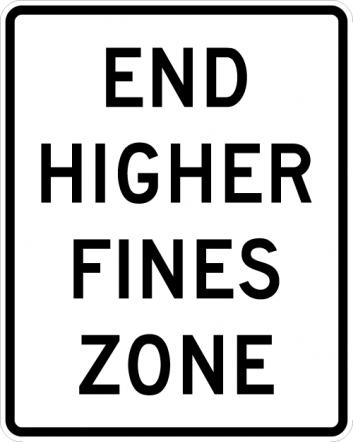
Higher Fines Zone (R2-10, R2-6P, R2-11) | At the start of the zone, again just beyond interchanges and major intersections, and an END sign at the end | Tells every driver in the zone, including those who join partway through, when increased penalties apply | |
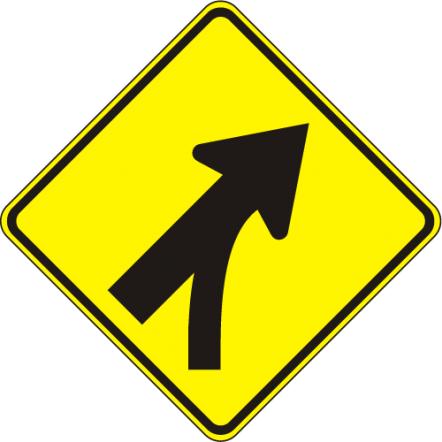
Merge (W4-1, W4-5) | W4-1 on the main road ahead of the merge; W4-5 on a curving on-ramp or entering road | Warns drivers on each roadway about the merge they are approaching |
Shop Signs Commonly Used in Repeated Placements
Plan Consistent Signage Across Your Entire Route
Whether you're posting speed limits along a multi-mile corridor, marking a higher fines zone, or placing weight limit signs at every route access point, consistent sizing and reflectivity make repeated signage effective. Browse our full selection of regulatory traffic signs to plan your layout and take advantage of bulk pricing on matching signs.
Shop Regulatory Signs