
Shape is the first thing a driver's brain registers on the road, often before color or text register at all.
Traffic sign shapes are not a design choice left to chance. The Manual on Uniform Traffic Control Devices (MUTCD) assigns a specific shape to each function so that drivers can identify a stop sign, a yield sign, or a railroad crossing warning by silhouette alone, even at a distance, in fog, or when a sign is partially obscured by snow or glare. Understanding traffic sign shapes helps property managers, contractors, and municipalities order the correct sign the first time and stay compliant with federal and state standards.
Questions Buyers Ask Before Ordering Shaped Traffic Signs
- What material are traffic sign shapes made from, and how long do they hold up outdoors?
- Our shaped traffic signs are cut from aluminum standard punched blanks and finished in one of three reflective grades: engineer grade (reflective), high intensity (very reflective), or diamond grade (ultra reflective). All high intensity and diamond grade signs meet DOT and MUTCD state and federal standards, and aluminum resists rust, warping, and fading far longer than plastic composites, making it suitable for years of outdoor exposure in sun, rain, and freeze-thaw cycles.
- What sizes are available for octagon, diamond, and other shaped signs?
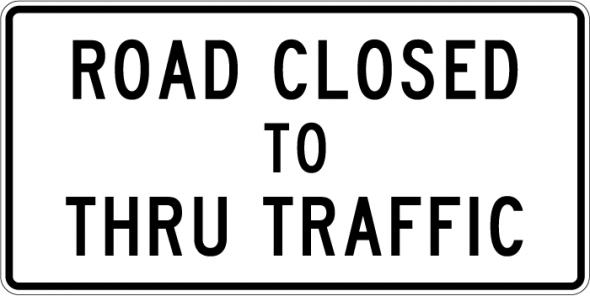
- Sizing varies by shape and function. Diamond-shaped warning signs like the Entering Roadway Merge Sign come in 24 inch, 30 inch, 36 inch, and 48 inch versions, while rectangular regulatory signs such as the Road Closed To Thru Traffic Sign are sized at 60 x 30 inches to meet visibility requirements on higher-speed roadways. If you're unsure which dimension fits your posting height or speed limit, our team can confirm the correct size against MUTCD tables.
- Do all traffic signs have to follow specific shape and color rules?
- Yes. The MUTCD standardizes shape and color by sign category so meaning transfers instantly across states. A red octagon always means stop, a yellow diamond always signals a warning, and a green rectangle always indicates guidance or direction. Ordering off-spec shapes or colors for public roadways can create liability issues, so we manufacture to the exact MUTCD sign codes, like R11-3a, R11-4, W4-5, and S4-2.
- How much do shaped traffic signs cost, and is there a bulk discount?
- Pricing depends on shape, size, and reflective grade. For example, a 24x18 inch regulatory sign in engineer grade starts around $33, while the same size in diamond grade runs closer to $58. Quantity breaks kick in at 4, 7, 16, and 50 units, with per-sign cost dropping at each tier, which matters if you're outfitting multiple intersections, work zones, or school routes at once.
- How long does production and shipping take?
- Standard printable signs like our diamond, rectangle, and octagon shapes typically ship within a few business days of order confirmation. Sign stands and mounting hardware, such as the Bone Safety SafeZone stands, run on a longer production cycle of roughly 20 to 25 business days, so we recommend ordering stands ahead of your sign delivery if you're setting up a temporary work zone.
- How are shaped traffic signs mounted and installed?
- Most rectangular, diamond, and octagon signs come pre-drilled on standard punched blanks for direct mounting to U-channel posts or existing sign poles with bolts. For temporary or roll-up applications, spring-loaded stands like the SZ-412 and SZ-460-2S hold signs 12 to 84 inches off the ground and are designed to flex in windy conditions without tipping.
- What's the difference between engineer grade, high intensity, and diamond grade reflectivity?
- Engineer grade offers solid daytime and moderate nighttime visibility at the lowest cost, high intensity brightens noticeably under headlights for higher-traffic roads, and diamond grade delivers the strongest nighttime reflectivity for highways, work zones, and locations where maximum driver reaction time matters most.
The 8 Basic Shapes of Traffic Signs and What They Mean
The MUTCD recognizes eight standard shapes, and each one is reserved almost exclusively for a specific message so drivers can react before they even read the text.
Octagon: Used only for the stop sign. No other sign on U.S. roads uses this eight-sided shape, which makes it recognizable even when the red color fades or a sign is coated in road grime.
Triangle (equilateral, point down): Reserved for the yield sign. The downward point mimics the act of giving way, reinforcing the message through geometry alone.
Diamond: The universal shape for warning signs. Yellow diamonds alert drivers to curves, merges, and changing road conditions ahead, such as the Entering Roadway Merge Sign, which flags an upcoming lane merge before drivers reach it.
Pentagon: A five-sided, home-plate shape used exclusively for school zone advance warning signs, often paired with fluorescent yellow-green backgrounds and supplemental plaques like the When Children Are Present Sign.
Circle: Used specifically for the railroad crossing advance warning sign (the yellow circle with an X and the letters RR). It is the only circular sign on the roadway, so drivers learn to associate the shape with rail crossings immediately.
Pennant: A horizontal isosceles triangle mounted with the point facing traffic, used solely for no-passing-zone signs placed on the left side of two-lane roads.
Crossbuck: The X-shaped sign posted directly at railroad grade crossings, distinct from the round advance warning sign that precedes it.
Rectangle: The most common shape on the road, covering regulatory signs, guide signs, and street signs. Rectangles handle everything from speed limits to detour instructions, including signs like the Road Closed Local Traffic Only Sign and the Road Closed To Thru Traffic Sign, both of which use rectangular formatting to communicate detour logic clearly.
How Shape and Color Work Together Across the 7 Main Sign Categories
Shape tells drivers what kind of message they're looking at, while color adds urgency and context. Together they form seven recognizable categories on U.S. roadways.
Regulatory signs use white or red backgrounds with black or white text, appearing as rectangles, octagons, or triangles to enforce laws such as speed limits and right-of-way. Warning signs are yellow with black symbols, most often diamond, pentagon, circle, or pennant shaped, and alert drivers to hazards ahead. Guide signs are green rectangles that provide route, mileage, and destination information, a category you can browse in full under guide signs or specifically for road signs and street name signs.
Construction and temporary traffic control signs use orange backgrounds, typically in diamond or rectangle shapes, to flag work zones. School zone signs use fluorescent yellow-green with pentagon or diamond shapes for maximum visibility around children. Recreational and cultural interest signs use brown rectangles to point toward parks, trails, and historic sites, found under recreation signs. Motorist service signs use blue rectangles to direct drivers to gas, food, and lodging, available in our service signs category.
Common Traffic Signs Every Driver Should Recognize
While the MUTCD covers hundreds of sign codes, most drivers regularly encounter around ten core signs: stop signs (octagon, red), yield signs (triangle, red and white), speed limit signs (rectangle, white and black), do not enter signs (circle, red and white), one way signs (rectangle, black and white), merge signs (diamond, yellow), railroad crossing signs (circle in advance, crossbuck at the crossing), school zone signs (pentagon, fluorescent yellow-green), no passing zone signs (pennant, yellow), and road closed signs (rectangle, white with black or orange text), such as the Road Closed Sign used to redirect traffic around construction or emergency work. Recognizing these ten by shape alone is often faster than reading the text, which is exactly why the MUTCD standardized shapes in the first place.
Traffic Sign Shape Reference Chart
Use this quick chart to match a shape to its category, standard color, and typical roadway use.
| Shape | MUTCD Category | Typical Color | Example Use |
|---|---|---|---|
| Octagon | Regulatory | Red / White | Stop sign |
| Triangle (point down) | Regulatory | Red / White | Yield sign |
| Diamond | Warning | Yellow / Black | Merge, curve, road condition ahead |
| Pentagon | Warning (School) | Fluorescent Yellow-Green | School zone advance warning |
| Circle | Warning | Yellow / Black | Railroad crossing advance warning |
| Pennant | Regulatory | Yellow / Black | No passing zone |
| Crossbuck | Regulatory | White / Red | Railroad crossing (at grade) |
| Rectangle | Regulatory / Guide | Varies (white, green, blue, brown, orange) | Speed limit, detour, directional, service |
Shaped Traffic Signs Built to MUTCD Standards
Every sign below is manufactured on reflective aluminum standard punched blanks and available in engineer grade, high intensity, or diamond grade reflectivity to meet DOT and MUTCD requirements.
 Warning Signs / Railroad Crossing Signs
Railroad Crossing Crossbuck Sign - R15-1
$89.95 - $107.50
Shop on Trafficsigns.com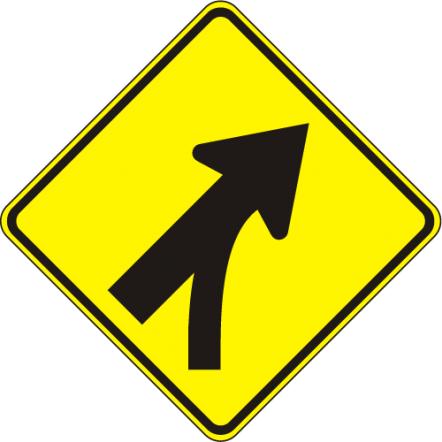 Warning Signs / Road Condition Signs
Entering Roadway Merge Sign - W4-5
$44.25 - $256.95
Shop on Trafficsigns.com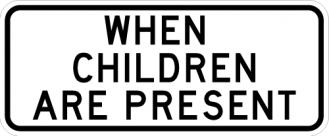 Warning Signs / School Zone Signs
When Children Are Present Sign - S4-2
$22.10 - $59.95
Shop on Trafficsigns.com
 Regulatory Signs / Traffic Control Signs
Road Closed To Thru Traffic Sign - R11-4
$110.00 - $165.00
Shop on Trafficsigns.comOrder MUTCD-Compliant Sign Shapes for Your Roadway or Project
Whether you need octagon stop signs, diamond warning signs, or rectangular regulatory signage for a road closure, our reflective aluminum signs are built to DOT and MUTCD standards and shipped in the reflective grade your project requires.
Shop Regulatory Signs