
MUTCD-compliant wrong way signs for roads, bike lanes, and controlled access points
A wrong way sign is one of the most critical regulatory signs on any roadway. Positioned at the entry points of one-way roads, divided highways, and exit ramps, these signs prevent head-on collisions by alerting drivers that they are traveling in the wrong direction. Whether you manage a municipal road network, a private campus, or a bike path system, having the correct wrong way sign installed in the right location can mean the difference between a safe road and a deadly one. Trafficsigns.com offers MUTCD-compliant wrong way signs in multiple sizes, reflectivity grades, and formats to meet the needs of any installation.
Common Questions About Wrong Way Signs
- What does a wrong way sign mean?
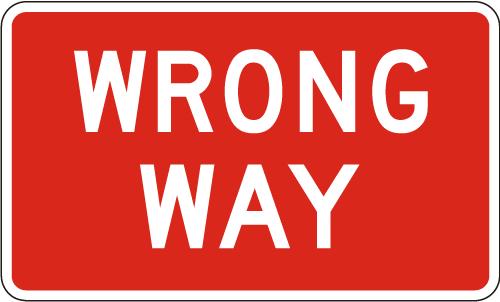
- A wrong way sign (MUTCD designation R5-1a) is a regulatory sign that alerts a driver they are entering a roadway in the direction opposing normal traffic flow. It is typically used at the exit ends of one-way streets, off-ramps, and divided highway entrances. The sign commands the driver to stop and reverse direction immediately. It features white text reading 'WRONG WAY' on a red rectangular background, making it highly visible day and night.
- Where are wrong way signs typically located?
- Wrong way signs are placed on the left side of the roadway at exit ramps, the termini of one-way streets, and on divided highway access points where entry in the wrong direction is possible. The MUTCD recommends installing the R5-1a sign on the right side as well for high-speed or high-risk locations, and supplementing it with a Do Not Enter sign (R5-1) near the same point for maximum driver awareness.
- How big is a wrong way sign?
- Standard wrong way signs come in several sizes. The most common are 18x12 inches for low-speed secondary roads, 24x18 inches for typical roadway applications, 30x18 inches for higher-speed environments, and 36x24 or 42x30 inches for freeways and high-visibility installations. The MUTCD provides guidance on minimum size requirements based on posted speed limits and road classification. Trafficsigns.com carries the R5-1a in all of these sizes.
- What are the different types of wrong way signs?
- The two primary MUTCD wrong way signs are the R5-1a Wrong Way Sign for motor vehicle traffic and the R5-1b Bicycle Wrong Way Sign for dedicated bike lanes and shared-use paths. The R5-1a uses the familiar red-and-white rectangular format, while the R5-1b includes a bicycle symbol to communicate specifically with cyclists. Both are available in engineer grade, high intensity, and diamond grade reflective sheeting.
- What is the history of the wrong way sign?
- The wrong way sign became standardized in the United States through the Manual on Uniform Traffic Control Devices (MUTCD), which has been updated periodically since 1935. The red-and-white color scheme and the specific R5-1a designation were formalized in later editions as the interstate highway system expanded and wrong-way driving incidents on high-speed divided highways became a documented safety problem. The sign's consistent design across all states is intended to ensure immediate recognition by any driver regardless of where they learned to drive.
- What does 'wrong way' mean in a traffic context?
- In traffic law and road design, 'wrong way' refers to a vehicle traveling against the intended direction of travel on a one-directional roadway. On a divided highway or one-way street, wrong-way driving creates the risk of a head-on collision. The wrong way sign exists specifically to warn a driver who has already made an incorrect entry that they must stop and turn around before proceeding further.
- What reflectivity grade should I choose for a wrong way sign?
- Engineer grade reflective sheeting is appropriate for low-speed, low-traffic locations with adequate ambient lighting. High intensity sheeting is the standard choice for most roadway applications, offering significantly greater nighttime visibility. Diamond grade sheeting provides the highest retroreflectivity available and is recommended for high-speed roads, freeways, and any location where nighttime wrong-way entries are a documented concern. All grades at Trafficsigns.com meet DOT and MUTCD state and federal standards.
What Is a Wrong Way Sign and Why Is It a Regulatory Sign?
Where Should a Wrong Way Sign Be Installed?
Related Regulatory Signs That Work Alongside Wrong Way Signs
Wrong Way Sign: Size and Reflectivity Grade Comparison
Choosing the right size and reflectivity grade for a wrong way sign depends on the posted speed limit, road classification, and ambient lighting conditions at the installation site. The table below summarizes the standard options available for the R5-1a Wrong Way Sign from Trafficsigns.com.
| Size | Typical Application | Reflectivity Grade | Starting Price | MUTCD Compliant |
|---|---|---|---|---|
| 18x12 in | Low-speed local roads, parking exits | Engineer Grade | $21.95 | Yes |
| 18x12 in | Low-speed local roads, parking exits | High Intensity | $25.95 | Yes |
| 18x12 in | Low-speed local roads, parking exits | Diamond Grade | $32.95 | Yes |
| 24x18 in | Urban streets, secondary roads | Engineer Grade | $33.25 | Yes |
| 24x18 in | Urban streets, secondary roads | High Intensity | $45.25 | Yes |
| 24x18 in | Urban streets, secondary roads | Diamond Grade | $58.25 | Yes |
| 30x18 in | Higher-speed arterials | Engineer Grade | $26.95 | Yes |
| 30x18 in | Higher-speed arterials | High Intensity | $37.50 | Yes |
| 30x18 in | Higher-speed arterials | Diamond Grade | $59.95 | Yes |
| 36x24 in | Freeways, high-speed divided highways | Engineer Grade | $69.95 | Yes |
| 36x24 in | Freeways, high-speed divided highways | High Intensity | $87.95 | Yes |
| 36x24 in | Freeways, high-speed divided highways | Diamond Grade | $111.95 | Yes |
| 42x30 in | High-volume freeway ramps | Engineer Grade | $61.95 | Yes |
| 42x30 in | High-volume freeway ramps | High Intensity | $84.95 | Yes |
| 42x30 in | High-volume freeway ramps | Diamond Grade | $139.95 | Yes |
Wrong Way Signs and Related Traffic Control Products
 Regulatory Signs / Traffic Control Signs
Wrong Way Sign - R5-1a
$21.95 - $139.95
Shop on Trafficsigns.com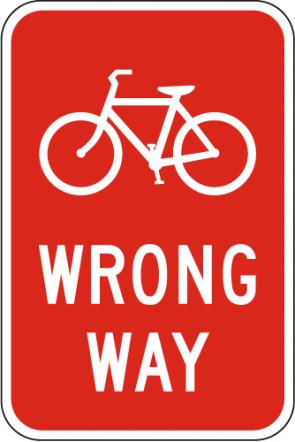 Regulatory Signs / Traffic Control Signs
Bicycle Wrong Way Sign - R5-1b
$21.95 - $58.25
Shop on Trafficsigns.com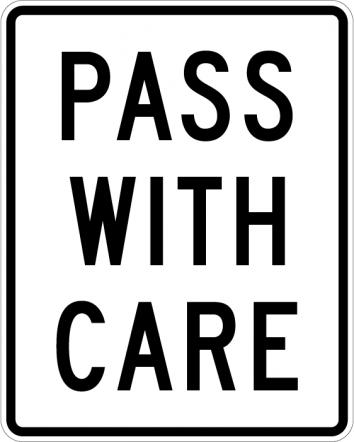 Regulatory Signs / Traffic Control Signs
Pass With Care Sign - R4-2
$33.25 - $72.45
Shop on Trafficsigns.com
Order MUTCD-Compliant Wrong Way Signs Today
Trafficsigns.com carries the full range of MUTCD wrong way signs in every standard size and reflectivity grade. All signs ship on reflective aluminum with pre-punched mounting holes and meet DOT and MUTCD state and federal standards. Volume pricing is available for orders of 4 or more signs. Browse the complete selection and place your order online, or contact our team for project-specific guidance on sign selection and installation requirements.
Shop Wrong Way Signs